
Wild Tokyo games, providers and live casino
 Available in AU
Wild Tokyo’s game catalogue is defined by supplier breadth rather than a published title count. The provider roster reaches 152 suppliers and includes major slot studios, live-dealer specialists and crypto-era game developers. Live games and live-dealer categories are also part of the catalogue.
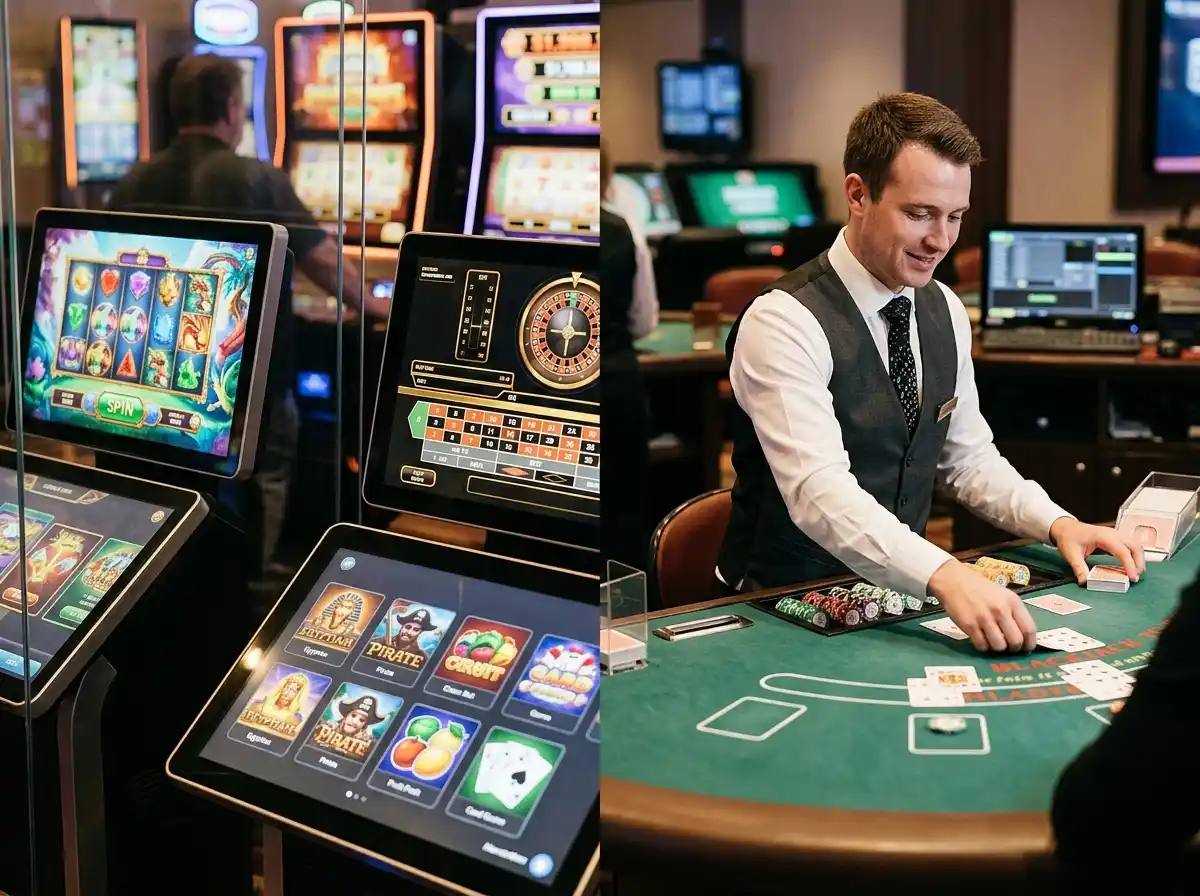
A 152-provider roster creates a broad supplier mix
Wild Tokyo lists 152 game providers. Examples include NetEnt, Playtech, Play’n GO, Evolution Gaming, Pragmatic Play, Nolimit City, Hacksaw Gaming, BGaming, Red Tiger Gaming, Quickspin and Yggdrasil Gaming. That mix spans established European studios, large multi-category suppliers and newer developers known for distinctive slot mechanics.
A roster of that size matters because catalogue diversity is not only about the number of individual titles. Different suppliers bring different visual styles, volatility profiles, bonus mechanics, live-table formats and interface conventions. A broad supplier pool reduces dependence on one studio’s design language and gives the catalogue more variety even without relying on a headline game-count figure.
| Provider example | Catalogue role |
|---|---|
| NetEnt | Established slots and casino games |
| Playtech | Slots and broader casino content |
| Play’n GO | Slots catalogue |
| Evolution Gaming | Live-dealer and casino content |
| Pragmatic Play | Slots and live-casino content |
| Nolimit City | Feature-heavy slots |
| Hacksaw Gaming | Modern slots and compact game formats |
| BGaming | Slots and crypto-oriented casino content |
| Red Tiger Gaming | Slots catalogue |
| Quickspin | Slots catalogue |
| Yggdrasil Gaming | Slots and networked game content |
The strongest practical consequence is search breadth. A player who recognises a supplier can use that studio identity as a way to navigate the catalogue, while a player who prefers a particular style can move between providers rather than being tied to one in-house library.
Provider breadth also makes the catalogue easier to segment mentally. NetEnt, Play’n GO, Red Tiger and Quickspin sit comfortably in a mainstream slots comparison; Nolimit City and Hacksaw Gaming represent a more aggressive modern design language; Evolution Gaming points toward live tables. Those groupings help a user narrow the catalogue by familiar supplier style instead of scrolling through an undifferentiated wall of games.
The number 152 should therefore be read as a supplier-count signal, not as a title count. One provider can contribute many games, while another may contribute only a smaller set. The useful conclusion is that Wild Tokyo draws content from many supplier ecosystems, which usually translates into more variety of mechanics and presentation than a narrow studio roster.
That supplier-count signal is especially useful when comparing catalogue structure. A casino with only a handful of studios can still have many titles, but those games may share similar engines, art direction or mechanics. A roster of 152 providers increases the chance of genuine variation between suppliers, which is more relevant to browsing quality than repeating similar games under different names.
Game selection benefits from supplier variety more than a headline count
With 152 suppliers, Wild Tokyo has room for several distinct catalogue segments. The listed provider examples point to a mix of mainstream slots, highly volatile feature-driven games, classic studio libraries and live-dealer content. The breadth is useful because players often choose games by mechanics or supplier reputation rather than by raw catalogue size.
- Mainstream slot studios: NetEnt, Play’n GO, Red Tiger, Quickspin and Yggdrasil Gaming.
- Feature-heavy modern slots: Nolimit City, Hacksaw Gaming and BGaming.
- Multi-category suppliers: Playtech and Pragmatic Play.
- Live-dealer presence: Evolution Gaming and other live-category content.
This supplier spread also changes concentration risk inside the catalogue. If a casino relies heavily on one or two studios, a player who dislikes those mechanics can run out of relevant options quickly. A wider roster makes it easier to switch style, interface and game family without leaving the same casino catalogue.
That variety can be practical rather than merely cosmetic. Studios differ in reel layouts, bonus structures, animation density, interface speed and the balance between simple and feature-heavy designs. A broad provider list means the catalogue can support several preferences at once, from familiar conventional slots to newer high-intensity formats.
Supplier diversity can also improve discovery. Someone who likes one title from a studio can browse that provider’s other games, while someone who dislikes a particular design style can move to a different supplier. This is a more useful way to interpret a large provider roster than assuming that every additional studio automatically improves quality.
For browsing, a useful sequence is simple:
- Start with a familiar provider or game family.
- Compare neighbouring suppliers with different mechanics or presentation styles.
- Use live categories when the preference shifts from RNG-based games to dealer-led tables.
- Keep session cost and gambling risk separate from catalogue variety; more choice does not reduce the financial risk of play.
Wild Tokyo’s account guide covers KYC and support alongside the game catalogue, while the payments section covers the separate question of how fiat and crypto rails work around account funding and withdrawals.
For game selection itself, supplier identity is the most concrete organising principle. The catalogue does not need a single overall title count to show depth when the provider roster already includes 152 names. A user can judge breadth by looking at how many distinct studio families are represented and whether the mix includes both slot specialists and live-casino suppliers.
This also makes it easier to avoid a common mistake in casino comparisons: equating “more games” with “better fit”. A catalogue can be very large yet still feel repetitive if much of it comes from similar providers. Wild Tokyo’s named examples point to a wider stylistic spread, which is more useful for variety than a raw count alone.
A practical comparison can therefore focus on three questions: does the catalogue include familiar suppliers, does it mix older and newer studio styles, and does it extend beyond slots into live-dealer content? Wild Tokyo meets those structural tests through the listed provider examples and the presence of live categories.
Live games add a dealer-led layer to the catalogue
Wild Tokyo includes live games and live-dealer categories. That gives the catalogue a second interaction model alongside slots and other software-driven casino games: streamed tables with a dealer, timed betting windows and a shared table environment.
Evolution Gaming is one of the listed suppliers and is strongly associated with live-dealer casino content. Pragmatic Play also operates across both slots and live casino. Their presence helps explain why the catalogue can support both conventional slot browsing and a dedicated live-game layer without depending on a single supplier for every category.
The practical difference is pace and attention. Slots can usually be played at a self-directed rhythm within the game’s interface, while live tables follow the dealer and table cycle. That can change how quickly decisions arrive and how long a session feels, even before bet size is considered.
Live play also adds a shared-session feel that software-only games do not have. The dealer, betting countdown and table presentation create a more structured sequence of rounds. That can make the experience feel closer to a physical casino table, while still carrying the same core financial risk as other gambling formats.
The supplier mix matters here because live casino is not simply another skin on a slot catalogue. It requires specialist content, streaming infrastructure and table formats. Having Evolution Gaming and Pragmatic Play among the provider examples supports a catalogue that can bridge both software-driven and dealer-led play styles.
- Live-dealer games use streamed tables and dealer-led rounds.
- Slots and software games follow their own game engines and interfaces.
- The 152-provider roster gives Wild Tokyo multiple supplier ecosystems rather than one catalogue style.
Supplier breadth is therefore the clearest measurable signal for Wild Tokyo’s games section. It supports variety across studios and game formats while leaving room for players to organise the catalogue around the providers they already know.
It also provides a practical way to compare Wild Tokyo with a smaller casino catalogue without relying on a title count. A 152-provider roster shows that the casino is sourcing content widely. The named studios cover enough different segments to demonstrate genuine supplier variety even when individual game totals are left aside.
For session planning, variety should still be separated from risk. A broader catalogue can make it easier to find a preferred style, but it does not make a gambling session safer or cheaper. The financial outcome still depends on the games selected, stake size and time spent playing. That distinction keeps catalogue breadth in its proper role: a product-choice feature, not a risk-reduction feature.
Wild Tokyo’s game strength is the breadth of its supplier roster
The clearest catalogue fact is the 152-provider list, supported by recognised names such as NetEnt, Playtech, Play’n GO, Evolution Gaming, Pragmatic Play, Nolimit City, Hacksaw Gaming, BGaming, Red Tiger, Quickspin and Yggdrasil Gaming. Live games add another format layer. The practical value of that breadth is variety across suppliers and interfaces, not a claim that a larger catalogue changes the financial risk of gambling.
For someone assessing the catalogue, provider range is the strongest starting point: it shows breadth, indicates the presence of both slot and live-dealer ecosystems, and gives familiar studio names to search for. The range is meaningful because it changes the variety of mechanics and presentation available, while the core gambling risk remains tied to the games themselves and the money staked.
Read next
Published by the Wildtokyoslots.com team.