Casino Apps in Australia: Legal and Practical Risks
 Available in AU
Offshore casino access, app installation, payments and withdrawals each bring practical limits and considerations for Australian players.

Table of Contents
- The Offshore Reality Behind Real-Money Play
- An App Icon, a Browser, or a PWA?
- The Welcome Bonus Comes with a Clock
- iPhone Access Without an App Store Listing
- Free-Play Apps and the Fiction of the Chip
- iOS and iPad: Deposits Have Their Own Friction
- What “Pays” Means After the Spin
- Gambling on a Small Screen Still Needs Limits
- Why “Popular” Is Not the Same as Suitable
- Android Access and the Sideloading Question
The Offshore Reality Behind Real-Money Play
The phrase “real-money casino app” can make an offshore service sound like an ordinary product with a local storefront. In Australia, the legal position is less tidy. The Interactive Gambling Act 2001 prohibits operators from providing online casino-style games to people in Australia. That includes familiar formats such as poker, blackjack, roulette and pokies. The rule addresses the businesses offering the service; it does not make an individual Australian punter’s act of playing at an offshore casino illegal under that Act.
That distinction matters, but it is not a seal of safety. An operator may be outside Australia while still accepting registrations from Australians, and the absence of player liability under this law does not create Australian oversight of the operator. Nor does it give a punter the protections that might be expected from a domestic gambling service. A site can be reachable, accept an account and display a balance without being subject to Australian casino regulation.
The state’s response is directed at the supply of prohibited services. The Australian Communications and Media Authority (ACMA) works to restrict access to gambling sites that breach the rules, including by arranging blocks. A page that fails to load may therefore reflect enforcement rather than a temporary fault. Blocking is not a guarantee that every prohibited site disappears from view; it is a practical intervention in a market where operators and users may be separated by borders and networks.
Choosing a casino app in Australia calls for attention to licensing and practical details such as deposit minimums and payout methods. This list offers a concise reference to the information available for each operator.
License: Curacao (operating since 2017) · Min. deposit: A$20 Uptown Pokies has operated since 2017 under a Curacao licence. Its minimum deposit is A$20.
License: Curacao, operated by Dama N.V. 7Bit Casino is licensed in Curacao and operated by Dama N.V.
License: Curacao OGL/2024/1335/0780 · Min. deposit: EUR 20 Vegaz Casino holds Curacao licence OGL/2024/1335/0780. Its minimum deposit is EUR 20.
License: Curacao eGaming OGL/2024/923/0383 (Antillephone N.V.) · Min. deposit: A$30 WinSpirit Casino operates under Curacao eGaming licence OGL/2024/923/0383, issued through Antillephone N.V. Its minimum deposit is A$30.
License: Curacao Gaming Control Board JustCasino is listed with a Curacao Gaming Control Board licence.
License: Tobique Gaming Commission · Payout speed: crypto ~10-15 minutes, fiat 1-5 days · Min. deposit: A$30 SkyCrown is licensed by the Tobique Gaming Commission. Its stated payout times are around 10–15 minutes for crypto and 1–5 days for fiat.
License: Curacao eGaming (Dama N.V.) JeetCity Casino is licensed by Curacao eGaming and operated by Dama N.V.
License: international iGaming licence – jurisdiction not named in the source · Payout speed: PayID 1-24 hours · Min. deposit: A$30 (PayID from A$10) House of Pokies lists an international iGaming licence, though the jurisdiction is not named in the available information. PayID payouts are stated as taking 1–24 hours; the minimum deposit is A$30, or A$10 with PayID.
License: Curacao Gaming Control Board OGL/2023/176/0095 (Hollycorn N.V.) Neospin holds Curacao Gaming Control Board licence OGL/2023/176/0095, associated with Hollycorn N.V.
License: Curacao – Antillephone N.V. (Versus Odds B.V.) · Min. deposit: EUR 20 Thor Casino is licensed in Curacao through Antillephone N.V., with Versus Odds B.V. named as the operator. Its minimum deposit is EUR 20.
That creates a peculiar geography. The service may be operated elsewhere, the game may run on a phone in Australia, and the law may still prohibit the operator from supplying it here. The screen makes the arrangement feel local. The legal responsibility does not move with the screen.
Offshore casinos that accept Australians commonly point to licensing jurisdictions such as Curaçao, Malta or Gibraltar. Those names describe where an operator may be licensed, not an Australian authorisation to offer casino games. A foreign licence does not cancel the prohibition in the Interactive Gambling Act 2001, and it should not be mistaken for Australian supervision or a route to Australian remedies. The regulatory relationship is with the licensing jurisdiction, not an Australian casino regulator.
That description is a risk disclosure, not an endorsement. Before depositing, a punter needs to confirm that the particular site accepts people located in Australia; availability can differ by operator and may change. A successful registration or a visible website does not establish that service is permitted, stable or suitable. The distinction between being able to reach a page and having dependable recourse if a dispute arises is substantial.
A VPN does not make that distinction disappear. Using one to get around a block or to conceal a location may breach an operator’s terms. If the casino later treats the account as violating those terms, winnings may be voided and the account closed. The technology can change the apparent route to a site; it cannot supply a local licence or compel an offshore business to honour a disputed balance.

There is also a hard limit on recourse. If an offshore casino refuses to pay winnings, there is no Australian government body to which a punter can complain and expect it to resolve the payment dispute. A foreign licensing authority may have its own complaint process, but that is not the same as Australian government protection, and the existence of a licence should not be treated as a guarantee of an outcome. The inconvenience is structural. The business may be available at a tap; the remedies are elsewhere.
Age rules remain part of the picture: a person must be at least 18 to register and gamble in Australia. Meeting that threshold does not alter the legal position of an operator offering prohibited casino-style games to Australians, and it does not remove the risks of dealing with an offshore business. Age eligibility and operator legality are separate questions.
The appeal of mobile play is partly its intimacy: a private screen, a familiar routine, a balance rendered in neat digits. But the device can make an offshore arrangement feel more settled than it is. Australian law draws its line at the service provider, while ACMA’s access measures and the operator’s own terms shape what happens in practice. A phone cannot bridge the gap between access and protection.
Reachable is not regulated.
No Local Protection
Offshore casinos are not subject to Australian regulation, meaning there is no domestic government body to resolve payment disputes or guarantee the return of winnings.
An App Icon, a Browser, or a PWA?
On a phone, “app” can mean several different things. It may be software installed from an official store, a site opened in a mobile browser, or a Progressive Web App that sits on the home screen and looks more like a conventional app. The icon alone does not tell which one it is.
For Australian mobile casino access, the browser is generally the ordinary route. Casino apps are rarely listed on Google Play or Apple’s App Store in Australia, and operators that accept Australian users typically provide browser play or a PWA rather than a native mobile app. The account is commonly the same one used on desktop; the difference is chiefly how the site is opened and displayed.
The browser: no installation required
A mobile browser loads the casino website directly. There is no separate app package to download, and the site can be opened through the browser’s address bar or a saved bookmark. That makes browser access the least mysterious format: the casino remains a website, even when its pages are designed to fit a phone screen.
The practical trade-off is that it may feel less like a dedicated application. The browser’s controls remain part of the experience, and the site must load over the connection each time. A poor connection, an old browser or other device limitations can affect how smoothly a site runs, though those problems are not unique to casino pages.
The familiar icon is not essential. A bookmark can bring a site back without turning it into software installed on the device.

A PWA: a website with an app-like doorway
A Progressive Web App, or PWA, is still a casino website. It can be saved to a phone’s home screen and behave more like a native app when opened, but the icon is a shortcut to the site rather than proof that a separate application has been installed from an official store.
The installation begins on the casino website. If the site offers an install or add-to-home-screen prompt, the user taps it and confirms. The resulting icon makes the page easier to return to; it does not change the operator, create a new account or establish that the service has been independently checked by an app store.
That distinction is useful because “app-like” describes the interface, not the source of the service. A PWA may open without the surrounding browser frame and may be arranged for a phone screen, while its underlying content remains connected to the website. The home-screen icon is a door, not a seal of approval.
Native software and the missing store listing
A native app is software built for a particular mobile operating system and installed as an application. It may offer an interface tailored to that device, but Australian casino access does not commonly arrive through this route: listings are rare on the major app stores, and browser access is the default.
Where an operator offers an app outside an official store, installing it is sideloading. That route carries security risks, and the safety of the software depends on the operator. An app file or download prompt should not be treated as evidence that a store or independent authority has vetted it. A polished icon can make software look settled; it cannot settle the question of who made it or what it does.
Direct access via a website with no installation required, though it retains browser controls.
A website saved as a home-screen shortcut that provides an app-like interface without store installation.
Software built for a specific OS, typically installed via sideloading in Australia due to app store restrictions.
The broader setting matters too. Recommendations for real-money play in this market concern offshore, crypto-friendly casinos, not locally licensed services. Site availability can vary, so location acceptance needs to be confirmed before any deposit. Using a VPN to reach a blocked casino may breach its terms, void winnings or lead to account closure. If an offshore casino refuses to pay, there is no Australian government body to complain to.
The choice between browser and PWA is therefore mostly a choice of doorway. Neither format makes an offshore service local, nor does an app icon make it legitimate. Browser play is common because it avoids a separate installation; a PWA offers a shortcut; a native app, when supplied outside a store, asks for more trust. The screen changes. The operator does not.
The Welcome Bonus Comes with a Clock
A welcome bonus is often presented as a gift, but its value depends on conditions that sit behind the headline. A balance credited to an account is not necessarily withdrawable money. Wagering requirements, minimum deposits and time limits can determine whether an offer is usable at all; game restrictions and cashout caps can narrow its value further.
Specialist reviews of casino offers describe wagering requirements in the range of 30x to 50x the bonus amount, with requirements above 40x regarded as steep. These are not universal terms: each offer has its own rules, and the multiplication figure may apply to the bonus, the deposit, or both. That distinction changes the amount of play required to meet the condition. A large advertised bonus can therefore carry a larger obligation than its headline suggests.

A minimum deposit is another gate. An offer may be available only after a qualifying deposit, so a “free” sign-up bonus or no-deposit bonus should not be assumed from the wording of a promotion. The full terms establish whether a deposit is needed, how much qualifies, and whether the bonus is added automatically or must be claimed. The label alone settles none of that.
Then there is the clock. Specialist reviews report that some bonuses must be cleared within 7–10 days; if the deadline passes, the bonus may be forfeited. The relevant period can begin at a particular point in the account or offer process, so the start time matters as much as the stated expiry. A short window can turn wagering into a schedule rather than an incidental part of play.
Game restrictions affect the route to clearing the requirement. Terms may specify which games count, or how much their play contributes. A punter who assumes every game advances the balance in the same way may discover that the apparent progress is not progress at all. Cashout caps matter too: even after conditions have been met, a cap may limit what can be withdrawn from bonus-related winnings. These details belong in the terms, not in the decorative language of the offer.
That is why “free money” is a poor description. The bonus is conditional, and the conditions can make it impractical or worth less than it first appears. Offers framed around free spins or real rewards are still subject to their stated rules; a spin is not the same thing as unrestricted cash. Nor does a bonus guarantee a real prize or a successful withdrawal.
Before claiming, the entire bonus wording needs to be read: wagering requirements, minimum deposit, eligible games, expiry dates and cashout caps. If any of those terms are unclear, the offer is not yet clear either. The clock starts regardless.
- Read full wagering requirements
- Check for minimum deposit rules
- Verify the bonus expiry date
- Confirm eligible games
- Assume “free money” is unrestricted
- Ignore cashout caps
- Overlook the bonus clock
- Assume all games contribute equally
These offers are associated with offshore crypto-friendly casinos, not Australian-licensed casino apps. A site’s acceptance of an Australian location must be confirmed before any deposit; using a VPN to reach a blocked casino may void winnings or lead to account closure. If an offshore casino refuses payment, there is no Australian government body to take the complaint to. The small print is doing rather a lot of work.
iPhone Access Without an App Store Listing
An iPhone can make casino access look like an app problem: find the icon, download it, sign in. In Australia, that sequence often stops at the store. Casino apps are rarely listed in the Apple App Store, and browser access is the usual route for casinos that accept Australian players. The missing icon is not a technical glitch. It reflects the awkward position of real-money casino services in a market where operators are prohibited from offering them to people in Australia.
On an iPhone, the browser becomes the doorway. A casino website can be opened in Safari, with an account that may also be used on desktop. The experience is still shaped by the site itself: menus have to fit a narrow screen, text must remain legible, and sign-in or game pages need to behave properly in a mobile browser. A polished home screen is no substitute for those basics.
Some operators provide a Progressive Web App, or PWA. On an iPhone, this is a website saved to the home screen, rather than an app downloaded through Apple. The site may display an add-to-home-screen prompt; confirming it creates an icon that opens the casino in an app-like view. It can make repeat access feel more direct, but the underlying service is still the website. The icon changes the doorway, not the house.
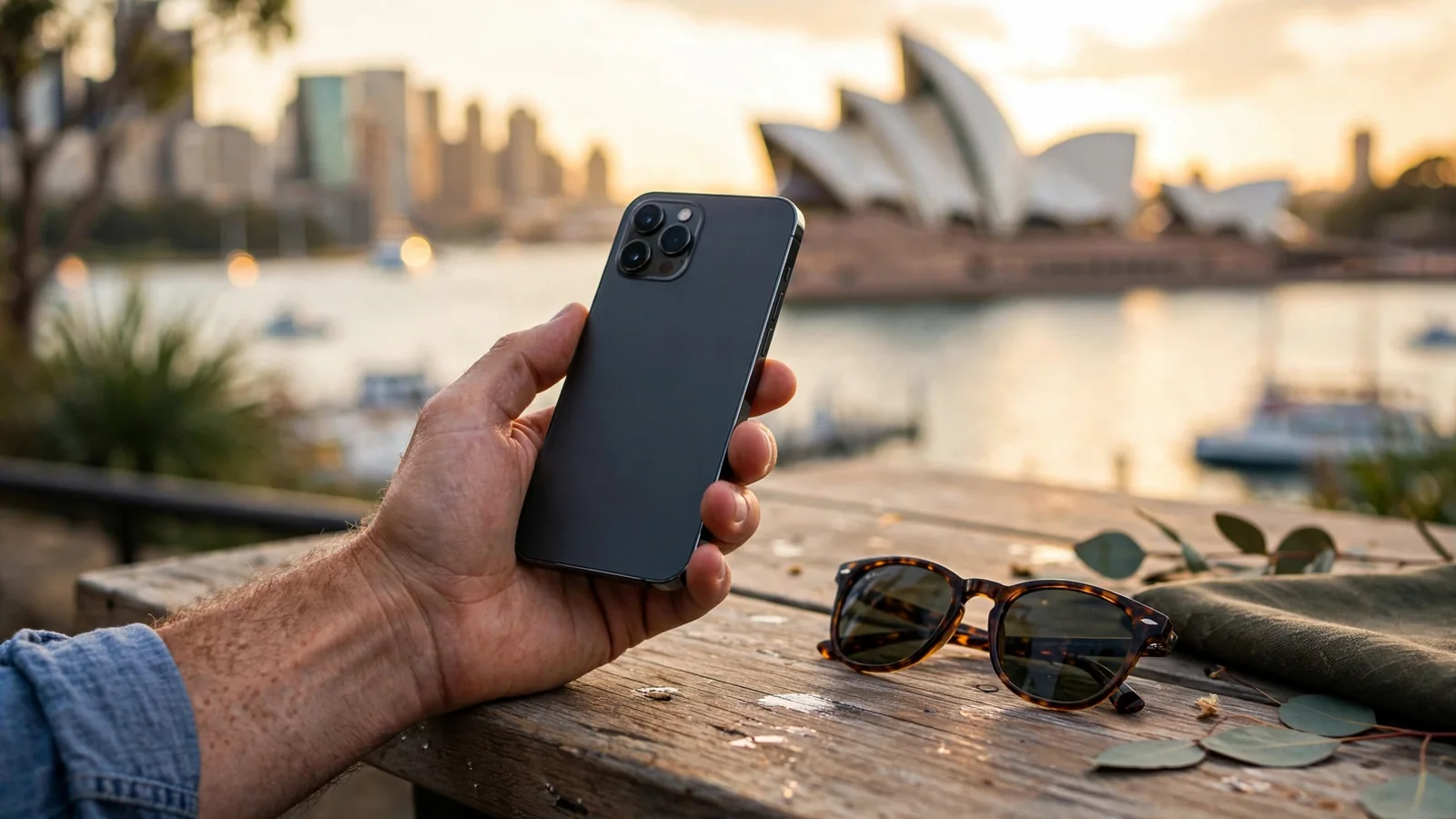
That distinction matters when labels such as “best casino apps for iPhone” suggest a tidy catalogue of approved software. There is no dependable App Store shelf of real-money casino apps to compare. A new icon on a website is not evidence of Apple review, nor does an app-like appearance establish who operates the service or what happens to an account. The practical question is less whether an app exists than whether the site and its terms can be checked before an account is used.
Any real-money operators discussed in connection with this page are offshore and crypto-friendly; that description is not an endorsement. Their acceptance of Australian locations can change, so location eligibility must be confirmed before depositing. A VPN used to reach a blocked casino may breach its terms, void winnings or lead to account closure. If an offshore casino refuses a withdrawal, there is no Australian government body that can resolve the complaint. The polished icon offers no local safety net.
This is where the iPhone’s convenience can be misleading. A saved shortcut may remove a few taps, but it does not make the service an Apple-listed app or place it under Australian casino licensing. Nor does it settle whether a particular site will work reliably in the browser. The sensible distinction is between access and assurance: a page loading on a handset confirms only that the page loaded.
Searches for iPhone casino apps often reach pages promising a download, a bonus or a crypto route. The language can make separate things sound like one product. A website shortcut is not a native app; a payment option is not proof of trustworthy operation; and an offer does not make the service safer. The App Store gap is a fact of access, not an invitation to fill it with unverified software.
An iPhone home-screen icon (PWA) is a shortcut to a website, not an application vetted or listed by the Apple App Store.
For iPhone users, browser play remains the straightforward format, with a PWA as a website-based shortcut where offered. Neither should be mistaken for a locally approved casino app. An icon is not a licence.
Free-Play Apps and the Fiction of the Chip
A chip in a social casino app looks like a small piece of money, which is the point of the design. It gives a game a familiar grammar: a balance, a stake, a win, a larger balance. But the resemblance is not the same as a cash value. Free-play apps use virtual credits, and that makes them a different kind of entertainment from real-money gambling.
In Australia, social casino apps built around virtual credits are legal to use. They are available directly through the Google Play Store and Apple App Store, unlike real-money casino apps, which are rarely listed there. Their presence in an official store is a useful distinction about availability, not a certificate that every feature is suitable for every person or that every app deserves the word “safe”.
The chip has a long social life beyond the screen. In a physical casino it marks a wager while keeping cash at a distance; in an app it can turn play into a sequence of numbers that is easy to collect and spend. That abstraction can make the experience feel lighter than money-based gambling. It can also make the boundary between play and payment less visible, especially when a bright balance is treated as a score. A virtual balance is still a balance inside the game, not a bank account.

Free casino apps are therefore not simply real-money services with the price removed. They belong to the social-game category: their credits are virtual, and their availability in the app stores reflects that difference. A free-play label should not be read as a promise that every part of an app is free, or that its credits can be exchanged for cash. The practical meaning rests on what the app itself says about credits and purchases, rather than on the cheerful word “free” in its title.
Nor are virtual credits the same thing as a welcome bonus, free spins or another offer attached to a real-money account. Those promotions belong to gambling with money and carry their own conditions. A social app’s play currency is part of the game’s internal economy; it does not turn the app into a route to withdrawable winnings. Similar graphics can conceal very different arrangements. The chip is a prop.
That difference matters when someone looks for casino apps with free play and assumes that “casino” names one consistent product. The label covers more than one kind of experience. Social apps can be installed from the major app stores in Australia, while real-money access operates under a different legal and technical reality. Confusing the two can lead to mistaken expectations about what a win means, what a credit buys, and whether anything can leave the screen.
Popularity, polished artwork and a familiar table layout do not establish that an app is trustworthy. Store availability tells where an app can be obtained; it does not, by itself, answer how its virtual-credit system works. The useful distinction is less glamorous than the icon: virtual credits are for play within the app, while cash gambling involves money and a separate set of risks. A chip may imitate a coin convincingly. It remains an imitation.
Attention: Social casino apps use virtual credits for entertainment; these are not real-money services and credits cannot be exchanged for cash.
iOS and iPad: Deposits Have Their Own Friction
On an iPhone or iPad, the payment step is less a feature of the device than a decision made by the casino’s cashier and the financial institution behind the chosen method. A touch screen can make the form easier to use; it cannot make every transaction acceptable to both sides. That is where the friction begins.
A specialist review describes PayID, BPAY, cards and cryptocurrency among mobile deposit methods, with processing times differing by method. That is a description of options reported by one review, not a promise that every offshore casino offers them or that they will remain available. The cashier’s current list and the terms attached to each method matter more than a general claim about iOS compatibility. A payment route appearing on an iPad does not establish that it will work with every Australian account.
POLi requires a firmer distinction. It stopped operating in Australia in September 2023 and no longer processes local transactions. Its appearance in an old payment guide, cached page or list of supposed casino payment options is not evidence that an Australian punter can use it now. Payment pages age quietly; the checkout does not always announce the date on which its assumptions expired.
Cards can bring a different obstacle. A specialist review notes that some Australian banks block or flag gambling-related card charges, which can cause a deposit to fail. A declined transaction may therefore reflect the bank’s controls rather than a fault with the iPhone, iPad or casino page. Repeating the same attempt is not a reliable fix: the bank may continue to reject it, and the account holder may need to check the bank’s own rules. This is not a reason to disguise the transaction or route it around a restriction.

The label “casino app” can also blur where the payment is actually being handled. A mobile casino may be opened through a browser or an app-like shortcut, while the deposit still passes through the operator’s cashier and an external payment provider. On a tablet, the larger display changes the layout, not the underlying checks. An app-like appearance is no banking endorsement.
Searches for casino apps with no deposit requirement, or a no-deposit bonus, can make funding seem irrelevant. It is still worth separating a promotional label from a usable payment route: terms, eligibility and location acceptance remain specific to the operator. No offer removes the need to understand what service is being accessed or how a transaction is treated.
For Australian users, the practical point is modest but consequential: payment methods are not interchangeable, and a method mentioned in a review may not be available at checkout. A failed card charge is not proof of a device problem. POLi is no longer an option for local transactions.
What “Pays” Means After the Spin
A balance on a casino app is a record on the operator’s screen, not money in a bank account. A withdrawal still has to pass through the casino’s review and payment process. The distinction is plain, but easy to lose when a running total looks like cash already earned.
The first withdrawal commonly brings an identity check. KYC verification may require a selfie or identity document, alongside proof of address. Until those checks are complete, a request can remain pending. That pause is part of the process, not evidence that funds have been sent; the account status and the transaction record matter more than the displayed balance.
Withdrawal Process
Complete KYC checks by providing a selfie, identity document, and proof of address.
Wait for the casino to review the request during their internal pending window.
Funds are released to the chosen method, such as an e-wallet, which may take additional time to arrive.
Payment routes can also change what “available” means. E-wallets such as MiFinity, Skrill and Neteller are used for both deposits and withdrawals, but the method shown for putting money in may not be available for taking it out. A specialist review reports that some casinos require a withdrawal to return by the deposit method, while some payment options are deposit-only. Those conditions are operator-specific, so the cashier’s withdrawal rules need to be read before a balance is treated as accessible.
Timing has more than one clock. The casino may apply a pending period before releasing a payment; only after that does the payment provider’s processing begin. A specialist review reports that e-wallet withdrawals can arrive within 24 hours after the pending period, but that is not a universal timetable or a promise attached to every account. Verification requests, payment rules and the operator’s handling of a request can all affect when funds reach their destination.
Some casinos also set weekly or monthly withdrawal caps. A specialist review puts the limits it has seen in the range of $4,000–$10,000 per week; the applicable cap must be checked in the operator’s terms, rather than assumed from another site’s policy. A large balance may therefore be released in stages. A number on a screen can outlast the excitement that produced it.
Any offshore crypto-friendly casino carries a separate practical risk: there is no Australian government body to complain to if it refuses to pay winnings. Before depositing, a punter must confirm that the site accepts their location. Trying to reach a blocked casino through a VPN may void winnings or result in account closure. The route from spin to payment is conditional, not guaranteed.

Gambling on a Small Screen Still Needs Limits
A phone makes gambling easy to carry from one pause in the day to the next. That convenience is the point of casino gaming apps, but it also changes the shape of a session: there is less distance between deciding to play and opening a game, and fewer natural interruptions to mark time. A small screen does not make the consequences smaller.
A specialist review of casino controls identifies deposit limits, loss limits, wager limits, session time limits and self-exclusion as tools that may be available. Their presence is not the same as their usefulness. A limit that is hard to find, set too high to matter or easy to change during a session may provide little pause. The details of each control matter as much as its label.
Deposit limits set a boundary on money added to an account. Loss limits focus on what can be lost, while wager limits address the amount put into play. Session time limits interrupt a stretch of play; self-exclusion is a more substantial barrier, intended to prevent access for a chosen period. These controls act at different points, so one does not necessarily replace another.
The useful moment to set a boundary is before play begins, when a balance or a run of results has not yet started making decisions feel urgent. On a mobile device, a brief session can blur into several: the game remains close at hand, and the next round requires little effort. A timer or pre-set limit can make an interruption deliberate rather than accidental.
Responsible Play
- Set deposit, loss, and wager limits before starting a session.
- Use session time limits to create deliberate interruptions.
- Understand the duration and scope of self-exclusion tools.
- Set boundaries before a run of results makes decisions feel urgent.
Controls should also be checked for how they take effect and whether changes apply immediately. If a setting can be reversed mid-session, that is a different safeguard from one that creates a genuine pause. Self-exclusion, in particular, should be understood before it is needed; its scope and duration depend on the operator’s terms.
The language of control can sound reassuring. It is not a promise that gambling will remain harmless, nor does a menu of limits remove the need to stop when play is causing distress or affecting ordinary life. Mobile access can compress the distance between impulse and action. Limits restore a little distance.
Why “Popular” Is Not the Same as Suitable
A label such as “popular” can sound like a verdict, but it may describe little more than visibility. A casino appearing often in searches or reviews has not thereby been shown to be widely used, reliable or suitable for a particular punter. Those are different claims, and one does not prove the others.
In Australia, the phrase “casino app” can also blur what is actually being used. Casino apps are rarely listed in Google Play or the Apple App Store, so the usual route is a mobile browser. Most Australian mobile casinos are accessed that way, with the same account available on desktop. Familiarity with that format is not evidence that one operator is more popular than another.

Nor does a polished mobile site settle the question of suitability. A prominent icon, smooth pages or a repeated name may make a service easier to notice; they do not, by themselves, establish how often people use it or whether its conditions fit their needs. Popularity is a measure only when the basis for measuring it is clear. Otherwise, it is decoration.
That distinction matters especially when comparisons sit beside rankings. A ranking can help organise information, but its order is not a public vote unless it is based on credible usage data. The existence of a comparison is not proof that the first-listed service is the most used, or the best match for every person.
“Best casino apps” therefore has no settled meaning without criteria. It might refer to ease of access, account features or something else entirely. The available picture establishes a common access pattern, not a league table of operators. Popularity remains a label, not a finding.
Android Access and the Sideloading Question
On Android, real-money casino access is more often a matter of opening a website than downloading an app. Casino apps are rarely listed on Google Play in Australia, so the browser is the default route; the same account can generally be used across mobile and desktop.

A website may offer an Android app file for installation outside Google Play. That is sideloading: the software comes directly from the operator rather than through the store’s usual distribution process. It may look like a familiar app once installed, but appearance is not a security check. Sideloaded casino apps carry security risks, and their safety depends on the operator. A careless or dishonest operator could expose a device or account to problems that a store listing might help users spot, though a listing would not itself guarantee safety.
There is a practical difference between opening a casino website and installing software from it. Browser access avoids adding a separate casino application to the device; sideloading gives the operator’s file a place on it. That choice is not merely about an icon or a quicker route to a game. It concerns trust in whoever supplied the software.
A Progressive Web App may also be offered as a website-based shortcut, without being a conventional Play Store download. Its presence should not be confused with independent approval of the operator. Nor does an installation file establish that an account will be accepted from a particular location. Access conditions can change, and installation is no substitute for checking them before depositing.
For Australians considering Android casino apps, the ordinary browser route is therefore the less involved one. Sideloading adds a separate security decision—and an operator’s assurances are not the same thing as independent protection.
Can I play mobile casinos for real money without an app?
Yes. Most mobile casino play is through a browser, so you can use the website without installing an app.
Do players need an app to play on mobile casinos?
No. Casinos that accept Australian players typically offer browser play or a Progressive Web App, and the browser is the usual option.
Can I use the same account on my phone and computer?
Yes. Mobile casino access commonly uses the same account as desktop.
What is the fastest way to get a withdrawal from a mobile casino?
Crypto and e-wallet withdrawals are typically processed in under 24 hours, though an e-wallet payout arrives within 24 hours after the casino’s pending period. First withdrawals usually require identity verification, which can affect timing.
How do wagering requirements actually work in practice?
A wagering requirement means you must wager a specified multiple of the bonus amount before clearing it. Welcome bonuses commonly require 30x to 50x wagering, and many must be cleared within 7–10 days or the bonus is lost.
Are mobile-only promotions worth it?
They can be, but check the wagering requirement, minimum deposit and clearance deadline before accepting. Requirements above 40x are considered steep, and missing a bonus deadline can mean losing it.
Can players use real-money mobile casinos in Australia?
Individual players are not prohibited by the Interactive Gambling Act 2001 from playing at offshore casinos, but operators are prohibited from offering online casino-style games to people in Australia. Offshore play does not provide Australian regulatory oversight or local government resolution of payment disputes.
Published by the Wildtokyoslotshubau.com team.