Casino Dice Games in Australia: Rules and Online Limits
 Available in AU
Learn how dice games reach their outcomes, what odds and strategy can—and cannot—tell you, and where Australian online services stand.

Table of Contents
- Dice Online, and the Australian Boundary Around It
- What Casino Dice Means Beyond the Search Term
- A Round of Dice, from Roll to Result
- The Different Games That Put Dice on the Table
- Craps and the Table Tradition
- Rules, Odds and the Meaning of “Best”
- What the Dice Decide
- Strategy Without the Promise of Control
- The Live Dice Table on Screen
- Where the Dice Are Rolled
Dice Online, and the Australian Boundary Around It
The phrase “casino dice online” suggests a simple arrangement: a familiar game, moved to a screen, available wherever a connection can be made. In Australia, the screen does not erase the boundary between a service that can be found and one that may lawfully be offered. Offshore gambling sites may accept Australian payments and operate under licences issued elsewhere. Their existence, and their apparent accessibility, do not make real-money online casino services lawful for people in Australia.
The governing line is set by the Interactive Gambling Act 2001. It restricts operators from providing online casino services to people physically located in Australia. Casino-style offerings fall within that boundary whether they involve dice, cards, wheels or other formats. The distinction matters: an online dice game may be presented as a casino product by an offshore operator, but that presentation does not give the operator permission to offer it to Australians. An overseas licence is not an Australian authorisation.
That is a rule aimed at providers, not a criminal penalty for the person who uses an offshore site. Australians are not criminalised merely for playing on such services. The difference can be easy to miss in the blur of a website’s terms, payment options and branding. Yet a customer’s ability to register or deposit says little about the legal position of the service. A working payment route is not a licence. A foreign licence is not a local one.
Choosing a casino dice game in Australia involves more than the game itself: the operator’s licensing and any stated payment details can help you decide what to check. This list provides a concise reference to the available information for each option.
License: Curacao (operating since 2017) · Min. deposit: A$20 Uptown Pokies has operated since 2017 and holds a Curacao licence. Its minimum deposit is A$20.
License: Curacao, operated by Dama N.V. 7Bit Casino is licensed in Curacao and operated by Dama N.V. These are the stated details to consider when reviewing the operator.
License: Curacao OGL/2024/1335/0780 · Min. deposit: EUR 20 Vegaz Casino holds Curacao licence OGL/2024/1335/0780. Its minimum deposit is EUR 20.
License: Curacao eGaming OGL/2024/923/0383 (Antillephone N.V.) · Min. deposit: A$30 WinSpirit Casino holds Curacao eGaming licence OGL/2024/923/0383, issued through Antillephone N.V. The minimum deposit is A$30.
License: Curacao Gaming Control Board JustCasino is listed with a Curacao Gaming Control Board licence. No further operator details are provided here.
License: Tobique Gaming Commission · Payout speed: crypto ~10-15 minutes, fiat 1-5 days · Min. deposit: A$30 SkyCrown is licensed by the Tobique Gaming Commission. Stated payout times are around 10–15 minutes for crypto and 1–5 days for fiat; the minimum deposit is A$30.
License: Curacao eGaming (Dama N.V.) JeetCity Casino holds a Curacao eGaming licence and is operated by Dama N.V. These licensing and operator details are the available points of reference.
License: international iGaming licence – jurisdiction not named in the source · Payout speed: PayID 1-24 hours · Min. deposit: A$30 (PayID from A$10) House of Pokies has an international iGaming licence, though the jurisdiction is not named in the source. PayID payouts are stated as 1–24 hours, with a A$30 minimum deposit (A$10 for PayID).
License: Curacao Gaming Control Board OGL/2023/176/0095 (Hollycorn N.V.) Neospin holds Curacao Gaming Control Board licence OGL/2023/176/0095, with Hollycorn N.V. named as the operator. The licence details are the available basis for assessing this entry.
License: Curacao – Antillephone N.V. (Versus Odds B.V.) · Min. deposit: EUR 20 Thor Casino is licensed in Curacao through Antillephone N.V., with Versus Odds B.V. named in connection with the licence. Its minimum deposit is EUR 20.
The federal body responsible for enforcing the Act and monitoring compliance with interactive gambling laws is the Australian Communications and Media Authority, or ACMA. Its work makes the boundary more than a sentence in legislation. ACMA can ask Australian internet service providers to block websites that provide prohibited interactive gambling services or advertise them in Australia. A site that appears one day may therefore be inaccessible later, or may shift addresses as enforcement proceeds. Availability is not a stable measure of legality.
Since November 2019, following enforcement actions, ACMA has blocked more than 1,455 illegal gambling and affiliate websites. That figure includes affiliate sites as well as gambling services; the machinery of enforcement reaches beyond the operator taking deposits. The authority has also reported that more than 210 illegal services have withdrawn from the Australian market since enforcement began in 2017. Other accounts give a figure of more than 190 for withdrawals over that period. The totals differ, but both describe a market in which some services leave after regulatory action.
There is an odd modernity to this kind of border. It is not a fence or a customs post but a request to internet providers, backed by a law that defines what operators may offer across a physical distance. The site can be based abroad, the payment can pass through an electronic system, and the customer can be sitting at home in Australia. None of those facts removes the operator’s obligation under Australian law. The internet makes the service travel; it does not make regulation vanish.

For dice play in particular, the legal issue is not whether the game feels traditional, whether its graphics resemble a casino table, or whether it is labelled as entertainment. The relevant question is whether a real-money casino service is being offered to people in Australia. A digital interface can make that service look self-contained, even private. The law treats the provision of the service as the matter at hand. Packaging changes less than it seems.
Nor does the presence of an offshore licence settle the question. Such licences belong to other jurisdictions and operate under their own systems. They do not replace Australian law or convert a prohibited offer into a permitted local one. That is why “licensed” can be an incomplete description when detached from the place where a service is being offered. A badge may identify a regulator abroad; it cannot redraw Australia’s boundary.
The responsible distinction is therefore plain, even if the online landscape is not: offshore casino sites may be visible and may process Australian payments, while offering real-money online casino games to people in Australia remains restricted by the Interactive Gambling Act. ACMA’s blocking powers and enforcement record give that restriction practical force. Access can fluctuate; the legal position does not follow every change in a website address.
Legal Restriction
Offering real-money online casino services to people physically located in Australia is restricted by the Interactive Gambling Act 2001.
Gambling also carries consequences beyond compliance. It can cause serious harm, particularly to vulnerable people, and online availability can make a service feel more ordinary than its risks warrant. Gambling is for adults aged eighteen or older; that threshold does not turn a prohibited online casino offer into a lawful one. In Australia, the boundary is both legal and human. A screen is not an escape hatch.
What Casino Dice Means Beyond the Search Term
A casino dice game is not simply any game in which dice appear. The phrase describes a family of games where dice are central to the way an outcome is produced, while the casino setting supplies the surrounding structure: stakes, defined outcomes and a framework for play. The distinction matters. Dice can turn up as a decorative feature, a symbol on a screen or one element in a much larger game. Their presence alone does not make the activity a dice game.
At the centre of the category is a familiar object with an unusually durable cultural life. A die is small, legible and apparently impartial: its faces are visible, and a roll seems to hand the decision to chance. That appearance has made dice useful far beyond casinos, from household games to rituals of choice. Casino games give the roll a more formal role. It is no longer only a way to settle an argument or pass an evening; it becomes part of a designed contest in which chance is organised and valued.
That organisation is the less visible half of the experience. A casino dice game pairs the physical or simulated randomness of dice with rules that make particular outcomes meaningful. The dice do not carry a built-in promise of reward. Their significance comes from the game’s design, which assigns meaning to what appears. In that sense, the game is not “just luck”, even though chance is central. It is chance given a grammar.

The category is broad because that grammar can vary. One game may make the dice themselves the main event; another may use them within a more elaborate table tradition or combine them with other elements. These are not interchangeable experiences merely because both involve cubes marked with pips. The name points to a shared instrument, not a single universal format. The familiar object gives the category coherence, while the surrounding design gives each game its character.
This is also why “casino dice” can mean more than a particular table or software title. It can refer to the general idea of casino play organised around dice, to an individual game, or to the visual language of a game presented with dice imagery. Those meanings overlap in ordinary conversation, but they are not identical. A game that borrows the look of dice may not make dice the mechanism that determines its result. Conversely, a dice-centred game can be presented in ways that look little like a traditional table.
The word “casino” contributes another layer. It signals a setting where games are designed around wagering, but it does not describe the dice themselves or explain how a specific game works. The dice belong to a much older world of play; the casino places them inside a commercial structure. That meeting between old object and formal institution is part of the subject’s appeal. A roll can feel immediate and almost domestic, while the rules around it are carefully arranged.
There is a social history folded into that contrast. Dice are easy to understand at a glance, which helps make them inviting as symbols of uncertainty. Yet the apparent simplicity can conceal how much interpretation a game requires. A player sees a roll; the game supplies the categories, boundaries and consequences attached to it. The result may feel spontaneous, but the meaning of that result has been designed in advance. Chance performs. The framework directs attention.

For that reason, the phrase “dice game” should not be mistaken for a promise of simplicity, transparency or control. It identifies the role dice play in a game, not how easy the game is to understand, how its outcomes are arranged, or what a player will experience. Nor does the phrase describe a single style of play. The category stretches from spare, abstract presentations to games shaped by table customs and social rituals. The common thread is the use of dice as a central source or sign of chance.
A useful way to frame casino dice, then, is as a meeting of three things: an instrument associated with randomness, a set of rules that makes outcomes legible, and a casino design that gives those outcomes a wagering context. Remove the dice and the category changes; remove the framework and the roll becomes an ordinary act of chance. Put them together and the familiar object acquires a more formal purpose.
That is the subject in its broadest sense: not one game, and not every casino game that happens to show a die, but a category built around dice as meaningful instruments of chance. The details belong to the individual games. The idea begins with the roll.
A Round of Dice, from Roll to Result
A round of digital dice play is usually organised around a short cycle: a game presents a state, the player makes a selection, a roll is generated, and the screen reports the outcome. The exact controls vary. Some interfaces reduce the action to a single roll button; others ask for a prediction or a wager before the result appears. The sequence matters more than the decoration.
In a demonstration or free-play interface, the cycle can be followed without treating it as a real-money service. A player begins by opening the game and reading the information shown before the round starts. That may include the available choices, the way a result is settled and whether the display is showing a practice balance rather than money. A button marked “roll” is not a rulebook. The terms attached to the game explain what the button actually does.
Digital Dice Round
Open the game and read the terms, available choices, and settlement rules, noting if it is a practice balance.
Make a prediction or select an available option and confirm the choice, including a stake if in wagering mode.
Observe the generated roll as the software compares the result with the game’s conditions.
Read the result to see if the prediction was successful and observe the change in balance based on the terms.
If the interface offers a choice before the roll, that choice is the player’s main action in the round. It might concern what outcome to predict or which available option to select. The player confirms the choice, and the interface may then ask for a stake if the mode involves wagering. In a free-play setting, any displayed balance is simulated; in Australia, real-money online casino games are prohibited from being offered to people in the country. The distinction is not cosmetic.
Once the round is committed, the dice are generated by the game. In a digital format, the roll is represented on screen, and the software compares the resulting value or combination with the condition set by the game. The player does not physically throw anything, and a button press does not steer the result after the round has been confirmed. The display may animate the roll, but animation is presentation, not evidence that the result is still being decided by the player.
The settlement follows. A successful prediction may be shown as a return, while an unsuccessful one may be recorded as a loss of the amount attached to that round. Some games show the result immediately; others keep a history panel, allowing previous outcomes to remain visible. That record describes what has already happened. It does not make a later result more predictable.

Then the round ends. The interface may return to its opening state, leave the previous result on screen or offer a way to begin another cycle. In a practice mode, the simulated balance may change according to the game’s displayed terms. In any wagering format, the settlement depends on those terms and on the amount committed; a visual flourish cannot alter either.
This is the practical answer to how a casino dice round proceeds: inspect the terms, make any permitted selection, confirm, observe the generated roll, and read the settlement. The actions are brief, but the pause before confirmation is where the player can still understand what is being risked in a wagering game. Once confirmed, the round belongs to the game’s process.
The interface can make the cycle feel almost weightless. A tap, a roll, a result: little friction, little ceremony. That simplicity is part of the format, not proof of control. In Australia, a description of the sequence should not be mistaken for an invitation to use a real-money online casino. The same screen can present a simulated exercise or a prohibited service; the label and the terms determine which kind of round is being shown.
The Different Games That Put Dice on the Table
A pair of dice can sit at the centre of a casino game, or appear as one instrument among several. That distinction matters more than the familiar shape of the cubes. Games played with dice do not become a single genre merely because chance is represented by numbered faces. The table, the betting structure and the role assigned to the roll can make them feel like different social inventions.
A communal table game involving two dice, a designated shooter, and a shared public ritual.
A game using three dice where players consider possible outcomes rather than taking turns throwing.
Pastimes where dice are used alongside other elements like cards or boards to determine movement or uncertainty.
Craps is the best-known example of a casino table game built around two dice. Its identity is bound up with a shared table and a public ritual: the dice pass between players, while the group follows a result that everyone can see. That communal quality sets it apart from a game in which dice outcomes are presented as isolated events. The dice are not just a source of random numbers; they help organise the room. The details belong to the table tradition itself.
Sic bo offers a different arrangement, using three dice. It belongs to the family of casino games in which players consider possible outcomes rather than take turns throwing dice across a shared table. The number of dice changes the landscape of possible combinations, but it does not by itself explain the game’s character. The way bets are arranged, and whether play is collective or individual, also shapes the experience.
This is why “a casino game with two dice” is not a useful category on its own. It can point toward craps, but the same physical equipment could serve a different format with another set of conventions. Three dice likewise do not automatically mean one particular game. Equipment narrows the field; it does not settle the question.
There are also games in which dice sit alongside cards, a board or other pieces. In those cases, dice may determine movement or introduce uncertainty without defining the whole activity. A casino table game can use dice as a component while asking players to attend to a broader structure. Calling every such pastime a dice game is understandable, but it blurs the difference between a game organised around dice and one that merely includes them.
The distinction is cultural as much as mechanical. A table with a communal throw makes chance visible and shared. A game arranged around discreet wagers can make the same uncertainty feel more private and analytical. The dice may look identical; the customs built around them are not. Casino games with dice therefore form a loose family, not a single experience with interchangeable rules.

The word “table” can mislead, too. It may describe a physical surface, a formal casino format, or simply the visual arrangement through which a game is presented. What matters is not whether dice appear on a table, but what the game asks them to do: anchor the entire contest, settle one part of it, or provide a recognisable symbol for chance. That difference separates the dice-led game from the wider collection of casino pastimes that happen to use dice.
A small object, many customs.
Craps and the Table Tradition
Craps is the casino dice game most closely associated with a crowded table. Its identity is not carried by the dice alone, but by the arrangement around them: a broad marked layout, players stationed along its edges, and a designated shooter whose toss gives the table a shared point of attention. The game has a stage, and the stage has an audience.
That audience is part of the distinction. Many casino dice formats place the player alone before a screen, with the roll contained inside a compact interface. Craps instead makes the table itself conspicuous. The felt is divided into named betting areas; chips occupy different patches of it; and the long sides of the table leave room for a loose assembly of participants. Even when a player is not the shooter, the table gives them a place in the scene.
The arrangement produces a small social theatre. One person handles the casino craps dice while others watch, wager, react or wait for a turn. The group may not know one another, and it need not behave like a team, but its attention moves together. A roll can draw a cheer from people with separate stakes; a pause can make strangers briefly share the same silence. The casino has found a way to make individual wagers look communal.
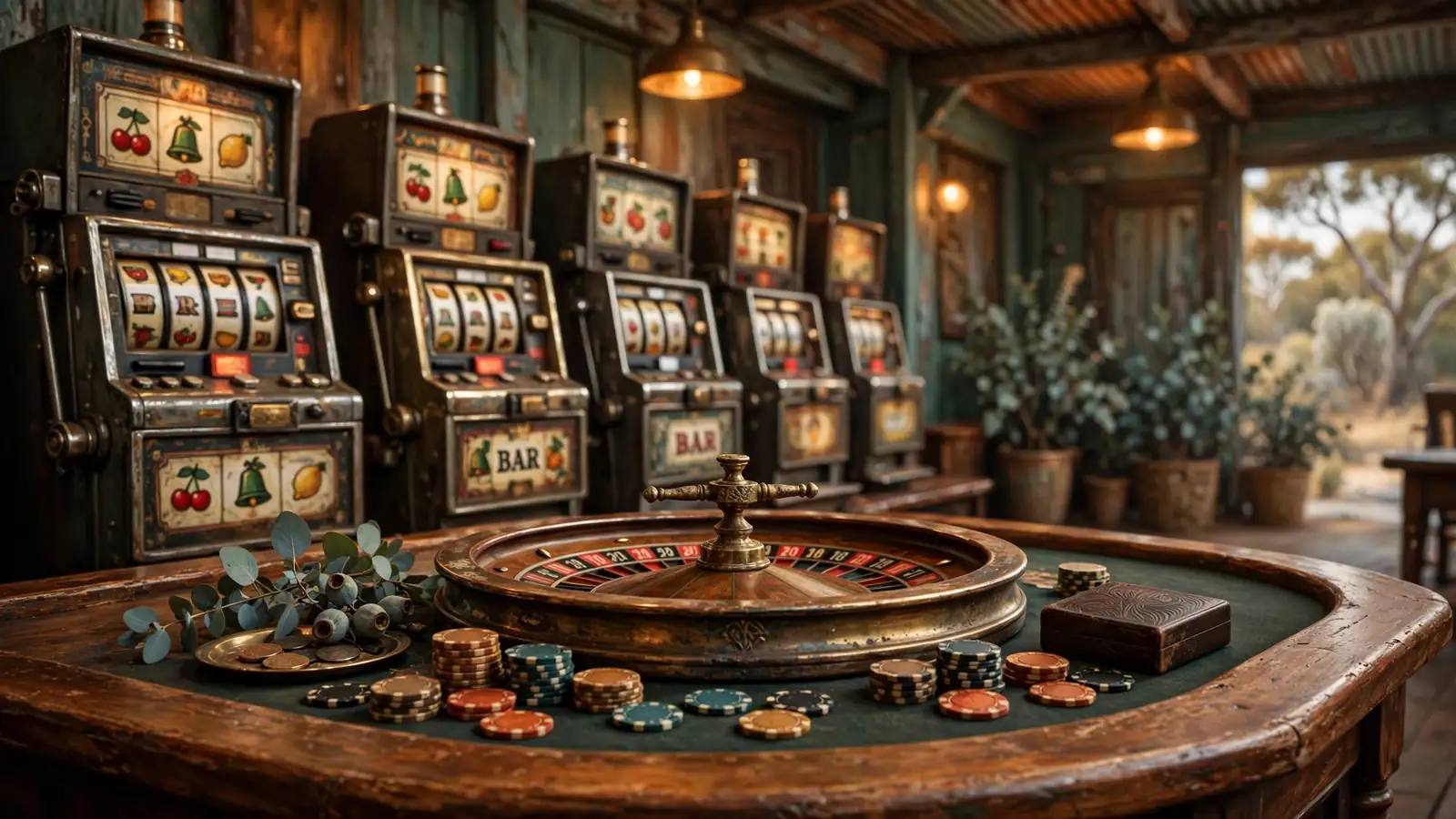
This is why craps table dice carry a different cultural weight from dice in a solitary game. The objects are familiar, but their public handling matters. A physical table makes visible who is acting and where the attention lies. The shooter’s gesture becomes a focal point, while the layout gives the surrounding players a common map. It is not merely a device for generating a result. It is a piece of casino architecture designed to organise looking.
The ritual also has boundaries. A craps table has its own vocabulary, gestures and expectations, and that can make it feel less immediately legible than a simple digital dice display. The layout is not decoration: it is the table’s grammar. A newcomer may see a field crowded with labels and chips before seeing a game that makes sense. The spectacle arrives first.
Real casino dice are therefore part of a larger impression: dice handled in public, a marked surface, a shooter, and a crowd whose attention gathers at the edge. Their physical presence can make the event feel immediate, but it does not turn chance into skill or make every participant’s fortunes identical. The table offers proximity, not control.

Online versions can borrow the language and look of a craps table, yet the traditional table’s social arrangement is a separate matter from the appearance of its layout. A screen may reproduce the markings; the gathering around the felt is harder to reproduce as a shared room. That difference is not a defect in one format or a virtue in the other. It is a difference in what the game asks its setting to do.
Craps endures in the imagination as a table game because it gives dice a public role. The toss is visible, the crowd is near, and the felt turns private wagers into a common spectacle. A small ritual, with a large audience.
Rules, Odds and the Meaning of “Best”
Rules are not the fine print around a dice game; they are the game’s architecture. They determine which outcomes count, how a stake is settled and what a player can choose before uncertainty takes over. Two games may both use dice and still ask for different kinds of attention. Their rules, rather than the familiar objects on screen, define the terms of the wager.

Odds describe the likelihood of an outcome, while payouts describe what a winning outcome returns. The relationship between them matters. A generous-looking payout can accompany a difficult result; a more modest return may be attached to an outcome that occurs more often. Neither feature alone says whether a game is favourable. The rules establish the probabilities and the payment structure together, and a meaningful comparison has to account for both.
This is why the phrase “best casino dice” has no stable answer in isolation. Best for what: a spare, easily understood rule set, several available choices, or a game whose terms can be assessed without a long detour through its instructions? Those are different preferences, not a universal ranking. A game with more options may reward careful reading, but complexity is not evidence of better value. Simplicity is not proof of fairness either.
The useful test is whether the rules make the consequences of a choice legible. They should state what qualifies as a win, what happens to losing and winning stakes, and whether any special condition changes settlement. Ambiguous wording matters because a player cannot assess odds from the dice alone. The printed or displayed terms supply the missing structure.
Rules also shape what “choice” means. Where a game offers different bets, each may carry its own probability and payout; comparing them requires more than noticing which one promises the largest return. The attractive number is only one side of the bargain. The less visible side is how often the relevant outcome is expected to occur under those rules.
There is no need to turn this into a hunt for a secret formula. A clear set of terms can make a game easier to understand, but it cannot make an uncertain result predictable. Nor does a confident label such as “best” settle the question. It usually conceals a preference: for pace, simplicity, variety or familiarity.
The soundest comparison begins with the rules and ends with a plain description of what they permit. Not a crown, but a fit.
What the Dice Decide
A casino dice game is not defined simply by the sight of dice. Dice are objects that produce a result; a game is the set of rules that gives that result meaning. The same throw could be irrelevant in one game and decisive in another. What matters is how the rules connect a face, a total or a combination to an outcome.
That distinction separates the instrument from the activity. Dice can supply uncertainty without being the whole game: a board, a wagering structure or other rules may determine what counts as success. Conversely, a compact digital game may use dice as its central randomising device, even when there is no physical table or visible pair of cubes. The medium changes the presentation, not the basic idea.
So, what casino game uses dice? There is no single answer. The phrase describes a family rather than one universal pastime, and the family resemblance lies in the role assigned to the dice. They provide an uncertain result within a framework designed by the game. Whether that result settles a wager directly or is interpreted through additional rules depends on the particular format.
This is also why dice should not be mistaken for a promise of fairness or control. A random-looking animation is presentation; the game’s rules and underlying system determine what outcomes mean. Nor does a familiar object make every dice game interchangeable. A pair of dice can sit at the centre of very different forms of play, each with its own logic and expectations.
The word “casino” adds a social frame: chance is organised as gambling, with stakes and outcomes governed by a particular game. The dice themselves have no intention, memory or sense of what happened before. They do not reward patience or correct a previous result. Meaning comes from the rules around them, and the uncertainty remains.

In Australia, this distinction is conceptual, not an invitation to participate in prohibited real-money online casino services. Gambling can cause serious harm, particularly to vulnerable people; any lawful gambling activity is for adults aged eighteen or older. A small object, a simple shape, and a surprisingly large human institution.
Strategy Without the Promise of Control
The phrase “casino dice strategy” can suggest a hidden lever: a sequence of choices that turns chance into something obedient. In practice, strategy is more modest. It is a way to decide what risks are acceptable, and to recognise what no decision can alter.
A player’s choices may shape exposure: how much is staked, which available wagers are considered, and when participation ends. Those choices matter to the scale and duration of a gambling session. They do not make the dice favour one person, nor do they convert a run of results into evidence that a reversal is due. Chance has no memory and no sense of fairness. It does not settle accounts.
This distinction is easily blurred because a dice game at a casino presents decisions in a vivid setting. The table, the other players and the moment of commitment can make a choice feel like influence over the outcome itself. But influence over a wager is not influence over the dice. The first belongs to the player; the second does not.
A useful approach to casino games that use dice begins, then, with boundaries rather than systems. A fixed spending limit can keep a session from expanding in response to disappointment or excitement. A decision to stop is not a prediction about what might happen next; it is a limit on further exposure. Chasing losses reverses that logic, treating past losses as a reason to risk more in pursuit of recovery. They are not a debt the next result must repay.
Strategy also means resisting the theatre of certainty. Patterns may appear in a sequence, and confident explanations may gather around them, but a story about past results does not command future ones. No betting routine can guarantee a win. A plan can organise decisions; it cannot remove uncertainty.
- Set a fixed spending limit
- Recognise what decisions cannot alter chance
- Use a decision to stop as a limit on exposure
- Chase losses to recover money
- Trust patterns in a sequence of results
- Assume a betting routine can guarantee a win
That is the quiet value of strategy: not mastery, but proportion. Gambling is for adults aged eighteen or over, and it can cause serious harm to vulnerable people. A person’s circumstances matter more than any elegant system. The most consequential choice may be to leave the game alone. A plain limit.
The Live Dice Table on Screen
A live dice table borrows the visual grammar of a room: a dealer, a felt surface, dice in view and a camera that makes the action feel shared. The screen does not merely display a result. It stages a social scene, with gestures and pauses that give chance a human scale.
That distinction matters. In a digital dice game without a live table presentation, the interface supplies the whole visible world: buttons, graphics and an outcome. A live production adds people and space, even when the participant remains alone at a device. The format can suggest company; it cannot make the experience communal by itself.
The dealer is part of the presentation, not a guarantee of fairness or an invitation to trust appearances. A camera can show a table, but the image alone does not explain the rules, the way outcomes are determined or the terms attached to play. Those belong to the game and its operator, not to the atmosphere. A polished studio is still a studio.
Live dice also place a familiar ritual inside a deliberately narrow frame. The table is visible, but the surrounding room is not; the dealer’s gestures are legible, while the histories and habits of the people watching remain outside the picture. It is theatre with a limited audience and a very tidy stage.
In Australia, the format does not alter the legal position: real-money online casino services are prohibited when offered to people in the country. A live presentation is no exception. Nor does the screen turn a prohibited service into a lawful one by making it resemble a traditional table.

For adults, gambling can carry serious harm, particularly for vulnerable people. The live format may make dice feel less abstract, but it does not soften the consequences of wagering. The camera changes the texture of the experience. Nothing more.
Where the Dice Are Rolled
A dice game carries the idea of a place with it. In a physical casino, that place is plain enough: a table, a marked surface, the small theatre of people gathered around a result they cannot call into being. The dice are objects in shared space. Their sound, movement and final position belong to the room, even when the wager belongs to one person.
A digital game relocates that image. The table becomes a screen, and the dice may appear as part of an interface rather than as objects handled in a venue. The setting is no longer a building one enters; it is a visual arrangement made by software. That change can make the game feel less social, though it does not alter the basic symbolism of dice: chance given a visible shape.
The distinction matters in Australia, where a digital setting is not simply a casino table delivered by another route. The Interactive Gambling Act 2001 prohibits operators from providing real-money online casino games to people in Australia. A screen may depict a game of chance, but depiction and lawful local provision are separate matters. The Australian Communications and Media Authority can seek to have access to prohibited services blocked. Physical casinos and online casino services therefore do not occupy equivalent legal ground.
For adults aged eighteen or older, the physical venue remains a setting with public rules and an identifiable location. A digital representation can seem placeless, arriving through a device rather than at a doorway. That absence of place should not be mistaken for absence of consequences: gambling can cause serious harm, particularly for vulnerable people.
One setting has walls. The other has a screen. The law notices the difference.
Created by the ”Wildtokyoslotshubau.com” editorial team.