Plinko Casino Australia: Games, Payments and Rules
 Available in AU
Plinko is a label used for slot-style products, so provider, payment and review details matter more than the name alone.

Table of Contents
- The Slot Behind the Plinko Name
- Online Versions, Offshore Boundaries
- Real-Money Play and the Price of a Cashout
- What Changes from One Plinko Game to Another
- Reading a Plinko Review Without Mistaking It for Evidence
- Australia’s Rules, and the Sites They Reach
- Free Play and the Question of What It Proves
- Crypto Payments, Scripts and the Limits of a Shortcut
- Bonus Terms: When a Match Is Not Money
- Guru Ratings, Lucky Names and the Evidence Gap
The Slot Behind the Plinko Name
“Plinko” began as the name of a familiar kind of falling-disc game, but in digital gambling it is also used for slot-style products. The label suggests a particular visual idea: a piece moving through a field of pegs towards a result. A game carrying that name may therefore look unlike a traditional reel-based pokie while still being presented within the broader slot category.
That distinction matters. A title’s appearance does not, by itself, tell much about how its software is made or what sits behind its presentation. The word “Plinko” can serve as a theme, a product name or a loose description. Similar names may point to games with different interfaces and designs; the shared label is not evidence that they come from the same maker or behave in the same way.
The software provider is part of that identity. Providers create and maintain games, and their work shapes the visual language, sound, pacing and presentation that distinguish one product from another. A familiar theme can be interpreted in more than one way: one maker may make the falling-object image central, while another may place greater emphasis on a slot-like frame around it. Those choices affect the character of a game, even when the name on the screen appears to promise something recognisable.
Choosing a casino for Plinko in Australia calls for checking the operator details available before you play. This list provides a concise reference to licensing and, where supplied, deposit or payout information.
License: Curacao (operating since 2017) · Min. deposit: A$20 Uptown Pokies has operated since 2017 under a Curacao licence. Its stated minimum deposit is A$20.
License: Curacao, operated by Dama N.V. 7Bit Casino is licensed in Curacao and operated by Dama N.V.
License: Curacao OGL/2024/1335/0780 · Min. deposit: EUR 20 Vegaz Casino lists Curacao licence OGL/2024/1335/0780. Its stated minimum deposit is EUR 20.
License: Curacao eGaming OGL/2024/923/0383 (Antillephone N.V.) · Min. deposit: A$30 WinSpirit Casino lists Curacao eGaming licence OGL/2024/923/0383, issued through Antillephone N.V. Its stated minimum deposit is A$30.
License: Curacao Gaming Control Board JustCasino is licensed by the Curacao Gaming Control Board.
License: Tobique Gaming Commission · Payout speed: crypto ~10-15 minutes, fiat 1-5 days · Min. deposit: A$30 SkyCrown is licensed by the Tobique Gaming Commission. The supplied payout estimates are around 10–15 minutes for crypto and 1–5 days for fiat; the minimum deposit is A$30.
License: Curacao eGaming (Dama N.V.) JeetCity Casino is licensed by Curacao eGaming and operated by Dama N.V.
License: international iGaming licence – jurisdiction not named in the source · Payout speed: PayID 1-24 hours · Min. deposit: A$30 (PayID from A$10) House of Pokies has an international iGaming licence, though the source does not name the jurisdiction. Its stated PayID payout time is 1–24 hours; the minimum deposit is A$30, or A$10 for PayID.
License: Curacao Gaming Control Board OGL/2023/176/0095 (Hollycorn N.V.) Neospin lists Curacao Gaming Control Board licence OGL/2023/176/0095, held by Hollycorn N.V.
License: Curacao – Antillephone N.V. (Versus Odds B.V.) · Min. deposit: EUR 20 Thor Casino lists a Curacao licence through Antillephone N.V. (Versus Odds B.V.). Its stated minimum deposit is EUR 20.
This is why “Plinko slot” is better understood as a category description than as a precise technical label. It brings together a visual reference and a gambling format, but does not settle the question of authorship. The provider’s name, when clearly stated, is a more useful clue to the game’s production than a broad theme alone. If the maker is not identified, the label leaves an important part of the description unresolved.
A similar ambiguity surrounds phrases such as “Gods of Plinko” or “Plinko Rush”. Such wording can sound like the title of a particular game, but a name on its own does not establish who produced it, how it is structured or whether another title shares its design. The same applies to references to a “temple” or a “top” Plinko game: evocative language can describe a theme or imply a ranking without supplying a meaningful account of the product. A name is the beginning of identification, not the evidence for it.
That is a small but telling feature of the digital slot trade. Its vocabulary is often assembled from recognisable images, genre labels and dramatic titles. The result can make a game seem familiar before its maker or format is clear. The surface does a lot of work.
Provider information can also give context to a game’s published return figure, though figures should not be transferred from one title to another. KA Gaming’s slot RTP percentages typically fall within a range of 94% to 96%. That is a general range for its slots, not a stated return for every game associated with the provider, and not a figure that can be assigned to an individual Plinko title without its own published details. The distinction is elementary, yet easy to lose when a provider name and a game name appear side by side.
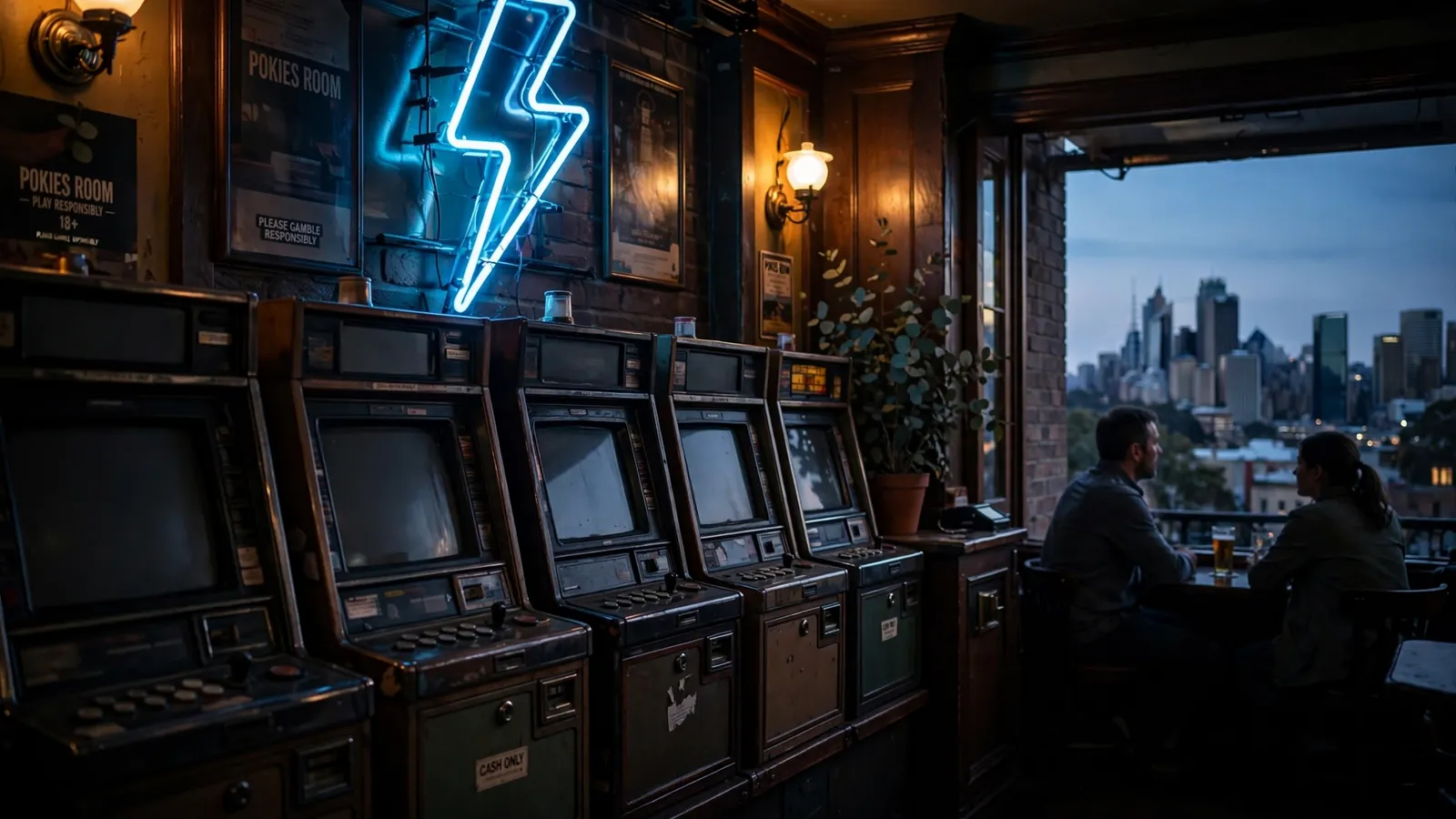
RTP, or return to player, is a theoretical measure used to describe a game’s long-run return under its stated model. It is not a forecast of what any particular session will produce. Nor does a percentage belonging to a provider’s wider catalogue establish the value for a specific game. A product-level figure is needed for that. The maker’s general profile can offer background; it cannot substitute for the game’s own specification.
The slot label also has cultural weight. In Australia, “pokies” is the ordinary local word for gaming machines, a term shaped by decades of their presence in pubs and clubs as well as casinos. A Plinko-style digital product borrows some of that recognisable slot identity while drawing on a different visual tradition. It is not simply a physical machine translated onto a screen. It is a software product that adopts and recombines familiar gambling imagery.
For that reason, descriptions of Plinko as a slot machine, a slot game or a slot-style product should be read as related but not identical claims. One may refer to the broad category, another to the presentation, and another to a particular title. The provider’s identity and the product’s own published information are what make those distinctions concrete. Without them, the name remains a signpost rather than a specification.
Names travel easily. Details do not.

Online Versions, Offshore Boundaries
Searching for Plinko online can make the game seem like a local product with a local home. It is not. A page may be visible from Australia, accept Australian payments and describe itself as an online casino, while the company behind it operates under a licence issued elsewhere. Those details explain why the service can appear available; they do not establish that it is lawful to offer here.
The distinction matters because the Interactive Gambling Act 2001 restricts the provision of online casino services to people in Australia. Real-money casino-style games offered to customers physically in the country fall within a prohibited category. Plinko’s presence beneath a casino heading does not create an exception. Nor does presenting it as a Plinko game online, a Plinko pokies title or a live casino option change the jurisdictional question. Labels travel more easily than legal authority.
That makes “available” an unreliable word. A site can load, display games and offer Australian payment methods without being authorised to provide online casino gambling to Australians. Offshore licences belong to the legal framework of the places that issue them. They are not Australian permissions, and they do not displace Australian law. An address on a screen is not a local licence.
This is the uneasy geography of offshore gambling: the business may be registered and regulated abroad, the service may be reachable from an Australian connection, and the person it is directed towards may be in Australia. These are separate facts, not competing descriptions of one fact. A foreign licence can tell something about the operator’s stated regulatory setting; it cannot turn a prohibited service into a lawful Australian one.

For that reason, a search for an online casino with Plinko may return pages that look polished and locally familiar. Australian dollars, familiar payment options and Australian-facing language can make an offshore service feel close to home. But payment acceptance is a commercial choice, not evidence of domestic approval. The same applies to claims that a particular Plinko casino online is “available” to Australians: the claim may describe technical access, not legal standing.
The difference between access and permission is often blurred by the internet’s ordinary habits. A website appears, so it is tempting to regard it as part of the local marketplace. Yet a visible service can still be an offshore operation, subject to rules elsewhere and restricted from serving people here. The border is not always a border on a map. Sometimes it is the line between where a company is licensed and where its customers are located.
Players are not criminalised for using offshore gambling sites. That fact should not be confused with a legal approval of the service. The law’s restriction concerns operators providing prohibited online casino services to people in Australia; the position of the player is different. A careful account has to hold both ideas at once, rather than turning one into a substitute for the other.
This distinction also explains why a page about a Plinko casino game online can sound more certain than it is. “Australian players welcome” is not the same statement as “lawfully offered in Australia”. A site may invite customers, process a payment or display a game, but those actions do not settle whether the operator is entitled to provide the service here. Marketing language tends to flatten those differences. Jurisdiction does not.
Legal Warning
Under the Interactive Gambling Act 2001, it is prohibited for operators to provide online casino services to people in Australia.
The phrase “Plinko live casino” can add another layer of suggestion, implying a recognised category or a locally established offering. It remains a description used by a site, not a legal status. Likewise, a list of online Plinko casino games says what a business presents on its pages, not whether those games may lawfully be supplied to Australians. The word “online” describes the means of access; it says nothing by itself about the reach of Australian law.
None of this makes offshore casino pages imaginary. They exist and may be reachable, and some accept Australian payments under licences from other jurisdictions. But reachability is not endorsement, and a payment channel does not redraw the legal map. The online world is unusually good at making distance feel irrelevant. Regulation is less accommodating.
There is a social reason to keep the distinction plain. Gambling services are not merely pieces of software crossing borders; they are businesses seeking customers in places where rules reflect local judgments about harm, responsibility and public oversight. Australia’s framework does not permit operators to offer real-money online casino games to people here. The fact that a service can address an Australian audience from offshore does not erase that judgment.
For anyone encountering Plinko presented as an online casino game, the useful question is therefore not only whether the page opens. It is where the operator’s authority comes from, and whether that authority reaches the Australian customer it appears to invite. In this market, offshore access and lawful local provision are not synonyms. A vulnerable person can suffer serious harm from gambling, whatever name appears on the game. Availability is the easier claim. Legitimacy is the harder one.

Real-Money Play and the Price of a Cashout
A balance displayed on a screen can look like money already possessed. The distinction becomes less comfortable when a player asks for it to leave the account. At that point, the important figures are not only wins or losses but the minimum amount that can be withdrawn, the documents required to verify an account, and the rules applied before a payment is released.
For offshore gambling sites, minimum withdrawal thresholds commonly sit between A$75 and A$150. A balance below the stated floor may therefore remain unavailable for transfer, even if it appears in the account as winnings. The threshold is not a fee deducted from the balance; it is a condition on when a withdrawal request can be made. That difference matters, though it does not make the money more accessible. An account can show a positive figure while the amount remains short of what the site will process.
The threshold also changes the practical meaning of a small win. If a player has less than the required minimum, the options may be limited by the site’s terms: the balance may have to remain there, or further play may be needed before it reaches the withdrawal floor. That is not the same as a promise that further play will produce the missing amount. Gambling can cause serious harm, particularly for vulnerable people, and a balance held behind a threshold is no reason to treat continued betting as a way to earn income or recover losses. The screen is not a bank statement.
Withdrawal Thresholds
Offshore gambling sites commonly set minimum withdrawal thresholds between A$75 and A$150, meaning balances below this floor cannot be transferred.
The first cashout can bring another kind of delay: identity checks. Sites commonly ask new withdrawing customers to provide KYC material, which may include a passport or driver’s licence together with a utility bill. These documents are used to connect the account to a named person and an address. The request can arrive after a balance has accumulated, which makes the timing feel consequential; verification is not merely a formality when the money cannot move until the paperwork is accepted.
This is one reason a displayed balance and a payable balance should not be treated as synonyms. A withdrawal can depend on the account being verified, on meeting the minimum, and on the site’s own processing rules. Each condition sits between the number on the screen and money received. A player may have completed a game and still have administrative steps ahead. Paperwork has its own suspense.
The phrase “real-money Plinko” can obscure that sequence by making play sound like a single transaction: stake, result, cashout. In practice, the movement of funds has separate stages, and the terms governing one stage do not guarantee the next. A win does not itself establish that a withdrawal request meets the site’s threshold or that identity checks are complete. Nor does an amount shown in an account settle the question of when, or whether, it can be transferred.
There is a further distinction in Australia. Under the Interactive Gambling Act 2001, operators are prohibited from providing real-money online casino games to people physically located in the country. Players themselves are not criminalised for using offshore sites, but the legal restriction on operators remains. That context is relevant to any account balance: a payment screen may describe a service offered offshore, not a locally authorised casino arrangement. The availability of a page or account does not change the legal position.

A cashout, then, is not simply the reverse of a deposit. It is a point at which thresholds, identity checks and the site’s stated conditions become visible together. The practical cost may be measured not only in money but in a balance that cannot yet be moved, documents that must be supplied, and uncertainty about processing. None of those details turns a gambling account into a reliable place to hold funds. The apparent simplicity ends at the withdrawal button.
What Changes from One Plinko Game to Another
“Plinko” sounds like a single, plainly defined game: a ball falls through a field of pegs and lands in a payout zone. In practice, the label can cover distinct implementations. The visible descent may stay familiar while the rules beneath it change—how outcomes are distributed, which positions carry larger prizes, and how frequently those prizes are expected to appear.
That matters because a recognisable board is not a full description of a game. A version with many modest outcomes can feel quite different from one that concentrates more of its potential return in rare, larger results. The first may produce a steadier-looking sequence; the second can bring longer stretches without a notable win. Neither pattern promises what a particular round will do. A ball’s path is an animation of an outcome, not evidence that the next path is due to be more generous.
The comparison is not simply between “safe” and “risky” versions. Risk is about the shape of possible results as well as their average. A game can advertise an attractive theoretical return and still have a volatile distribution, meaning individual play may diverge sharply from that figure. Conversely, a less dramatic-looking presentation does not establish that outcomes are gentle. The label alone tells little.
- Check the specific game version’s rules
- Look for the published RTP of the exact title
- Assume all Plinko games behave the same
- Apply a provider’s general RTP to a specific game
What an advertised return can—and cannot—say
Return to player, or RTP, is a theoretical measure across a very large volume of play. It is not a forecast for a session, a personal refund rate, or a promise that a particular share of stakes will come back. A stated RTP can help distinguish one published configuration from another, but only if it refers to the exact game version being considered. Where the figure is absent, unclear, or detached from a named configuration, the comparison has a missing piece.
KA Gaming slot RTP percentages typically sit between 94% and 96%. That range is useful as a provider-level reference, not as a universal Plinko figure: it should not be assigned automatically to every game carrying the Plinko name, or treated as the return of a particular board. A percentage without its game context is a label, not an answer.
Even when two games publish the same RTP, they need not feel alike. Their payout distributions may differ, as may the frequency and scale of outcomes. In a Plinko-style game, the placement of payout values across landing zones is therefore as relevant to the experience as the headline percentage. A high-value zone can be conspicuous on screen without being a common destination. Bright design is not probability.
Other details worth separating are the number and arrangement of landing positions, the available risk settings, and whether those settings alter the payout structure. These are not decorative variations if they change the range or spread of possible outcomes. They are part of the game’s mathematics. A change in graphics alone, by contrast, may leave the underlying rules untouched.

The phrase “casino Plinko” can therefore describe an idea more reliably than a specification. One game may borrow the familiar pegboard image; another may use different rules, payout patterns, or presentation while keeping the same name. Similarity on screen is not proof of equivalence.
A cautious comparison starts with the rules and the stated return for the exact version, then treats both as descriptions of a model rather than predictions of an individual result. Where details cannot be matched, claims of one game being better than another have little footing. The pegs may be visible. The assumptions often are not.
Reading a Plinko Review Without Mistaking It for Evidence
A Plinko casino review can sound precise while saying very little. Words such as “exciting”, “generous” or “high-paying” are judgments, not measurements. A useful review separates description from evidence: it identifies what game is being discussed, names the provider where that information is available, and gives a concrete figure when making a claim about returns.
A stated return to player (RTP) is more informative than a promise of frequent wins, but it needs context. KA Gaming slot RTP percentages typically fall between 94% and 96%. That range describes a provider’s slots generally; it does not establish the RTP of every Plinko-branded game, or tell how any individual session will turn out. A review that attaches a figure to a particular title should make clear which game and version the number belongs to. Without that link, precision is mostly decoration.
The same discipline applies to a “Plinko Rush” or “Plinko Deluxe” review. A title alone does not establish who made the game, what its rules are, or whether the review concerns the same product found elsewhere under a similar name. “What is Plinko casino?” is best answered by identifying the specific game being described, rather than treating a shared label as proof that all versions are alike.
Review Analysis
- Distinguish descriptive measurements from subjective judgments
- Verify if RTP figures are attributed to the specific title or the provider’s general catalogue
- Treat promotional language and “free” labels as marketing rather than technical proof
Review language also has a point of view. A page may explain a product, or it may be arranged to steer attention towards a particular service. That does not automatically make every detail false, but it changes what the detail can prove. Claims about a game’s features should be distinguishable from praise, and a stated RTP should be attributable to the title rather than borrowed from a provider’s wider catalogue. A confident tone is not a testing method.
The word “free” needs similar care. It may describe a mode or an offer, but the label itself cannot establish what is available or what the experience demonstrates. A review should specify what it actually examined instead of allowing a broad heading to stand in for a description.
The useful test is modest: can the claim be checked against a named game, a defined feature or a clearly attributed figure? If not, it belongs in the category of opinion. Reviews can help organise information; they cannot turn promotional language into proof. A neat distinction.
Australia’s Rules, and the Sites They Reach
Plinko’s Australian context is shaped less by the name attached to a game than by the law governing the service behind it. The Interactive Gambling Act 2001 prohibits operators from providing online casino-style games to people in Australia. That category includes slots and other casino games, whether a site presents them as Plinko or under a different label. The rule concerns operators; people who use offshore sites are not criminalised for doing so.
Enforcement sits with the Australian Communications and Media Authority (ACMA), the federal regulator responsible for applying the Act and monitoring compliance with national interactive-gambling laws. Its reach is not limited to issuing statements about the rules. ACMA can ask Australian internet service providers to block websites that offer prohibited interactive gambling services or advertise them locally.
The resulting list is substantial. Following enforcement actions, ACMA has blocked more than 1,455 illegal gambling and affiliate websites since November 2019. Blocking is a practical barrier, not a change in the underlying legal status: a site that becomes inaccessible through an Australian provider has not thereby become lawful, and a familiar game name does not alter the service’s classification.
There is also a measure of market withdrawal. Since ACMA began enforcing the rules in 2017, accounts of the number of illegal services that have left Australia do not align: one gives a total above 210, while another puts it above 190. Both describe services withdrawing from the Australian market, rather than websites blocked by internet providers. Those are different enforcement outcomes, and the figures should not be folded into one.
The distinction matters because “available” can mean several things: a page may be visible, an account may remain accessible, or a provider may have ceased serving the country. None of those circumstances turns prohibited online casino services into lawful Australian offerings. Plinko casino searches therefore sit inside a broader regulatory system that treats the operator’s service—not its branding—as the relevant object.
There is a distinctly administrative texture to this arrangement: federal rules, a regulator, and access restrictions carried out by internet providers. The law does not need to name every game that later appears online. Its categories do the work. A label is no exemption.
Free Play and the Question of What It Proves
A free-play label changes the apparent stakes, not what can be concluded about a Plinko game. A demonstration may let someone see a game’s presentation or follow its basic sequence without wagering money. It does not, by itself, establish how a real-money version behaves, what return it offers, or whether a result in one mode predicts anything in another.

That distinction matters because the word “free” can carry more weight than it deserves. It may describe a mode, an offer, or simply wording attached to a title. Those are not interchangeable. A reference to a “Pond of Plinko” free slot, for instance, would need to be assessed as a specific product claim, not treated as proof that a particular game or feature exists. Names do not verify mechanics.
Free spins are another phrase that can blur categories. Spins, where offered, are not the same thing as a demonstration mode, and the phrase alone says nothing about conditions or outcomes. Nor does a free-play screen establish that winnings can be withdrawn. The distinction is plain, if easily obscured.
In Australia, this discussion also sits within a legal boundary: the Interactive Gambling Act 2001 prohibits operators from providing real-money online casino games to people in the country. A free demonstration should not be mistaken for permission to promote or provide prohibited gambling services. The label does not change the rule.
Free play may therefore be understood as a limited viewing experience, not a test of real-money prospects. It cannot show that a game is safe, fair in every context, or likely to produce a particular result. Those conclusions require evidence about the actual game and its terms; an appealing name, a simulated result or a free-spin phrase cannot supply it.
Casino gambling is for adults aged 18 or older, and problem gambling can cause serious harm, particularly to vulnerable people. Free mode does not erase that wider context. Its value is modest: it can make a presentation visible without making a claim about money true.
Crypto Payments, Scripts and the Limits of a Shortcut
Crypto payments and a Plinko script belong to different conversations. One concerns moving value; the other usually means software code associated with creating or modifying a game. The shared word “Plinko” does not make either one evidence that a product is fair, secure or legitimate.
A specialist review reports that crypto withdrawals can clear faster than other methods, while network fees and conversion spreads may reduce the amount ultimately received. That is a limited comparison, not a promise about timing or value: the result depends on the payment route and the terms in force. A transfer that moves quickly can still arrive diminished. Speed is only one part of the arithmetic.
The phrase “Plinko script” can also refer to very different things, from code discussed by developers to a claim that a ready-made game can be deployed or altered. The label alone says little about who wrote the code, what it does, or whether the resulting game has been independently tested. A polished demonstration is not a technical audit. Nor does the presence of cryptocurrency settle those questions; payment technology and game integrity are separate matters.
In Australia, that distinction sits within a wider legal boundary: real-money online casino games are prohibited services when offered to people in the country. A crypto option does not change the nature of the service or make it lawful. The absence of a familiar payment intermediary is not a certificate of legitimacy.
There is a broader social habit at work here: technical vocabulary can make uncertainty look like control. “Blockchain,” “script” and “instant” sound precise, yet none tells a player what the underlying arrangement permits or what protections exist. The important distinction is between a payment mechanism and the service receiving it, and between code and evidence about how that code behaves.

Crypto is not a shortcut around scrutiny. And a script is not proof. Anyone affected by gambling should be at least eighteen; gambling harm can be serious, particularly for vulnerable people.
Bonus Terms: When a Match Is Not Money
A Plinko bonus can look like a balance increase while remaining money with conditions attached. Bonus funds are not cash: any winnings derived from them may be locked behind wagering requirements before they can be withdrawn. A no-deposit offer changes the route by which the bonus is granted, not the distinction between a promotional balance and withdrawable funds.
The arithmetic matters more than the headline. A specialist review describes a $100 bonus carrying a 40x wagering requirement: the associated wagering obligation is $4,000 before bonus-derived winnings become eligible for withdrawal. That figure illustrates one reported offer, not a standard term across games or operators. The multiplier may be attached to the bonus, the deposit, or both; the wording determines which amount is used.
Contribution rules add another layer. A specialist review reports blackjack contributing only 10% toward wagering requirements. Under such a rule, a bet does not necessarily count in full, and a game that appears to advance the requirement may do so slowly. The advertised bonus value therefore says little on its own about the amount of qualifying play required.
Names can obscure this distinction. A search for a Gods of Plinko bonus, or for a version associated with the Netherlands, does not establish that the terms are the same across offers or jurisdictions. The label is not the contract. The operative details are the qualifying games, contribution rates, eligible balance, and any conditions governing when wagering is complete.
A match is an inducement to play, not an immediate addition to spendable funds. That is the quiet hinge in the offer: the number shown first may be the least useful number in the terms. In Australia, advertising real-money online casino services is prohibited, so bonus language should not be mistaken for an invitation to take up such an offer. The obligation remains the point.
Guru Ratings, Lucky Names and the Evidence Gap
A Plinko rating attached to a casino “guru” may look like a settled verdict, but the label does not explain how that verdict was reached. It might refer to a game, a site, or an editorial score applied to both. Those are different objects, and a confident number beside either one cannot make them interchangeable.
The useful question is what sits beneath the rating. A review that identifies the game’s provider and gives a specific, checkable basis for its assessment offers more to examine than a page built around adjectives such as “trusted” or “top-rated”. Even then, a review is an account of evidence, not the evidence itself. Its claims need to be read for scope: a score for one version says little about another version carrying the same broad Plinko name.
“Lucky” is a name, not a measure. A lucky-themed Plinko title may suggest a mood or a design, but it cannot establish that outcomes are more favourable, that the software has been tested, or that a reviewer’s rating has independent support. The same distinction applies to a UK-facing label: geography in a page title does not, by itself, settle what a rating measures or whether it has relevance to Australian conditions.
There is a small industry of borrowed authority in gaming language. A guru sounds like a person who has inspected the machinery; a rating looks like the residue of that inspection. Unless the page explains its method and names the particular version being assessed, the impression can outrun the information. A title can attract attention. It cannot carry the proof.
Published by the Wildtokyoslotshubau.com team.