Casinos That Accept Google Pay in Australia
 Available in AU
Everyday wallet use is widespread, but online acceptance and withdrawal options depend on the individual service.

Australia’s Wallet Culture, and the Limits of What It Tells Us
In Australia, paying by tapping a card is not a novelty that needs explaining. Contactless credit and debit cards are accepted almost everywhere, and mobile wallets such as Google Pay and Apple Pay have a similarly broad everyday reach. The phone has joined the card as an ordinary way to pay: a small change in the object held at the counter, rather than a wholesale change in how payment feels.
That familiarity shapes the language around online payments. A person accustomed to tapping a phone for groceries, transport or a café bill may naturally expect the same wallet to be useful elsewhere. The expectation is understandable. It is not evidence that a particular service accepts that method.
Australians are also comfortable moving among cards, mobile wallets and services connected to bank accounts, including PayPal. These methods coexist rather than forming a single ladder from old to new. A card can remain the default in one setting while a wallet is quicker in another; a bank-linked service may suit a different kind of purchase. Payment habits are practical, and often situational.
Google Pay availability can vary by casino and may change, so check the payment options shown for Australian players before signing up. The details here provide context about each operator but do not confirm that any of them accepts Google Pay.
License: Curacao (operating since 2017) · Min. deposit: A$20 Uptown Pokies has operated since 2017 under a Curacao licence, and its minimum deposit is A$20. The supplied details do not confirm Google Pay availability.
License: Curacao, operated by Dama N.V. 7Bit Casino is operated by Dama N.V. and holds a Curacao licence. The supplied details do not confirm Google Pay availability.
License: Curacao OGL/2024/1335/0780 · Min. deposit: EUR 20 Vegaz Casino lists Curacao licence OGL/2024/1335/0780 and a minimum deposit of EUR 20. The supplied details do not confirm Google Pay availability.
License: Curacao eGaming OGL/2024/923/0383 (Antillephone N.V.) · Min. deposit: A$30 WinSpirit Casino lists Curacao eGaming licence OGL/2024/923/0383, issued through Antillephone N.V., and a minimum deposit of A$30. The supplied details do not confirm Google Pay availability.
License: Curacao Gaming Control Board JustCasino is listed with a Curacao Gaming Control Board licence. No payment or deposit details are provided, so Google Pay availability cannot be confirmed.
License: Tobique Gaming Commission · Payout speed: crypto ~10-15 minutes, fiat 1-5 days · Min. deposit: A$30 SkyCrown lists a Tobique Gaming Commission licence and a minimum deposit of A$30. Its stated payout times are around 10–15 minutes for crypto and 1–5 days for fiat; the supplied details do not confirm Google Pay availability.
License: Curacao eGaming (Dama N.V.) JeetCity Casino is listed under Curacao eGaming, with Dama N.V. named as the operator. The supplied details do not confirm Google Pay availability.
License: international iGaming licence – jurisdiction not named in the source · Payout speed: PayID 1-24 hours · Min. deposit: A$30 (PayID from A$10) House of Pokies lists an international iGaming licence, though the jurisdiction is not named. Its minimum deposit is A$30, or A$10 with PayID, and PayID payouts are listed at 1–24 hours; Google Pay availability is not confirmed.
License: Curacao Gaming Control Board OGL/2023/176/0095 (Hollycorn N.V.) Neospin lists Curacao Gaming Control Board licence OGL/2023/176/0095, with Hollycorn N.V. named. The supplied details do not confirm Google Pay availability.
License: Curacao – Antillephone N.V. (Versus Odds B.V.) · Min. deposit: EUR 20 Thor Casino lists a Curacao licence through Antillephone N.V., with Versus Odds B.V. named, and a minimum deposit of EUR 20. The supplied details do not confirm Google Pay availability.
There is a social history in that ease of switching. The modern wallet is less a single object than a collection of routes to money, each made familiar through repetition. Contactless cards made the tap routine; mobile wallets brought the same gesture onto a phone. For consumers, the distinction between the device and the payment instrument can become easy to overlook. The screen presents a neat surface. Behind it, acceptance still depends on the merchant and the service.
That difference matters when everyday habits are carried into searches about online pokies. A broad comfort with Google Pay across Australian shops does not establish that an online gambling operator accepts Google Pay, or that any particular site does. A familiar logo on a phone says something about the wallet’s place in daily life; it does not settle the rules of a separate commercial service.
The distinction is not a technicality. Payment methods do not travel everywhere merely because they are widely used. A shop, a transport provider and an online platform each make their own arrangements. The Australian pattern of card and wallet use can explain why people expect a phone-based payment option to be available. It cannot establish what an individual operator offers.
Even the phrase “Australian online casino” carries more weight than a payment preference. Under the Interactive Gambling Act 2001, operators may not provide real-money online casino games to people physically located in Australia. Casino-style games, including poker, blackjack, roulette and slots, fall within the prohibited services. The Australian Communications and Media Authority is responsible for enforcing the Act. The law draws a line around what operators may provide, not a guarantee that a familiar payment method will be available wherever an online service can be encountered.

Australian consumer law does not protect players who use offshore casinos. That is a material difference between tapping a phone at an ordinary local business and dealing with an offshore gambling service. The payment gesture may look much the same; the protections surrounding the transaction do not. Familiarity can smooth a payment, but it cannot make the circumstances equivalent.
There is a dry irony in the way modern payment systems make distant services feel close. A wallet on a phone compresses a complicated chain of institutions into a tap, and the tap looks the same whether the purchase is routine or consequential. Convenience conceals distinctions. It does not erase them.
This is why broad claims about Australian payment culture need careful boundaries. “Accepted almost everywhere” describes the everyday reach of contactless cards and mobile wallets across the country. It is not a universal promise covering every type of business, every online service or every transaction. The words point to a strong social habit, not an exhaustive directory.
The habit itself is real. Australian consumers move among physical cards, phone wallets and bank-linked services without treating those changes as unusual. That makes Google Pay a recognisable part of daily financial life, rather than an unfamiliar experiment. But the status of a wallet in ordinary commerce and its status in online gambling are separate questions, shaped by different providers and, in this market, by a distinct legal boundary.
Legal Warning
Under the Interactive Gambling Act 2001, providing real-money online casino games to people in Australia is prohibited, and Australian consumer law does not protect players using offshore casinos.
A search for a mobile casino or online pokies that accept Google Pay often begins with an everyday assumption: if the wallet works in so many places, perhaps it works here too. The assumption describes a consumer’s experience, not an operator’s payment policy. It cannot identify a service, confirm acceptance or turn a prohibited offering into a lawful one.
The useful conclusion is modest. Australia’s broad use of contactless cards and mobile wallets explains why phone payments feel ordinary. It also explains why people may expect digital wallets to appear across more settings. But payment culture is context, not proof. The gap between the familiar tap and a particular online gambling service remains.
Google Pay Acceptance Is a Site-Level Question
A mobile wallet can be commonplace in Australian shops and still tell little about whether an online gambling operator accepts it. Payment acceptance is not a property that transfers automatically from one setting to another. It depends on the particular service, the way its cashier is configured and the rules applying to the transaction. A general statement that Google Pay is widely used in Australia cannot establish that an online casino takes it.
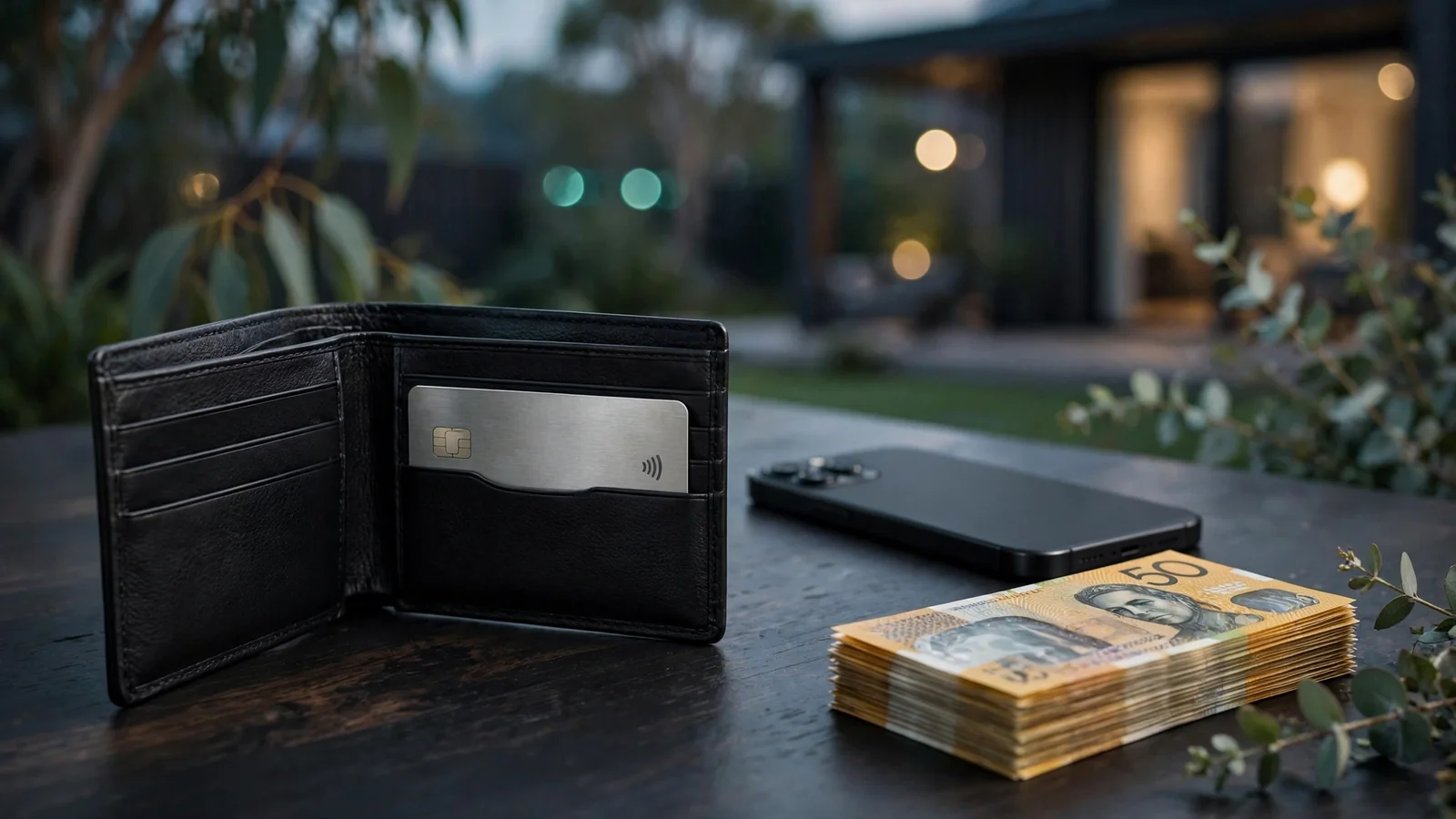
That distinction matters because payment logos can look more conclusive than they are. A logo may indicate that a method is familiar, or that it is available somewhere within a broader payment network; it does not, by itself, show that a given operator offers it to Australian customers. Nor does a list assembled for a different country or a different kind of service settle the question for Australia. The detail belongs to the individual site, not to the wallet’s reputation.
There is a more fundamental boundary in this market. The Interactive Gambling Act 2001 makes it illegal for operators to provide real-money online casino games, including poker, table games and pokies, to people located in Australia. The Australian Communications and Media Authority is responsible for enforcing that law. In other words, a list framed as a shopping guide to Australian casino sites accepting Google Pay would risk presenting prohibited services as available options. A familiar payment method does not change the legal status of the service it might be used to pay for.

That is why naming a “best” Google Pay casino would be more than an unsupported ranking. It would turn a question about payment technology into a recommendation for online casino play. The distinction is not rescued by calling the site offshore, by describing it as accessible, or by adding a commercial disclaimer. Australian consumer law does not protect people who use offshore casinos. The protective language of consumer advice cannot make that exposure disappear.
A site-level question still has a useful meaning when treated as a matter of careful interpretation rather than an invitation to choose an operator. The relevant issue is whether a particular service’s own cashier identifies Google Pay as an available method for the relevant customer and transaction. That information can differ between services and can change. A payment option appearing in a general description, an old review or a wallet’s list of supported merchants is not equivalent to a live indication in a specific cashier.
The word “available” also needs care. A payment method can be recognised in one part of a service and not another, or be subject to conditions that are not evident from a logo. A cashier is where payment choices are presented in the context of a transaction; its contents are more pertinent than broad claims about a wallet’s popularity. Even then, the presence of an option does not make the underlying gambling service lawful in Australia.

This is where online gambling differs from the ordinary retail setting. In daily commerce, people move among cards, mobile wallets and bank-linked services according to what a merchant accepts. That flexibility is part of the country’s payment culture. But the same habit cannot be carried over as an assumption about gambling operators. Retail acceptance answers a retail question. It does not answer whether an online casino accepts Google Pay, and it does not establish that the casino may lawfully offer real-money play to Australians.
There is also an identity-checking stage around financial activity. Online casinos generally ask customers to complete a Know Your Customer assessment before handling financial transactions. That process is about establishing and checking a customer’s identity; it should not be confused with payment-method acceptance. A wallet option, if displayed, would not replace identity checks or resolve the legal position of the operator. Payment convenience and permission are separate matters. Quite separate.

Claims about a “best” site often compress several different judgments into one label: whether a method appears in a cashier, whether a transaction is permitted, whether the operator is lawful for the customer’s location, and whether the service offers any protection if something goes wrong. A single ranking cannot make those questions interchangeable. In Australia, the legal question is especially important because real-money online casino services are prohibited when offered to people physically in the country.
The phrasing “Google Pay casino” can make the wallet seem like the defining feature of the service. It is not. A payment method is a means of moving funds; it is not evidence of the operator’s standing, the legality of the games or the protections available to a customer. Treating it as a seal of approval confuses technical compatibility with public legitimacy. The interface may be modern. The underlying service remains subject to the law.
The same caution applies to claims about games or pokies associated with a wallet. A payment system does not certify, endorse or create access to particular games. Nor does a reference to Google Pay turn a prohibited online casino offering into an ordinary retail purchase. The payment question cannot be used as a shortcut around the legal one.
- Check the live cashier for current payment options
- Treat payment labels as site-level technical details
- Distinguish between payment capability and legal permission
- Assume retail wallet popularity proves casino acceptance
- Treat a payment logo as a seal of legitimacy
- Use payment methods as a shortcut around legal restrictions
For Australians, the soundest reading of any claim about a casino accepting Google Pay is therefore narrow: it is a statement about a payment option at a particular site, not proof that online casino play is lawful or protected. Such a claim should not be treated as a recommendation, a ranking, or assurance that the method will be available to every customer. There is no general rule by which everyday wallet use establishes operator acceptance.
The larger story is less about a new button in a cashier than about the limits of convenience. Payment technology makes transactions feel familiar, and familiarity can soften the perception of what is being bought. But the rules governing online gambling in Australia do not follow the habits of retail checkout. A widely used wallet does not convert an unlawful offer into a lawful one, and a site’s payment choices do not confer consumer protection. The distinction is plain, even when the interface is not.

Deposits, Games and the Payment Boundary
A deposit is a movement of money into an account. A game is a service made available through that account. The two may appear side by side on a screen, but they are not the same transaction, and naming a payment method does not establish that it can be used for either one.
That distinction matters when Google Pay is mentioned alongside casino deposits or pokies. A reference to the wallet might concern a general payment option, a particular account function, or a claim about a service. Those meanings can blur together in casual descriptions. Yet a payment label alone cannot show what the operator accepts, what the payment is for, or whether the service itself can lawfully be offered in Australia.
The cashier is where a payment method, if offered, would be presented in relation to an account transaction. Its presence there would be a claim about funding that account; it would not, by itself, answer every question about the games associated with it. And a mention of Google Pay in connection with games does not establish that the wallet pays for a particular game, or that such a game can be offered to people in Australia.

Two separate boundaries are involved. One concerns the mechanics of an account payment: whether a service presents a method for depositing funds. The other concerns the nature and legality of the service receiving those funds. Treating the first as evidence about the second is a category error dressed up as convenience.
What a deposit describes
In ordinary language, a casino deposit sounds like a single, self-contained event: money goes in, then play begins. In practice, the phrase compresses several ideas. It can refer to a payment initiated through a cashier, to funds credited to an account, or more loosely to the act of preparing an account for later use. A short label cannot clarify which meaning is intended.
The same compression affects claims about Google Pay. Saying that an account has a Google Pay deposit option would describe a payment route as presented by the service. It would not establish that the payment has been authorised, that funds have been credited, or that a particular game is available. Those are distinct stages and claims. A phrase that collapses them may sound simple, but simplicity is not evidence.

This is not unique to digital wallets. In any online service, payment and the thing purchased remain conceptually separate, even when the interface makes them feel continuous. A button can join two actions on a screen; it cannot make their rules identical. The distinction becomes especially important where the underlying service is legally restricted.
A request framed around a small deposit amount carries the same limitation. The amount does not tell whether a payment method is offered, whether the operator can provide the service, or whether a game is available. It is a figure attached to a proposed transaction, not proof that the transaction exists or is lawful. No amount changes the legal character of the service.
The game is not the payment
Searches that combine a wallet with a game or pokies can make it seem as though a payment method belongs to the game itself. Usually, the more precise subject is the account or service through which a game might be accessed. The payment is not a feature of the game; nor does the game’s appearance on a platform establish that a particular wallet can fund an account connected with it.

This language can obscure responsibility, too. A payment service is not the operator of the gambling service simply because its name appears beside a deposit description. Conversely, an operator cannot make a prohibited service permissible by using a familiar payment brand. The payment route and the service provider occupy different positions in the transaction.
That is why a list of games paired with a wallet would be a poor answer to a question about deposits. It could imply that the payment method has been verified for each title and that the titles may be offered locally. Neither implication follows from the pairing. In Australia, the legal issue is not cured by changing the instrument used to move funds.
The boundary also matters when a description uses broad wording such as “pay with Google Pay.” It may mean paying a merchant for a product, adding funds to an account, or some other transaction. Without a clearly identified service and purpose, the phrase does not tell what is being paid for. When the service is gambling, that missing context is not a minor detail.
The Australian legal boundary
The Interactive Gambling Act 2001 makes it unlawful for operators to provide real-money online casino games to people physically in Australia. That prohibition covers online casino-style offerings, including games such as poker, blackjack, roulette and pokies. The Australian Communications and Media Authority is responsible for enforcing the Act.
The legal rule concerns the operator’s provision of the service. It does not explicitly make an Australian player criminally liable simply for using an offshore site. That distinction should not be mistaken for approval, protection, or a recommendation. Offshore access does not turn a prohibited service into a locally authorised one.
There is another consequence for anyone considering a transaction with an offshore casino: Australian consumer law does not protect players who use those services. A payment interface may look familiar, and an account may describe a deposit in ordinary retail language, but neither feature supplies the protections that would apply to an Australian consumer transaction. The interface is not a legal safeguard.
Attention: A familiar payment interface or the use of ordinary retail language in a deposit description does not provide the legal protections of Australian consumer law when dealing with offshore casinos.
This is where the payment question meets the broader policy choice. Australia does not treat real-money online casino games as an ordinary digital retail category. The law places the burden on operators not to provide them to people in the country. A wallet cannot alter that allocation of responsibility, and a deposit description cannot soften it.
The result is a distinction that marketing language often blurs: payment capability is not permission to provide a gambling service. A cashier can describe a transaction; it cannot certify the legality of the service behind it. Nor does the presence of a recognisable payment name amount to a finding by the regulator.
No shortcut.
Reading payment claims carefully
A claim about a casino deposit should be read as a claim about a particular account transaction, not as a general statement about every service on a platform. It does not establish that Google Pay is available in every cashier, that it can be used for every account action, or that a named game is connected to it. Each assertion would need its own basis.

The wording can also conceal a shift between “accepting” a wallet and “using” it to fund gambling. A business may accept a payment method for one kind of transaction without accepting it for another. Even where a cashier displays a method, the display is not proof that every proposed payment will proceed. The transaction’s stated purpose still matters.
Likewise, a deposit claim says nothing by itself about the legality of the recipient’s service. It can be technically specific and legally irrelevant at the same time. That is an uncomfortable combination for a reader trying to interpret a payment label, but it is precisely why the two questions must remain separate.
The most careful reading is therefore narrow: a Google Pay reference may describe a stated payment option for an account, if the operator presents it that way. It cannot establish that the wallet funds a particular game, that the game is available to Australians, or that the operator may lawfully offer the service. Those are not details hiding inside the word “deposit.” They are separate matters.
A payment method can make a transaction legible. It cannot make the underlying service lawful.

Withdrawals Are Not the Reverse of Deposits
A payment going into an account and money coming out are separate events, even when they appear under the same payment-method label. The phrase “Google Pay withdrawal” can suggest a neat return journey: funds enter through a wallet and later travel back along the same route. That symmetry is an assumption, not a demonstrated process.
The distinction matters because a cashier is not simply a two-way door. A deposit describes money moving towards an account; a withdrawal concerns money leaving it. The words are opposites, but that does not establish that the payment arrangements are. A label associated with one direction cannot, by itself, settle what happens in the other.
What “instant” can and cannot mean
Searches for an instant Google Pay withdrawal combine two expectations: that Google Pay is involved in the payout, and that the payout arrives without delay. Neither follows from the wording. “Instant” needs a defined starting point and endpoint. It might refer to a request being submitted, an account being credited, or money becoming available outside the casino account. Those are different stages, and treating them as one event makes the promise sound clearer than it is.
Naming a method is not a clock. Nor is a fast deposit evidence of a fast withdrawal; the two movements have different purposes and cannot be treated as reciprocal just because the same brand appears in a cashier.
The same caution applies to claims about “instant withdrawal pokies” or a newly launched service. A game category, a payment label and a speed claim do not establish the mechanics of a payout. Newness adds no proof. It only makes clear information about the particular service more important.
Identity checks belong to the process
Before financial transactions, online casinos typically require customers to undergo a Know Your Customer assessment. This identity-checking step is part of the financial process, not a promise about how quickly a withdrawal will be completed. It does not establish that Google Pay is available for cash-outs, or that a requested payment will be released immediately.

The distinction is easy to miss because verification and payment are often presented near each other. Yet confirming who holds an account and moving money are not the same task. A completed identity assessment cannot be read as confirmation of a particular payout route or arrival time. Conversely, a payment label does not tell anyone what identity checks apply.
That is why a claim about an “instant Google Pay withdrawal casino” needs more than the method name. It would need to specify what “instant” measures and what part of the transfer it describes. Without those details, the adjective performs more work than the evidence.
Offshore context is not a consumer guarantee
The legal setting in Australia is central to the meaning of these claims. Under the Interactive Gambling Act 2001, operators may not provide real-money online casino games, including pokies, to people located in Australia. The Australian Communications and Media Authority is responsible for enforcing that law. Australian consumer law does not protect players who use offshore casinos.
That legal position does not turn a search phrase into a reliable payout description. Nor should the appearance of an Australian-facing payment option be mistaken for evidence that an online casino is lawful to provide here, or that Australian consumer protections apply. A payment interface and a legal entitlement are different things.

This is a sober boundary, not a technicality. Where an offshore service is involved, a displayed method name cannot supply the protections absent from the Australian consumer-law framework. The law sets the context; a cashier label does not change it.
Read the claim as a claim, not a route
A withdrawal statement is meaningful only to the extent that it identifies the event being described. “Google Pay accepted” and “Google Pay withdrawals available” are not interchangeable statements. “Instant” adds another claim, one that needs a clearly defined endpoint.
This does not imply that every payment method behaves in the same way, or that every cashier uses identical arrangements. It means only that the deposit side cannot answer a question about cashing out. The reverse of a deposit is not automatically a withdrawal through the same channel.
The wording around payouts often compresses several separate matters into one attractive phrase: a named wallet, a promise of speed and an implied return journey. Unpacking it leaves a narrower question—what precisely is confirmed about the withdrawal itself?
A neat label is not a payment trail.
What are the deposit and withdrawal limits at the best Amex casinos?
Limits are set by each casino and can vary. Check the casino’s cashier or payment terms for its current Amex deposit and withdrawal limits.
How do you check if casino sites accept Amex deposits?
Check the site’s cashier or payment-methods section for American Express. If it is listed, select it there to make a deposit.
What are the fees involved with American Express payments?
Amex deposits typically have no fee, but a casino may charge a 1.5% surcharge, and Amex cards incur a 3% currency conversion fee. Withdrawal fees may also apply.
Are there fees for using Amex at online casinos?
Deposits typically have no fee, though a casino may apply a 1.5% surcharge. Currency conversion on Amex carries a 3% fee, and withdrawals may incur a fee.
Are there any fees associated with using American Express at online casinos?
Amex deposits typically have no fee, but a casino may charge a 1.5% surcharge. A 3% currency conversion fee applies to Amex cards, and withdrawal fees may apply.
Can I use Amex to withdraw winnings from an Australian online casino?
Some casinos allow Amex withdrawals, but not all do, and you generally need to have deposited with Amex first. Withdrawals can take up to five days to clear, and a fee may apply.
Created by the ”Wildtokyoslotshubau.com” editorial team.