Casinos That Accept POLi in Australia: What to Know
 Available in AU
A POLi mention cannot confirm payment availability or lawful access to real-money pokies for people in Australia.

Table of Contents
- POLi and the Australian Online Pokies Search
- What a POLi Deposit Claim Can—and Cannot—Establish
- Casino-Site Comparisons Without a Verified POLi Shortlist
- Instant Withdrawals: A Claim That Needs Evidence
- The 2026 POLi Casino Search in Its Legal Context
- Payment Methods and Casino Games: Two Separate Questions
- Australia’s Everyday Payment Habits, and the Missing POLi Evidence
- POLi Withdrawals and the Limits of What Is Known
- Paying with POLi: Availability Cannot Be Assumed
- Bonus Searches Do Not Verify POLi Eligibility
POLi and the Australian Online Pokies Search
The phrase “casinos that accept POLi Australia” brings two separate ideas together: a named payment method and online pokies. Their appearance in the same sentence does not establish that a casino offers POLi, or that an online casino service may lawfully be provided to people in Australia. A search can express a hope, a hunch or a practical question. It cannot settle either point.
That distinction matters in a country where the legal position is not a small-print variation on an ordinary consumer service. Under the Interactive Gambling Act 2001, it is illegal for operators to provide real-money online casino games to people physically located in Australia. The prohibition covers casino-style services including poker, table games and pokies. The Australian Communications and Media Authority is responsible for enforcing the Act, and access to offshore services is actively blocked and enforced.
So the interest in POLi and online pokies sits within a peculiar gap between digital convenience and domestic law. A person can encounter the vocabulary of offshore gambling online; that does not mean the service is lawful for an operator to supply in Australia, nor that an Australian consumer is protected as they would be in a permitted local market. Australian consumer law does not protect players who use offshore casinos. The law’s attention falls on the provision of the service, while players do not face a fine or criminal prosecution simply for using an offshore site. Those are distinct propositions, not a loophole dressed up as reassurance.
Use this list as a starting point when looking for casinos that may suit a Poli deposit. The details provided do not confirm Poli availability, so check the cashier or the operator before signing up.
License: Curacao (operating since 2017) · Min. deposit: A$20 Uptown Pokies has operated since 2017 and lists a Curacao licence. Its minimum deposit is A$20.
License: Curacao, operated by Dama N.V. 7Bit Casino is listed as operating under a Curacao licence and is operated by Dama N.V. The available details do not specify a minimum deposit or payment methods.
License: Curacao OGL/2024/1335/0780 · Min. deposit: EUR 20 Vegaz Casino lists Curacao OGL/2024/1335/0780 as its licence. Its minimum deposit is EUR 20.
License: Curacao eGaming OGL/2024/923/0383 (Antillephone N.V.) · Min. deposit: A$30 WinSpirit Casino lists Curacao eGaming OGL/2024/923/0383, issued through Antillephone N.V. Its minimum deposit is A$30.
License: Curacao Gaming Control Board JustCasino is listed as licensed by the Curacao Gaming Control Board. No deposit or payment-method details are provided here.
License: Tobique Gaming Commission · Payout speed: crypto ~10-15 minutes, fiat 1-5 days · Min. deposit: A$30 SkyCrown lists the Tobique Gaming Commission as its licensing authority. Its stated payout speeds are around 10–15 minutes for crypto and 1–5 days for fiat, with a minimum deposit of A$30.
License: Curacao eGaming (Dama N.V.) JeetCity Casino is listed under Curacao eGaming and operated by Dama N.V. The available details do not specify its deposit minimum or payment methods.
License: international iGaming licence – jurisdiction not named in the source · Payout speed: PayID 1-24 hours · Min. deposit: A$30 (PayID from A$10) House of Pokies has an international iGaming licence, though the jurisdiction is not named in the available source. PayID payouts are listed at 1–24 hours; the minimum deposit is A$30, or A$10 when using PayID.
License: Curacao Gaming Control Board OGL/2023/176/0095 (Hollycorn N.V.) Neospin lists Curacao Gaming Control Board OGL/2023/176/0095, with Hollycorn N.V. identified. No deposit or payment-method details are provided here.
License: Curacao – Antillephone N.V. (Versus Odds B.V.) · Min. deposit: EUR 20 Thor Casino lists a Curacao licence through Antillephone N.V., with Versus Odds B.V. identified. Its minimum deposit is EUR 20.
A payment label can make the prospect feel more concrete. “POLi” may appear to promise a familiar route between a person’s finances and a digital account, while “pokies” names the play being sought. But a method’s name in a page title, advertisement or discussion is not proof that it is available in a particular cashier. Nor does a phrase such as “Australian online casino” confer Australian authorisation. The words can describe the intended audience without describing the legal status of the service.
The distinction is easy to overlook because online commerce trains people to treat a list of logos as a set of working options. In a lawful retail setting, a payment mark generally signals something practical: a way to complete a purchase. In the online casino context, the same visual shorthand cannot make the underlying service lawful, and it cannot establish that a named method is supported. A logo is not a licence. A search result is not a regulator.
The word “Australian” also carries more than one meaning in these searches. It may refer to a person’s location, a currency, an intended customer group, or a site’s own description of whom it serves. Those meanings are often blurred in commercial language. Under the Interactive Gambling Act, physical location is central: the restriction concerns real-money online casino games provided to people located in Australia. A site’s overseas address or branding does not change that boundary.


The mobile version of the same question does not alter it. A phone can make an online service feel like an ordinary extension of daily life, available alongside banking, messages and news. Yet the device does not transform a prohibited gambling service into a permitted one. Nor can a mobile label prove that POLi is accepted or that a particular cashier presents that option. The screen is smaller; the legal and evidential questions remain.
There is a social story in the persistence of these searches. Digital platforms encourage the idea that any service can be assembled from interchangeable parts: a preferred payment route, a chosen form of entertainment, a convenient device. The law draws a boundary through that apparent modularity. A payment method and a game are not independent building blocks when the service connecting them is prohibited for operators to provide to people in Australia.
This is why claims about “the best” Australian POLi pokies or newly available options should be read as claims, not as proof of legitimacy or access. A ranking can arrange names and make a market appear settled. It cannot change the Interactive Gambling Act, guarantee a cashier option, or supply the protections absent from offshore casino use. Commercial confidence is not legal authority.
Legal Prohibition
Under the Interactive Gambling Act 2001, it is illegal for operators to provide real-money online casino games to people physically located in Australia.
The broad search is therefore best understood as a question about the relationship between payment language, online gambling and Australian rules—not as confirmation that a suitable or lawful casino exists. The distinction is less satisfying than a list of convenient choices, but it is the one that keeps a payment label from being mistaken for permission.
What a POLi Deposit Claim Can—and Cannot—Establish
A statement that a casino accepts POLi is a claim about a particular cashier, not proof supplied by the payment method’s name. It may suggest that POLi can be selected when adding funds, but the phrase alone does not establish that the option is available to Australian residents, works at the time of the claim, or applies to every account. Those are separate propositions, and each needs evidence of its own.
The distinction matters because a cashier is not a fixed feature of a brand name. Payment options can depend on the operator’s arrangements, the customer’s location and account status, and the terms in force when a transaction is attempted. A broad page heading or promotional sentence can leave all of those qualifications unstated. Even a clearly worded claim may describe a past arrangement rather than the present one.


A deposit claim therefore has a narrow reach. If reliable, current information says that POLi is offered in a particular cashier, that supports the proposition that the payment option is presented there under the stated conditions. It does not, by itself, prove that a transaction will be accepted, that funds will arrive in a particular time, or that the option is available to every person who visits the site. Nor does the word “deposit” establish an amount, a minimum, or an account-specific limit.
The same caution applies to a proposed small deposit. A figure in a headline or search result may be a description, a promotional hook, or a detail attached to one operator’s rules. It cannot be treated as a generally available entry amount without current, specific terms. The cashier’s available choices and the operator’s conditions would have to support that claim; the number alone does not.
There is a difference between a payment method being mentioned and being selectable. A page may list POLi among possible methods without showing whether it is offered to customers in Australia. A logo can be decorative, old, or carried over from a template. A description written outside the cashier can be less informative than the actual payment screen, while even that screen would establish only what it displays for the account and circumstances in view. Evidence has a boundary.
This is not a technical quibble. Payment language often compresses several questions into one confident sentence. “Accepts POLi” might be read as a statement about availability, eligibility, successful processing, or a particular deposit size. Those meanings are not interchangeable. A deposit option being named does not settle the rest.
Attention: A payment logo or a claim that a casino accepts POLi is not proof of a lawful service or a guarantee of a protected transaction.
The Australian setting gives the distinction a legal weight beyond ordinary consumer confusion. Under the Interactive Gambling Act 2001, it is illegal for operators to provide real-money online casino games to people physically located in Australia. A payment claim does not alter that rule or make a prohibited service lawful. Australian consumer law also does not protect people who use offshore casinos. A sentence about a cashier should not be mistaken for a guarantee of a lawful service or a protected transaction.
That is a less glamorous reading than a list of payment logos. It is also the more accurate one. A claim can establish something only when it is tied to a specific, current, relevant piece of information. Otherwise, it remains a claim.
The wording should be read with attention to what it actually says. Does it name POLi as a deposit option, or merely mention it in general copy? Is the information current and directed at Australian customers? Are any account, location, or transaction conditions stated? If those points are absent, filling them in from the phrasing is guesswork. The absence of a qualification is not evidence that no qualification exists.
Search-result snippets and short promotional descriptions are particularly poor places to infer detail. They are designed to condense, and condensation discards context. A statement that a site accepts POLi may be repeated across pages even after the underlying cashier changes. Repetition can make a claim look settled without adding independent confirmation. Familiarity is not verification.

The point is not that every payment claim is false. It is that a claim about deposits answers only the question it can substantiate. A named method may indicate an advertised option; it cannot stand in for current, location-specific cashier information, nor can it establish transaction outcomes or conditions that are not stated. In a market where the underlying service is prohibited, payment copy carries no power to change the legal position.
A method’s name is not a receipt.
Casino-Site Comparisons Without a Verified POLi Shortlist
A ranking of casino sites that accept POLi would look like a practical answer: names arranged from strongest to weakest, perhaps with a note about deposits or games. But a ranking is only as useful as the claim beneath it. If the payment method cannot be confirmed for each operator, putting names in order gives uncertainty the appearance of a consumer guide.
The difficulty is not the word “best”. It is what that word quietly promises. A comparison suggests that the sites have been assessed on shared terms and that their relevant features are established. For POLi, that would require more than a passing mention on a third-party page or an old description of a cashier. Payment options can change, and a method being discussed online does not establish that it is currently offered to Australian customers.
Nor does a site’s general reputation answer the payment question. A service may be familiar, attract attention for its games, or appear in a list of Australian-facing operators without accepting POLi. Those are separate claims. Combining them into a single label—“best POLi casino”—turns association into proof.
A ranking based on general reputation or third-party mentions does not establish that a specific payment method is currently available to Australian customers.
The same problem affects searches for a preferred website or a list of sites that take POLi. A shortlist without reliable confirmation can send people towards operators on the strength of an untested assumption. Ranking them compounds that weakness: the first name looks endorsed, while the names below it seem to have passed the same test. Formatting can make a claim look sturdier than its foundation.
What a meaningful comparison would require
A sound comparison would need to establish that POLi appears in the operator’s own cashier for the relevant customer market, rather than merely in general payment commentary. It would also need to distinguish a current option from a historical one, and a deposit route from any other financial function. Those distinctions matter because an available payment method is not a permanent quality attached to a brand.
The comparison would then need consistent criteria. A list cannot fairly rank one site by payment availability, another by game selection and a third by a claim about speed. Each criterion describes something different. “Best” becomes an elastic word, stretched to fit whichever detail happens to be available.
There is also a difference between a method being named and a transaction being usable. Availability can depend on the operator’s arrangements and the customer’s circumstances. A general description cannot settle what an individual cashier will show.
That restraint is not a coy way of hinting that a particular operator is worth pursuing. Better no ranking than a borrowed certainty.

“Best” is not a neutral label
In gambling, rankings do more than organise information. They can steer attention towards a service, and a favourable label can operate as an endorsement even when the surrounding prose sounds cautious. In Australia, advertising real-money online casino services to Australian audiences is prohibited. A comparison that promotes operators would therefore be more than an untidy piece of research.
The legal setting also changes how the phrase “Australian casino site” should be understood. The Interactive Gambling Act 2001 makes it illegal for operators to provide real-money online casino games to people physically in Australia. Players do not incur a fine or criminal prosecution merely for using an offshore casino, but Australian consumer law does not protect people who use offshore casinos. The absence of player liability is not a consumer guarantee.
These are not minor footnotes to a league table. They affect what a ranking might lead people to infer: that a listed operator is approved, protected or suitable for Australian play. A payment label cannot establish any of those things. A ranking cannot make the underlying service lawful.
The impulse to compare is ordinary. People compare the route, the terms, the interface, the confidence that a transaction will do what it says. But a comparison only helps when its categories are clear and its claims can be checked. For POLi and casino-site rankings, a neat list would suggest more certainty than the subject allows. The names are not the answer.
Comparison Limits
- Rankings cannot change the Interactive Gambling Act or guarantee cashier options.
- A favorable label can act as an endorsement even when prose is cautious.
- Offshore casino use is not protected by Australian consumer law.
- Proximity of payment labels and game lists is not proof of legality or availability.
Instant Withdrawals: A Claim That Needs Evidence
“Instant” sounds like a property of a payment method. In a withdrawal claim, it is really a chain of events compressed into one appealing word: a request is submitted, an operator reviews it, the payment is released, and the funds arrive. Those stages are not interchangeable. A quick approval does not establish an equally quick arrival.
That distinction matters when POLi appears beside claims about instant withdrawals or real-money pokies. A payment option associated with putting money into an account does not, by itself, show that the same option can carry winnings out. Nor does the word “instant” establish which part of the process is meant. It may describe an internal status rather than money received in a bank account. The wording is brisk; the transaction may not be.
A meaningful speed claim would need to identify what is being timed and where the clock starts and stops. Does it begin when a withdrawal is requested, after identity checks, or only after the operator approves it? Does it end when the payment is sent or when it reaches the account? Without those distinctions, “instant withdrawal” is a slogan with its measuring instrument removed.
The gap between deposit and withdrawal is not peculiar to POLi. Payment systems can have different functions in either direction, and operators can set separate processes for incoming and outgoing funds. A cashier label therefore cannot settle a question about withdrawals. The relevant terms are the withdrawal terms, including any review, verification or payment conditions. A deposit route is not a receipt.

There is another complication in Australia: online casino-style games for real money are not lawful services for operators to provide to people located in the country. The Interactive Gambling Act 2001 covers services involving games such as poker, blackjack, roulette and pokies. The Australian Communications and Media Authority is responsible for enforcing that law. The prohibition concerns the provider; it does not make a player’s use of an offshore site a criminal offence.
That distinction can disappear in promotional language. Search results may place “instant,” “POLi,” “real money” and “no deposit” together as though their proximity established a working payment route and a lawful offer. It establishes neither. A phrase that combines a method, a speed and a game is still only a claim until each part has a clear basis.
The legal setting also changes the weight of a payout promise. Australian consumer law does not protect people using offshore casinos. If a service operating beyond the local framework disputes a withdrawal, the apparent simplicity of a payment label offers no substitute for local consumer protections. Fast-sounding language does not make the underlying arrangement safer.
For a claim to be more than decoration, it would need to distinguish the payment method from the processing stages, and state what “instant” refers to. It would also need to sit honestly within the law governing online casino services in Australia. Otherwise, the phrase encourages a conclusion that the words themselves cannot support: that a deposit method guarantees a rapid cashout, or that an advertised real-money service is permitted.
- Verify current terms in the operator’s cashier.
- Distinguish between deposit and withdrawal functions.
- Check for specific location-based conditions.
- Treat the word “instant” as a guarantee of payout speed.
- Assume a deposit method also works for withdrawals.
- Mistake promotional slogans for verified transaction records.
Speed is not a synonym for certainty. And a payment name is not a payout record.
The 2026 POLi Casino Search in Its Legal Context
A casino’s payment options may seem like a practical matter, but in Australia they sit within a legal framework that changes what the question can safely imply. The Interactive Gambling Act 2001 prohibits operators from providing real-money online casino games to people in Australia. The rule covers casino-style games such as pokies, poker and table games; it is not a system for approving a local menu of offshore casinos and their payment methods.
That distinction matters when POLi is part of the question. A website’s claim about accepting a payment method would not establish that its online casino service is lawful to provide in Australia. Nor would a payment option, by itself, make a service authorised or protected under Australian law. A cashier is not a legal status.
The Act is directed at providers. It does not explicitly criminalise an individual for using an offshore site, and the legal framework does not impose player liability simply for playing there. That is not the same as saying an offshore service is permitted, dependable or covered by Australian consumer protections. Australian consumer law does not protect players who use offshore casinos. The gap between a player’s position and an operator’s obligations is a real one.

Enforcement belongs to the Australian Communications and Media Authority (ACMA), which is responsible for enforcing the Act. Offshore casino services are actively blocked and enforcement is applied; they are not merely operating in a recognised local market under a different payment arrangement. A service being visible online, or describing itself as available to Australians, does not settle its legal position.
This is a particular feature of the Australian settlement: the law places the prohibition on the supply of online casino gambling, rather than making the player the target of the same offence. That can leave a misleading impression of ordinary consumer choice. A site may have a polished interface and list familiar payment brands, yet those details do not supply the protections that would accompany a lawful local casino market.
The year in a search for POLi casinos does not change that underlying framework. A claim that a casino accepts POLi and the legal question of whether it may offer real-money casino games to people in Australia are separate matters. The latter is governed by the Interactive Gambling Act, not by the payment label displayed on a website.
In short, payment language cannot make a prohibited service lawful. Nor does the absence of an explicit player offence amount to consumer protection. The distinction is narrow, but consequential.
Payment Methods and Casino Games: Two Separate Questions
A payment option and a catalogue of games answer different questions. The first concerns how an account might be funded; the second concerns what an operator offers for play. Seeing POLi mentioned beside casino games does not establish that the payment method is available, nor that any particular game can lawfully be offered to people in Australia.
Why payment and games are separate
POLi relates only to the funding of an account, not to the design or legality of the games. A payment route cannot turn a prohibited real-money service into a permitted one under the Interactive Gambling Act 2001.
The distinction matters because interfaces often compress separate claims into a single impression. A payment logo can suggest access; a game description can suggest availability. Neither, by itself, confirms the other. A cashier’s options are not a reliable guide to the services an operator may provide, and a page describing games does not establish that POLi can be used to pay for them.
Australia’s legal framework makes that separation more than a matter of website design. Under the Interactive Gambling Act 2001, operators cannot provide real-money online casino-style services to people physically in Australia. That category includes games commonly presented as table games, poker and pokies. The Australian Communications and Media Authority is responsible for enforcing the Act. A payment route does not alter the legal character of the service it might fund.
This is an important difference between the mechanics of a transaction and the status of the activity around it. A cashier can describe a way to move money; it cannot turn a prohibited service into a permitted one. Nor does the appearance of a payment method establish that a real-money game is available to Australian residents. The labels may sit next to each other on a screen, but proximity is not proof.
The distinction also clarifies why “POLi casino games” is an imprecise idea. POLi, where a service accepts it, would relate to payment, not to the design or identity of a game. There is no special class of games created by paying through one method. Treating payment and play as interchangeable makes a commercial interface look more conclusive than it is.
There is a further practical consequence: Australian consumer law does not protect players who use offshore casinos. That leaves a substantial gap between what a site presents and what local protections cover. The familiar ease of digital payment does not close it.
Payment is one question. The service being paid for is another. In Australia, that second question carries the legal weight.
Australia’s Everyday Payment Habits, and the Missing POLi Evidence
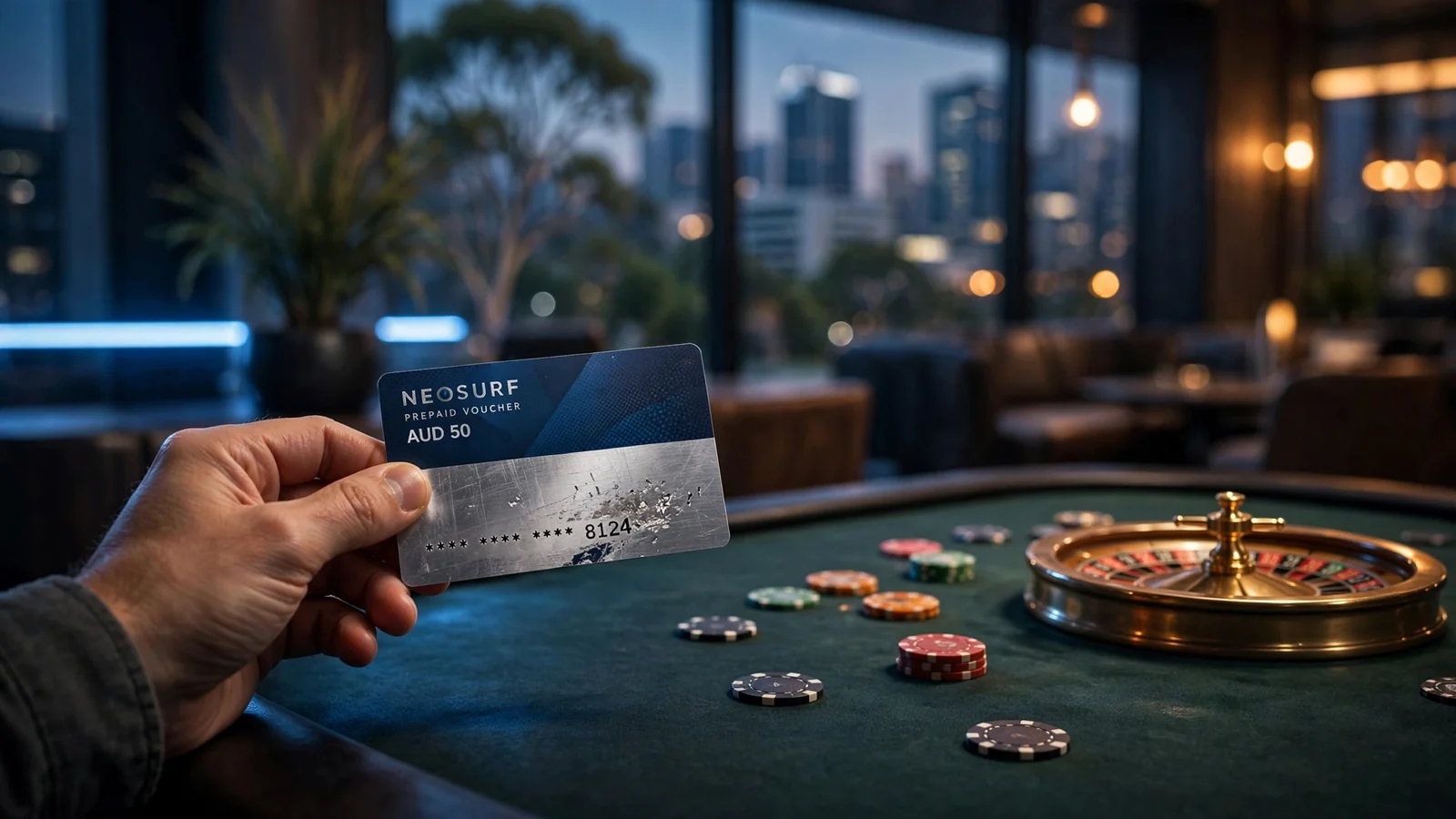
Australian payment culture is notably comfortable with switching channels. Contactless credit and debit cards are accepted almost everywhere, as are mobile wallets such as Google Pay and Apple Pay. A purchase can pass from plastic to phone without much ceremony; the method matters less than whether it fits the moment.
Bank-linked services such as PayPal sit within the same familiar mix. People move between cards, wallets and services connected to bank accounts as ordinary parts of paying. That familiarity can make a further bank-linked option sound as though it belongs naturally in the same landscape. But familiarity with a category is not proof that a particular service is available at a particular business.
That distinction matters when the subject is POLi and an Australian casino. The everyday use of cards, mobile wallets and PayPal says something about how Australians pay across many settings. It does not establish that an online gambling cashier offers POLi, or that an operator accepts it from people in Australia. A payment habit cannot stand in for the cashier’s actual options.

There is also a difference between a method being familiar to consumers and its being usable for a given transaction. The route from a bank-linked service to a payment choice at an online gambling site is not guaranteed by local popularity. The cashier is where availability would have to be made clear; assumptions based on the wider payment culture leave the central point unanswered.
That uncertainty sits within a more consequential setting. The Interactive Gambling Act 2001 prohibits operators from providing real-money online casino games to people in Australia. The Australian Communications and Media Authority enforces the law, and Australian consumer law does not protect players who use offshore casinos. Familiar payment habits do not change that legal position. Nor do they make a payment option evidence of lawful local provision.
Australia has made digital payments feel unremarkable. That is a statement about daily life, not a blanket endorsement of every service offered in every setting. In this case, the distinction is plain: widespread comfort with cards, wallets and bank-linked services cannot establish that an Australian casino accepts POLi. Popularity elsewhere in the payments landscape settles nothing at the cashier.

POLi Withdrawals and the Limits of What Is Known
A payment method used to fund an account is not automatically a way to receive money back. That distinction matters when POLi is mentioned alongside casino withdrawals: a deposit facility, even where one is available, would not by itself establish that withdrawals can be sent through the same channel.
The word “withdrawal” can also cover different stages. An operator might approve a request, then rely on a separate payment channel to transfer funds. The time taken and the method offered would depend on the operator’s arrangements. That is a poor basis for a money decision.
There is a larger complication in Australia. The Interactive Gambling Act 2001 bars operators from providing real-money online casino-style games to people in the country, including poker, table games and pokies. The Australian Communications and Media Authority enforces that law. Its focus is the provision of the service, not a general criminal penalty on a player for using an offshore site. The legal distinction is significant, though it does not make offshore play protected.
Australian consumer law does not protect people using offshore casinos. A dispute over a delayed or rejected payment may therefore leave a player with fewer practical remedies than a familiar local purchase would. Payment claims should not be mistaken for consumer safeguards.
A search for a casino withdrawal through POLi may reflect a straightforward hope: that the route used to pay can also return winnings. But those are separate functions, and the label alone establishes neither. Nor does familiarity with a payment service settle what an operator can legally offer to Australians.
The withdrawal question remains narrower than the general question of paying with POLi. Until an operator’s terms clearly identify the method and its conditions, POLi should not be described as a confirmed payout option for Australian pokies. A name is not a transaction.
Final Conclusion
A payment method name is neither a receipt nor a guarantee of the legality or availability of a gambling service in Australia.
Paying with POLi: Availability Cannot Be Assumed
POLi is a payment name, not a promise attached to every online cashier. A site’s general description of its payment options cannot establish that POLi is available to every account, or that it can be used for every kind of transaction. The relevant point is narrower: acceptance belongs to the individual operator and its current cashier arrangements.
That distinction matters because “paying with POLi” can refer to several different expectations. It may mean using POLi to fund an account, seeing it listed among payment methods, or relying on it as part of a broader route to play. Those are not interchangeable claims. A payment option, where offered, does not by itself establish anything about withdrawals, account eligibility or the games associated with an account.
Nor does familiarity with a payment service in other settings settle the question. A casino payment method is determined by the operator’s own arrangements; the name of a service in a general article or on a third-party page is not the same as its presence in a particular cashier. The phrase “POLi casino payment method” can therefore conceal a basic uncertainty: whether the service is actually offered in that setting.
The wording around pokies or other casino games can blur the distinction further. Payment describes how funds might enter an account; it does not establish that a particular game is available, lawful to provide, or connected to that payment route. In Australia, the Interactive Gambling Act 2001 prohibits operators from providing real-money online casino games to people physically in the country. The payment label does not change that boundary.
There is also a practical limit to the idea that an offshore service functions like an ordinary local purchase. Australian consumer law does not protect players who use offshore casinos. Familiar payment language can make a transaction seem routine; the legal and consumer setting is not.

A simple name, then, settles little. POLi acceptance cannot be inferred from the fact that a site is described as a casino, nor from references to playing with POLi. The label and the actual arrangement remain separate matters.
Bonus Searches Do Not Verify POLi Eligibility
A bonus described alongside POLi can sound like a single package: a payment route and a reward attached to it. The wording alone establishes neither. It does not show that a promotion exists, that POLi is accepted, or that the two are linked by an operator’s terms. Search language compresses separate questions into a neat phrase; the underlying arrangements, if any, would need to be stated independently.
That distinction matters because promotional language can make an offshore gambling service appear more settled or accessible than it is. A bonus label is not evidence of eligibility, and it cannot turn a payment method into proof of an offer. Nor does a mention of POLi establish that any particular account, deposit or promotion would qualify.

The legal setting is less accommodating than promotional phrasing may suggest. Under the Interactive Gambling Act 2001, operators may not provide real-money online casino games to people physically in Australia. The Australian Communications and Media Authority enforces the Act. Australian consumer law does not protect players who use offshore casinos. A bonus, whether described as POLi-related or otherwise, does not change those facts.
There is no reliable inference to draw from the pairing of a payment name and a reward word. Promotion terms, where lawfully applicable, would need to identify their own eligibility rules; a search phrase cannot supply them. The offer-shaped language is not the offer.
In this context, bonus wording deserves particular caution. It can attract attention while leaving the essential questions unanswered—and may sit within advertising that is prohibited for online casino services in Australia. A phrase is not permission.
What are the deposit and withdrawal limits at the best Amex casinos?
Limits are set by each casino and can vary, so check the limits shown in that casino’s cashier or payment terms.
Which online casinos accept American Express for deposits?
Jackpot City Casino, Spin Palace, Ruby Fortune, Ignition Casino, Joe Fortune and PlayAmo are listed as supporting Amex deposits for Australian players.
Can you use an American Express gift card at an online casino?
Yes, at casinos that accept American Express, but gift cards can be used for deposits only.
Are there any fees for depositing with American Express?
Amex deposits are typically free, but a casino may charge a 1.5% surcharge, and Amex cards incur a 3% currency conversion fee.
What should I do if my American Express deposit is declined?
Check with American Express or your bank whether gambling transactions or payments to that particular website are blocked.
What are the fees involved with American Express payments?
Deposits are typically free, though a casino may apply a 1.5% surcharge; Amex cards also incur a 3% currency conversion fee. Withdrawal fees may apply depending on the casino.
Can I withdraw winnings directly to my American Express card?
Some casinos allow Amex withdrawals, usually only if you have previously deposited with Amex, but not all do. Withdrawals can take up to five days to clear and may incur a fee.
Created by the ”Wildtokyoslotshubau.com” editorial team.