Best pokies in Canberra: hours and venue checks
 Available in AU
Venue trading hours do not necessarily confirm gaming room access, so opening details need to be checked for the specific venue and day.
Table of Contents
- When Canberra’s Gaming Rooms Are Open
- What “Best-Paying” Can—and Cannot—Mean
- Online Pokies from Canberra: The Legal Boundary
- Pokies Near the Airport, CBD and Beyond
- Canberra Venues and the Rules Around Gaming Rooms
- Why “24-Hour Pokies” Needs a Local Check
- The Crown Canberra Search: What Can Be Verified
- Pokies in Canberra’s CBD: Clubs and Local Evidence
- Parkes and the Limits of a Canberra Venue Search
- Cashless Pokies and the Newcastle Query
When Canberra’s Gaming Rooms Are Open
There is no dependable citywide opening time for Canberra’s gaming rooms. A venue’s general trading hours do not necessarily tell the whole story: the room containing the pokies may have its own access arrangements, and a venue can change its hours without the change appearing everywhere it is listed. An old directory entry is not a door schedule.
That matters most when timing is tight. Someone setting out early, arriving late or trying to fit a visit around other plans needs the hours for the particular venue and the particular day—not a broad claim that Canberra pokies are open. A listing can be useful as a starting point, but it should not be treated as confirmation that the gaming room is operating at that moment.
The distinction sounds modest. It is not. A hotel, club or other venue may have public-facing areas open while access to a gaming room follows different conditions. Even when a venue is open, that does not establish that every part of it is available. The reverse can also be true: a room’s advertised hours may not reflect an unexpected closure or a change made for a particular day. The practical question is therefore not simply whether a venue is open, but whether its gaming room is open now.
Why live hours matter
Opening information becomes stale in ordinary ways: schedules are revised, listings lag behind, and special arrangements may affect a particular day. A search result can preserve an earlier answer long after the venue has moved on. The more specific the intended visit, the less useful a general listing becomes.
Direct confirmation is the sensible final check. The venue’s own current information or a call to its staff can clarify whether the gaming room is operating, whether the stated hours apply that day, and whether access is subject to any conditions. If the information is unclear, that uncertainty is itself useful: it is better to resolve it before travelling than to mistake a venue’s name on a map for an open door.
Early opening deserves the same care. A request for pokies at dawn is a question about a particular room’s current schedule, not evidence that such a schedule exists. The same applies to a late visit. Hours that suit one venue—or one day—cannot be carried across the city by assumption. There is no reason to treat a time mentioned in an old listing as a standing promise.
A venue’s operating arrangements also belong to a wider set of responsibilities. A report published by regionriverina.com.au describes requirements for venues with more than 20 gaming machines, including a responsible gambling officer on duty while the machines operate, alongside an incident register. Those obligations concern oversight and responses to gambling harm. They do not, by themselves, tell anyone when a Canberra gaming room opens. Staffing rules are not trading hours.
This is a useful distinction because operational details are often bundled together in casual descriptions. The fact that a room has procedures, staff or a published schedule does not settle every question about access on a given day. Nor does a venue’s general opening time answer whether its gaming machines are operating. Each detail needs to be checked for what it actually establishes.
A schedule is not a guarantee
The phrase “open now” is especially time-sensitive. It can become inaccurate between the moment a listing is updated and the moment someone relies on it. A venue may also have different arrangements across days, so a schedule seen once should not be treated as a permanent pattern. Confirmation close to departure is more valuable than a confident but undated listing.
- Check the venue’s own current information
- Call staff to clarify gaming room hours
- Confirm access before travelling
- Rely on general citywide opening times
- Treat old directory entries as schedules
- Assume a venue’s general hours apply to the pokies room
Around-the-clock operation is a separate claim from a room being open early or late. An early start does not establish continuous access, and a late closing time does not establish that the room remains available through the night. Those are different operating facts. The question of whether any Canberra venue runs continuously needs its own direct confirmation; it cannot be inferred from a broad opening-hours entry.
For a practical visit, the useful record is simple: the venue, the date, the gaming room’s stated hours and whether staff confirm that those hours are current. A venue’s own notice is more relevant than a copied listing, but even official information can need checking when timing is close. If a call or current notice cannot clarify the point, the opening time remains uncertain.
There is no universal Canberra clock for gaming rooms. The answer depends on the venue and the day, and the most reliable check is the one made against the venue’s current information. A schedule can point the way. It cannot turn an assumption into an open room.
What “Best-Paying” Can—and Cannot—Mean
Choosing pokies in Canberra for 2026 means checking the details that matter before you play, including licensing and the deposit or payout information available. This reference card summarises the verified details provided for each operator.
License: Curacao (operating since 2017) · Min. deposit: A$20 Uptown Pokies has operated since 2017 and is licensed in Curacao. Its minimum deposit is A$20.
License: Curacao, operated by Dama N.V. 7Bit Casino is licensed in Curacao and operated by Dama N.V.
License: Curacao OGL/2024/1335/0780 · Min. deposit: EUR 20 Vegaz Casino holds Curacao licence OGL/2024/1335/0780. Its minimum deposit is EUR 20.
License: Curacao eGaming OGL/2024/923/0383 (Antillephone N.V.) · Min. deposit: A$30 WinSpirit Casino holds Curacao eGaming licence OGL/2024/923/0383, issued through Antillephone N.V. The minimum deposit is A$30.
License: Curacao Gaming Control Board JustCasino is licensed by the Curacao Gaming Control Board.
License: Tobique Gaming Commission · Payout speed: crypto ~10-15 minutes, fiat 1-5 days · Min. deposit: A$30 SkyCrown is licensed by the Tobique Gaming Commission. Its stated payout times are around 10–15 minutes for crypto and 1–5 days for fiat; the minimum deposit is A$30.
License: Curacao eGaming (Dama N.V.) JeetCity Casino holds a Curacao eGaming licence and is operated by Dama N.V.
License: international iGaming licence – jurisdiction not named in the source · Payout speed: PayID 1-24 hours · Min. deposit: A$30 (PayID from A$10) House of Pokies has an international iGaming licence, though the jurisdiction is not named in the available information. PayID payouts are stated as 1–24 hours, with a A$30 minimum deposit or A$10 for PayID.
License: Curacao Gaming Control Board OGL/2023/176/0095 (Hollycorn N.V.) Neospin holds Curacao Gaming Control Board licence OGL/2023/176/0095 and is operated by Hollycorn N.V.
License: Curacao – Antillephone N.V. (Versus Odds B.V.) · Min. deposit: EUR 20 Thor Casino is licensed in Curacao through Antillephone N.V., with Versus Odds B.V. identified as the operator. Its minimum deposit is EUR 20.
“Best-paying” sounds like a property stamped on a pokie, as fixed as its title or artwork. In practice, the phrase can blur together two different things: a game’s theoretical return setting and the results of actual play. The first may help describe a game over a very large number of spins. The second is what happens in a particular session, and it can be far less orderly.
Every spin is an independent event determined by a Random Number Generator. A previous win does not make a loss due, and a run of losses does not oblige the machine to pay next. The reels may appear to tell a story of momentum; the mathematics does not. A short session can produce results that sit nowhere near a game’s theoretical return.
That distinction matters when someone looks for the best pokies in Canberra for 2026. A ranking based on anecdotes, recent jackpots or a machine’s reputation would confuse memorable outcomes with dependable evidence. A large win proves that a large win occurred. It does not establish that the machine is more generous than another, or that the next player will encounter the same result.
Return to player, or RTP, is also not a promise about an individual’s stake. It is a theoretical measure of how a game is configured to return money across play, not a forecast for a particular person or visit. Even where an RTP figure is published, it cannot be read as a schedule of repayments. Randomness is not a cashier.
There is another complication: a game’s return setting may not be identical wherever that game appears. A specialist review source reports that some providers give casinos a choice of RTP settings for the same pokie. If that account applies to a particular game, the title alone would not identify its setting at a particular venue. The same familiar symbols could sit behind different return configurations. That is a reason to treat broad claims cautiously, not a basis for assuming that every game has multiple settings or that a particular Canberra machine uses one setting rather than another.
The practical consequence is modest but important. Comparing game names is not the same as comparing machine configurations. A name might be recognisable across locations, while the information needed to compare its settings may not be visible in the name itself. Without reliable, venue-specific details, a claim that one pokie is the best-paying in Canberra is stronger than the evidence can carry.
The word “best” can also mean something other than return. Players may prefer a game’s pace, sound, bonus features or level of complexity. Those are matters of taste, not proof of better payouts. A lively feature can make a game feel eventful; it does not, on its own, establish a higher return. Nor does a game’s popularity show that it is more likely to pay.
This is why “best-paying” claims deserve a careful reading. Does the claim refer to a published theoretical return, an independently checked setting, a recent anecdote, or simply a game someone enjoys? These are not interchangeable forms of evidence. A precise-sounding claim can still leave the crucial question unanswered: which configuration, at which machine, and on what basis?
Return to Player (RTP)
A theoretical measure of how a game is configured to return money across play, not a forecast for a particular person or visit.
The search for Canberra casino pokies, whether in the city centre or elsewhere, often turns a broad wish into a local ranking. But the location does not make a game-level claim more certain. A venue’s name, a game title and a payout boast do not together amount to verified machine data. A credible comparison would need information about the relevant setting, not just a list of popular titles.
There is no dependable shortcut from a game’s reputation to the next spin. The machine’s setting may matter to a theoretical comparison; randomness governs the individual result. Both statements can be true at once. The first may help distinguish configurations when trustworthy details exist. The second is why no configuration can promise a particular outcome.
“Best-paying” can therefore be a useful question only when its terms are clear. Without that clarity, it is an attractive label attached to an uncertain comparison. The reels remain indifferent.
Online Pokies from Canberra: The Legal Boundary
A Canberra address does not alter the national rules for real-money online pokies. The Interactive Gambling Act 2001 makes it unlawful for an operator to provide online casino games, including pokies, to people in Australia without a domestic licence. No Australian online-casino licences have been issued. There is no locally licensed online casino behind an offer of real-money play.
The distinction between the operator and the player matters. The Act is directed at companies providing the prohibited service, not at individual Australians who play on an offshore site that accepts them. That does not make the operator’s service lawful in Australia, nor does it give the player the protections associated with a domestic gambling licence. The law draws its line in an unusual place: the business is prohibited, while the individual is not prosecuted simply for playing.
Offshore access is not the same as domestic approval. The Australian Communications and Media Authority (ACMA) enforces the Act and blocks illegal offshore gambling sites; internet service providers must comply with its blocklist. A site may still appear in an advertisement or be reachable at some point, but neither circumstance establishes that it is authorised to offer online pokies here. Access can be disrupted, and an offshore operator remains outside the Australian licensing system.
The sharpest practical risk is what happens when a dispute arises. If an offshore casino refuses to pay winnings, an Australian player has no legal recourse in Australia. A foreign licence, where a site claims one, does not supply an Australian route to recover money. Nor does the mere presence of familiar payment options or a polished website settle questions of legality, fairness or accountability.
That is the boundary, not a recommendation. Searches for online pokies near Canberra, real-money play or a no-deposit offer may make internet gambling sound like a local extension of a venue. Legally, it is not. A bonus label does not change the status of the operator, and a promise of play without a deposit does not create a domestic licence. High-limit language is no more reassuring: the central issue is not the size of a stake but the absence of an Australian-licensed online casino.
Legal Risk
Under the Interactive Gambling Act 2001, providing online casino games to people in Australia without a domestic licence is unlawful, and players have no legal recourse in Australia if an offshore casino refuses to pay winnings.
The difference also matters for safeguards. Deposit limits, loss limits, session time limits and self-exclusion are recognised tools for controlling gambling, but their presence on an offshore site does not bring that site under Australian licensing. BetStop applies to Australian-licensed operators; it does not bind offshore casinos. It should not be mistaken for a universal block on online gambling or a guarantee that an offshore account will be closed.
Identity checks are another separate matter. Before making a first withdrawal, identity and address documents need to be verified. That is a necessary account and payment safeguard, not proof that a site is licensed in Australia or that a disputed withdrawal can be enforced locally. Documentation may establish who holds an account; it cannot create a regulator where none exists.
This is why the phrase “best-paying” becomes especially slippery online. A promotional claim cannot resolve the legal gap, and no local licence stands behind the offer. In Canberra, as elsewhere in Australia, the governing fact is plain: real-money online pokies are prohibited services when supplied to people in the country, while the individual player is not the target of that prohibition. The distinction is real. So is the exposure.
Pokies Near the Airport, CBD and Beyond
A request for pokies near Canberra Airport sounds precise until “near” has to be measured. It might mean a short walk, a brief drive or simply somewhere in the same part of the city. Those are different errands, and a search phrase cannot decide between them. Nor does the appearance of a place in a map result establish that it has a gaming room.
The same caution applies to searches around the Canberra CBD. A venue described as being in the city centre might still be inconvenient for someone arriving from the airport; a place outside the centre could be closer by road. Distance depends on the starting point and the route, not just on the broad label attached to an address. “Near” is a small word with a large amount of geography tucked inside it.
Location-based results also blur categories. A hotel, club, restaurant or licensed venue may appear in a general local search without that listing establishing whether pokies are present. An address is not a gaming-room directory. The distinction matters because a pin on a map offers a neat visual answer, while the underlying question is whether the premises actually provide the thing being sought.
A more useful comparison begins with a specific destination, then checks the venue’s own current information for its address and gaming facilities. Directions can then be considered from the airport, the CBD or another starting point. This separates three questions that are easily folded into one: where a place is, what it offers, and how far away it is. A tidy search result may answer only the first.
“North Canberra” is similarly broad. It can narrow a search geographically, but it does not identify a particular premises or establish what is available there. The phrase “near me” is narrower only if the device location is accurate and the result itself is current. Neither wording turns a general result into confirmation of a gaming room.
There is also a small geographical trap in searches that pair Canberra with Victoria. Canberra is in the Australian Capital Territory, so a Victoria label may reflect a mistaken location, an unintended result or a different place altogether. The words alone do not settle which. Adding a suburb or a named destination can make the intended area clearer, but the location still needs to be checked against the venue’s own details.
This is less satisfying than a list of pins with confident distances. It is also more honest. A map can help with the route once a real venue has been identified; it cannot supply evidence about the venue’s facilities merely by placing a marker on a screen. The practical value lies in keeping location, distance and the presence of pokies as separate claims.
For the airport, the CBD and Canberra’s outer areas alike, the reliable sequence is plain: establish the premises, confirm what it offers, then assess the journey. Search wording can point toward an area. It cannot do the checking.
Canberra Venues and the Rules Around Gaming Rooms
A venue’s obligations can say something about how its gaming room is managed, but they cannot establish which Canberra venue is “best”. A responsible gambling officer is not a quality mark, and a compliance rule does not reveal the machines on a particular floor. Those are different questions.
A report by regionriverina.com.au describes a requirement applying to venues with more than 20 gaming machines: from 1 July, a dedicated responsible gambling officer (RGO) must be on duty whenever those machines are operating. The threshold matters. It is not a blanket statement that every venue with pokies must have an RGO present under this rule; it applies to venues above the specified machine count.
The officer’s presence is tied to the hours of machine operation, rather than simply the venue’s general opening hours. That distinction gives the role a practical shape: oversight is required while the gaming room is active. The report also describes a one-month grace period for venues to remove signage and put the officer arrangements in place. It is a transition period, not a permanent exemption.
There is a second administrative duty. The report says venues will also be required to maintain a gambling incident register. It is intended to record occurrences, including situations where a patron’s behaviour indicates possible risk of, or harm from, gambling. In other words, the obligation is not confined to staffing a room; it includes keeping a record when concerns arise.
Records are a modest instrument, but they mark a shift in how gambling harm is treated. What might once have been left to informal observation becomes something a venue is expected to document. That does not make a register proof that a particular incident was handled well, nor does it tell anyone how often concerns occur. It establishes a duty to record, not an outcome.
For someone comparing pokies venues in Canberra, these requirements offer a limited point of reference. They describe responsibilities for venues meeting the machine-count threshold, not a directory of local rooms or confirmation that any named Canberra venue falls within it. Nor do they say anything about machine returns, the number of pokies at a particular site, or whether one room is more suitable than another.
That matters especially when a phrase such as “best pokies venue in Canberra” is treated as though it has a simple answer. Venue regulation can set a floor for conduct and oversight; it cannot turn compliance into a ranking. The relevant questions remain specific: whether a venue is covered by the requirement, how it meets its obligations, and what current information it provides about its own gaming room.
Gaming Room Obligations
- Venues with more than 20 machines must have a responsible gambling officer on duty during operation.
- A gambling incident register must be maintained to record risks or gambling harm.
- Regulatory compliance sets a floor for conduct but does not establish a venue’s quality ranking.
Rules, not recommendations.
Why “24-Hour Pokies” Needs a Local Check
A venue that stays open late is not necessarily a venue whose pokies remain available through the night. The distinction sounds small until a journey is planned around it. “Open” can refer to a bar, dining room or building entrance; it does not, by itself, establish that a gaming room is operating at the same time.
That is why claims about 24-hour pokies in Canberra need a more exact reading than ordinary opening-hours listings. Around-the-clock operation is a specific claim: it means access to the relevant gaming area and its machines continues across the night, not merely that some part of a venue remains open. A sign on a door, a broad business-hours entry or an old directory listing may not settle that point.
Hours can also be presented in ways that blur the boundary. A venue may have different schedules for different areas, or publish hours that do not explain whether the gaming room follows them. A listing marked “open now” is especially time-sensitive: it can become stale, and it may describe the venue as a whole rather than the room in question. The clock is not a small detail here. It is the claim.
A useful check is therefore local and direct. The venue’s current information should specify the gaming room, not just the building, and should make clear whether overnight access is continuous or subject to a closing period. If that wording is absent, a direct confirmation is more reliable than treating a general opening-hours entry as proof. Public holiday schedules and temporary changes can also make a familiar listing a poor guide to a particular night.
This is separate from the broader question of when Canberra gaming rooms open. A room can have ordinary operating hours without being available all night; conversely, a venue’s late closing time does not establish continuous access to pokies. The two claims require different answers.
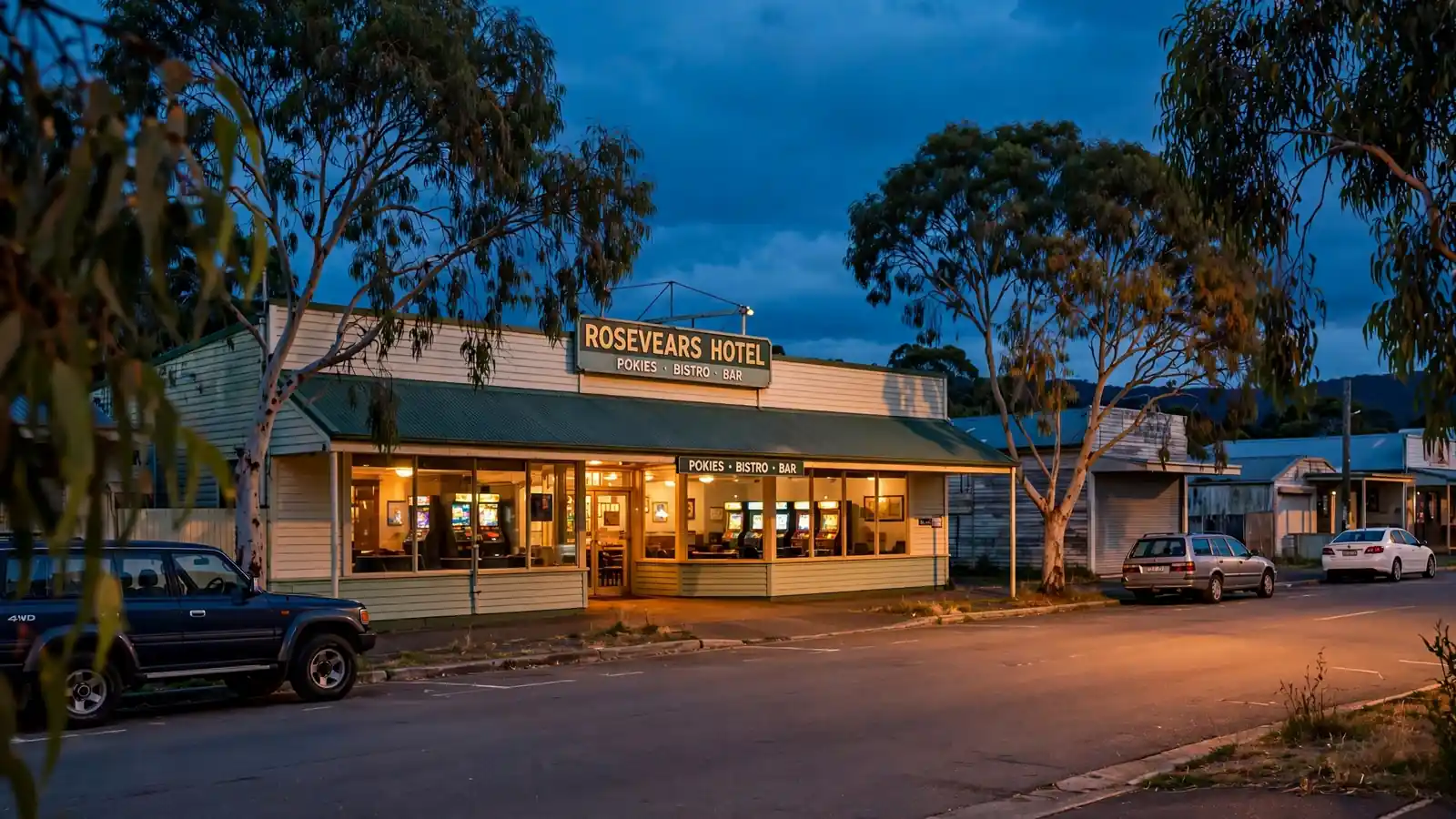
The phrase “24-hour pokies venues in Canberra” may sound like a directory category, but a search term is not itself evidence that such a venue exists. The same goes for asking whether pokies are open now: the answer depends on the specific venue, room and time, and should not be inferred from a generic listing. Until those details align, an all-night claim remains just that—a claim. A clock, checked locally.
The Crown Canberra Search: What Can Be Verified
Putting Crown, Canberra and pokies together in a phrase does not establish that a Crown venue operates in Canberra, or that Crown machines are available there. A name in a listing, a map result or a page title can point to a place, a brand, an old reference or simply a mistaken association. Those are not interchangeable kinds of evidence.
The distinction matters because a venue claim has several parts. It must identify a physical location, establish who operates it and show that pokies are present. A result that supplies only the brand and the city leaves those points unresolved. Repetition does not improve the evidence: several pages copying the same unsupported description still amount to one claim passed around.
The same caution applies to requests for the best pokies room in Canberra. “Best” might refer to atmosphere, access, machine choice or a player’s hoped-for outcome; none of those can be inferred from the Crown name. A ranking would need a stated basis and reliable information about the places being compared. Without that, the label is decoration, not a finding.
Nor does a venue name settle a question about the maximum cash payout from a pokie. That figure would have to relate to a particular machine and its applicable conditions. A general reference to a room, a brand or a city cannot establish what a specific machine may pay, or how a payout is handled. Treating one as a substitute for the other turns a location clue into a money claim.
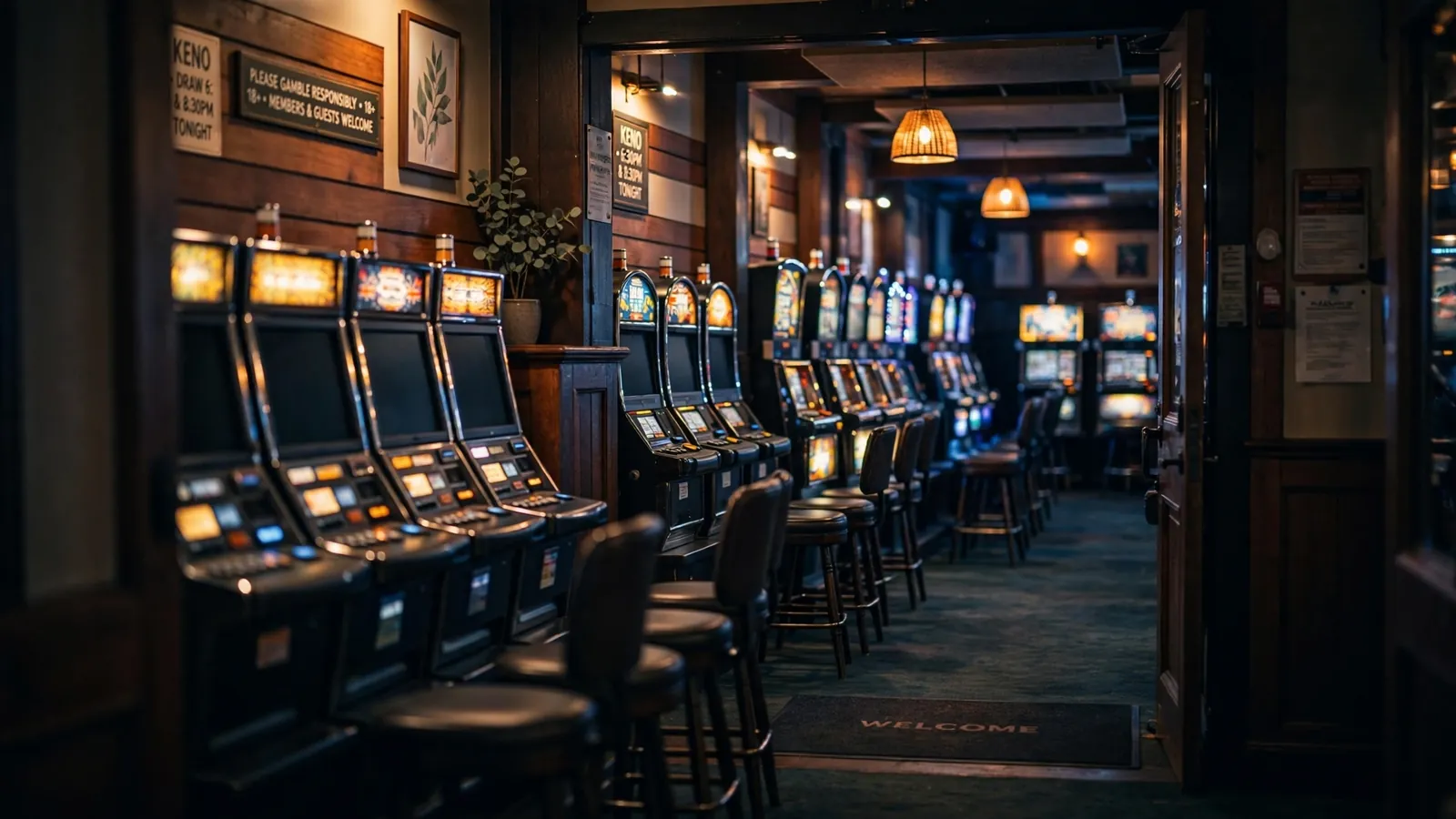
A careful account therefore keeps the statements narrow. Crown may appear in a phrase associated with Canberra, but that association alone cannot confirm a Canberra casino, a Crown-operated gaming room or any pokies there. The name should not be used to imply that such a venue has been established, and a promotional description should not be mistaken for independent confirmation.
For a location claim, useful evidence would identify the premises and the operator rather than merely pairing familiar names. For a machine or payout claim, it would need to identify the relevant machine and the terms attached to it. Until those details are available, the responsible description is not that Crown offers Canberra pokies, nor that it does not; it is that the name alone proves neither.
That is a smaller answer than a directory or a ranking. It is also the more accurate one.
Pokies in Canberra’s CBD: Clubs and Local Evidence
A club and its gaming room are not interchangeable ideas. Clubs may be community institutions, social spaces or licensed venues, but those descriptions do not establish that a particular club in central Canberra has pokies. Nor does a broad city-centre label identify which streets, buildings or venues are meant. Place names can make a search sound more definite than the evidence behind it.
That distinction matters when looking for pokies in Canberra’s CBD. A venue’s location, its facilities and its current operation are separate questions; none can be settled by the word “club” alone. Without reliable, venue-specific information, naming a club would turn an assumption into a recommendation. The restraint is less satisfying than a directory, but more useful than a fictional one.
General rules offer context, not a local roster. In Australia, deposit limits, loss limits, session time limits and self-exclusion are recognised responsible-gambling tools. They describe protections that may be relevant to gambling settings; they do not prove that a specific city-centre venue has a particular machine, procedure or service. Regulation draws boundaries. It does not fill in every address.

Self-exclusion is especially easy to flatten into a phrase. It is a tool for restricting access to gambling, not evidence that a named CBD club participates in a particular scheme or that the restriction will operate in every setting. BetStop applies to Australian-licensed operators and does not bind offshore sites; that distinction concerns online operators, not proof about a Canberra club’s premises. Different systems, different doors.
The phrase “best pokies” also suggests a ranking that local venue evidence cannot support. A club’s presence in the CBD would not establish the games it offers, their settings or whether they suit any individual. A shortlist assembled from names alone would look precise while saying very little.
For anyone comparing central venues, the dependable approach is to establish each point separately through current venue information: whether pokies are present, what responsible-gambling arrangements apply, and whether self-exclusion can be requested there. Claims should be tied to the venue itself, rather than inferred from a district label or the general rules governing gaming rooms.
The CBD is a useful geographic description, not a certificate of what happens inside a club. Until a venue’s own details support the claim, the honest account remains limited: club-related searches point toward a category of place, not a verified list of Canberra locations.

Parkes and the Limits of a Canberra Venue Search
Parkes narrows the geography, but it does not by itself establish a place to play. A request for pokies in Parkes, Canberra is asking for a venue tied to a particular locality; the locality name is not proof that a gaming room operates there.
That distinction matters in a city whose public identity is built from mapped districts and institutional addresses. A place can be easy to locate on a map while the details that matter to a visitor—whether a venue has pokies, where its entrance is, or what facilities it offers—remain separate questions. The word “Canberra” does not settle them, and adding “Parkes” does not fill in the missing venue.
Nor does “best” supply a useful local comparison. It expresses a preference, not evidence about which machines are present at a particular address. Without a named venue and reliable details about its gaming room, there is no sound basis for treating one Parkes option as better than another. A confident ranking would be decoration pretending to be information.
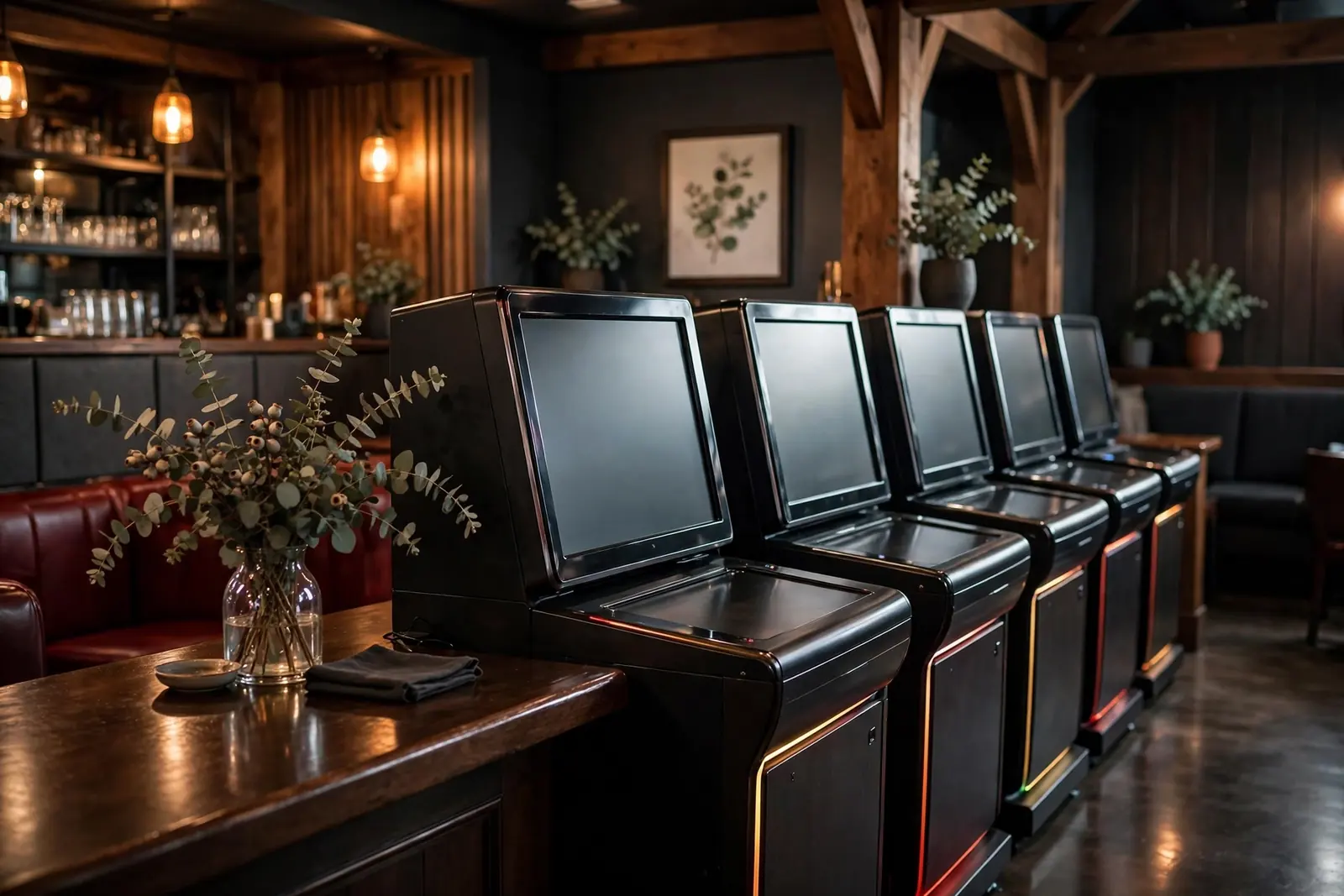
The practical boundary is modest. Parkes can be treated as the area being asked about, while any claim about a particular room or its pokies needs to rest on venue-specific details. A broad Canberra label cannot stand in for that check. This is not a judgment about the district; it is a limit on what a place name alone can establish.
That restraint can feel unsatisfying when the purpose is to find somewhere nearby. Yet an invented address would be worse than an incomplete answer: it could send someone to a venue that does not match the description. For Parkes, the useful distinction is between a location someone has in mind and a gaming venue that can actually be identified there. One is a search for place; the other requires evidence.
Cashless Pokies and the Newcastle Query
“Cashless” can describe different things, and the distinction matters. PayID is a way to move money between accounts; it does not describe how a pokie in a Canberra venue accepts payment. Its name may appear in discussions of online gambling deposits, but that does not establish that any local machine is cashless, or that a particular venue offers that feature.
PayID works through the New Payments Platform (NPP). Rather than entering bank account details, a sender can use an alias such as an email address, mobile number or ABN. The NPP is available through all major banks and protects transfers with end-to-end encryption. Those are properties of a payment network, not evidence about a pokie’s design, a venue’s arrangements or an operator’s legal status.
The same distinction applies when Canberra and Newcastle appear together in a description. They are separate places; a reference to both does not show that a Newcastle venue has a Canberra counterpart, or that a particular machine can be found in either city. Location and payment method are two different questions, even when a compact phrase makes them look like one.
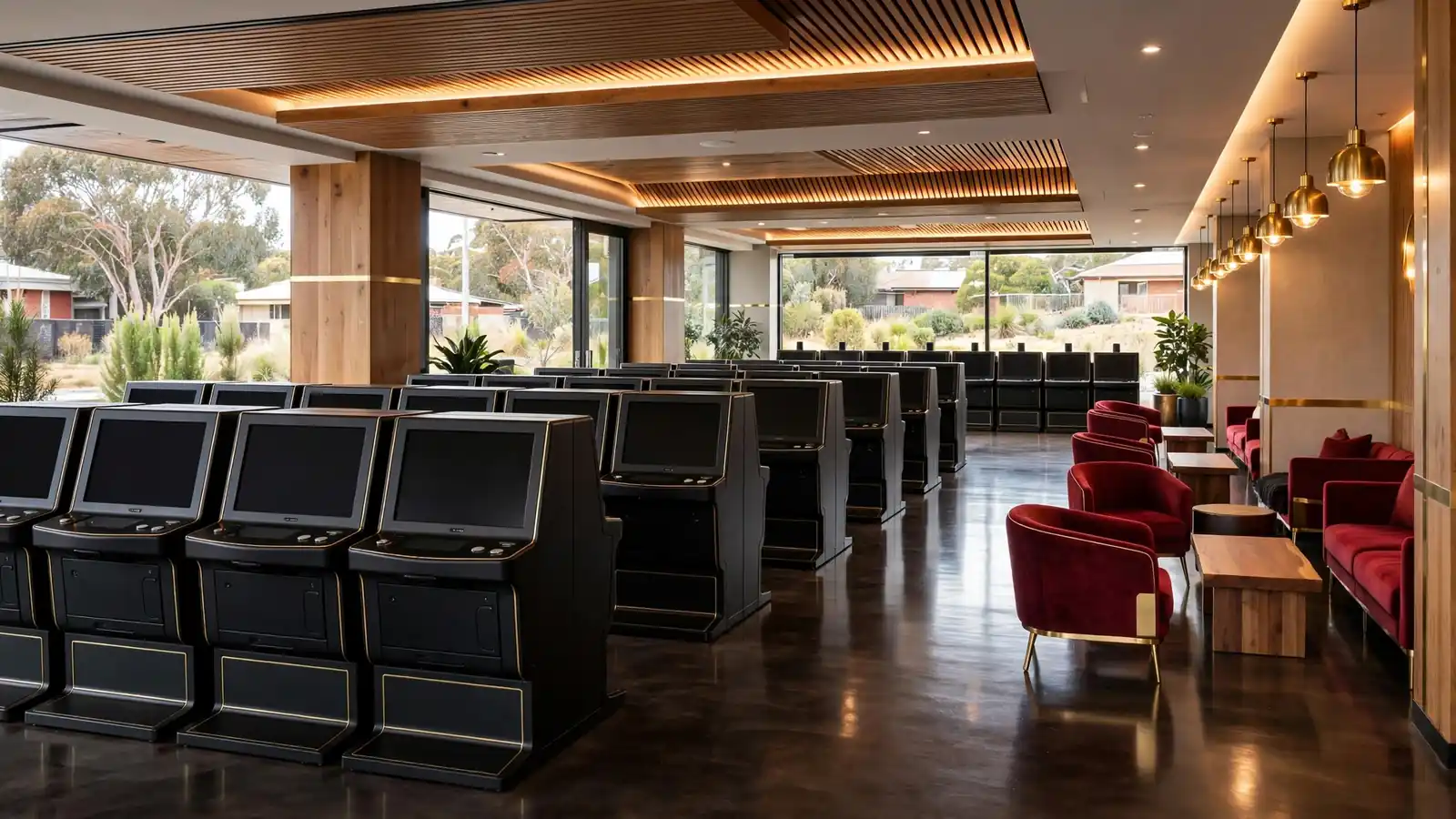
There is also a larger boundary around online payment language. PayID’s existence does not make an online casino lawful in Australia, certify a site, or confirm that its games are fair. It is simply an alias-based transfer facility within the NPP. A payment rail can be secure without settling the legality or reliability of the service receiving funds.
So “cashless pokies” should not be read as a verified description of Canberra machines. It may refer to payment technology discussed elsewhere, while the Newcastle wording adds a separate geographical association. Neither element, on its own, establishes local availability. A tidy phrase; two unanswered questions.
Prepared by the Wildtokyoslotshubau.com editorial staff.