Online Pokies PayID in Australia: Payments Explained
 Available in AU
PayID works through Australian banking infrastructure, while casino payment terms shape how deposits and withdrawals are handled.

Table of Contents
- PayID and the Australian Payment Network
- Real-Money PayID Payments: Matching Details and Irreversible Transfers
- How PayID Deposits Reach an Online Casino
- Checking Whether a Casino Accepts PayID
- Choosing Among PayID Casinos Without a ‘Best’ List
- PayID Limits, Fees and the Cost of a Withdrawal
- PayID Withdrawals: Casino Reviews and Waiting Periods
- Free Credits and the Wagering Terms Behind Them
- PayID Claims on Facebook: Check the Terms, Not the Pitch
- Australian PayID Pokies: What the Payment Method Does—and Does Not—Show
PayID and the Australian Payment Network
PayID belongs to the ordinary infrastructure of Australian payments: it is a digital system for sending money using an identifier such as a mobile phone number or email address. Instead of asking someone to remember a string of bank details, the system lets an identifier stand in for the destination account. The identifier is the visible part; the transfer itself moves through the banking network behind it.
That network is the New Payments Platform, or NPP, which connects participating banks and supports quick transfers between them. PayID is therefore not a separate wallet or a casino-specific payment product. It is a way of addressing a payment within Australian banking infrastructure. Its familiar identifiers make the system easier to recognise, but they do not change what the underlying transaction is: a transfer between accounts.
There is a distinctly local history in that arrangement. Australians have long dealt with money through a dense network of banks, account numbers and institutional rules. The NPP made rapid transfers part of that landscape; PayID gave them a label that could be easier to remember than the account details beneath it. Convenience here is partly a matter of design. The user sees a phone number or email address, while the bank continues to do the less visible work.
For an Australia-focused search for online pokies with PayID, it helps to check the available operator details before choosing where to play. These brief verdicts highlight only the licensing, deposit, or payout information provided for each operator.
License: Curacao (operating since 2017) · Min. deposit: A$20 Uptown Pokies has operated since 2017 under a Curacao licence. Its stated minimum deposit is A$20.
License: Curacao, operated by Dama N.V. 7Bit Casino is licensed in Curacao and operated by Dama N.V.
License: Curacao OGL/2024/1335/0780 · Min. deposit: EUR 20 Vegaz Casino lists Curacao licence OGL/2024/1335/0780. Its stated minimum deposit is EUR 20.
License: Curacao eGaming OGL/2024/923/0383 (Antillephone N.V.) · Min. deposit: A$30 WinSpirit Casino lists Curacao eGaming licence OGL/2024/923/0383, issued through Antillephone N.V. Its stated minimum deposit is A$30.
License: Curacao Gaming Control Board JustCasino lists a Curacao Gaming Control Board licence.
License: Tobique Gaming Commission · Payout speed: crypto ~10-15 minutes, fiat 1-5 days · Min. deposit: A$30 SkyCrown is licensed by the Tobique Gaming Commission. Its stated payout speeds are around 10–15 minutes for crypto and 1–5 days for fiat; the minimum deposit is A$30.
License: Curacao eGaming (Dama N.V.) JeetCity Casino is licensed in Curacao eGaming, with Dama N.V. named as the operator.
License: international iGaming licence – jurisdiction not named in the source · Payout speed: PayID 1-24 hours · Min. deposit: A$30 (PayID from A$10) House of Pokies lists an international iGaming licence, though the jurisdiction is not specified. Its stated PayID payout speed is 1–24 hours, and PayID deposits start at A$10.
License: Curacao Gaming Control Board OGL/2023/176/0095 (Hollycorn N.V.) Neospin lists Curacao Gaming Control Board licence OGL/2023/176/0095, with Hollycorn N.V. named in the licence details.
License: Curacao – Antillephone N.V. (Versus Odds B.V.) · Min. deposit: EUR 20 Thor Casino lists a Curacao licence associated with Antillephone N.V. and operated by Versus Odds B.V. Its stated minimum deposit is EUR 20.
The word “instant” describes the intended character of PayID transfers: they are designed to move quickly between banks. It does not mean every transaction has the same result in every circumstance. Banks retain their own policies and controls, and a payment method does not erase those decisions. That distinction matters wherever the same transfer system is discussed alongside commercial services, including searches for Australian pokies using PayID. A familiar payment rail can appear in many contexts without becoming an endorsement of them.
Online real-money casino games are not a lawful service for operators to provide to people physically located in Australia. The Interactive Gambling Act 2001 treats online casino-style games, including pokies, as prohibited interactive gambling services when supplied to customers in the country. This legal setting is not altered by the presence of a payment button, a bank transfer, or an Australian payment identifier. Payment infrastructure and permission to provide a gambling service are separate matters.
That separation can be obscured by the plainness of a payment label. PayID sounds domestic because it is part of Australian banking; a casino page may place it beside other cashier options and make the arrangement look routine. But a payment network’s role is limited. It carries transactions through participating banks; it does not certify the business receiving money or make a prohibited service lawful. Domestic plumbing is not a licence.
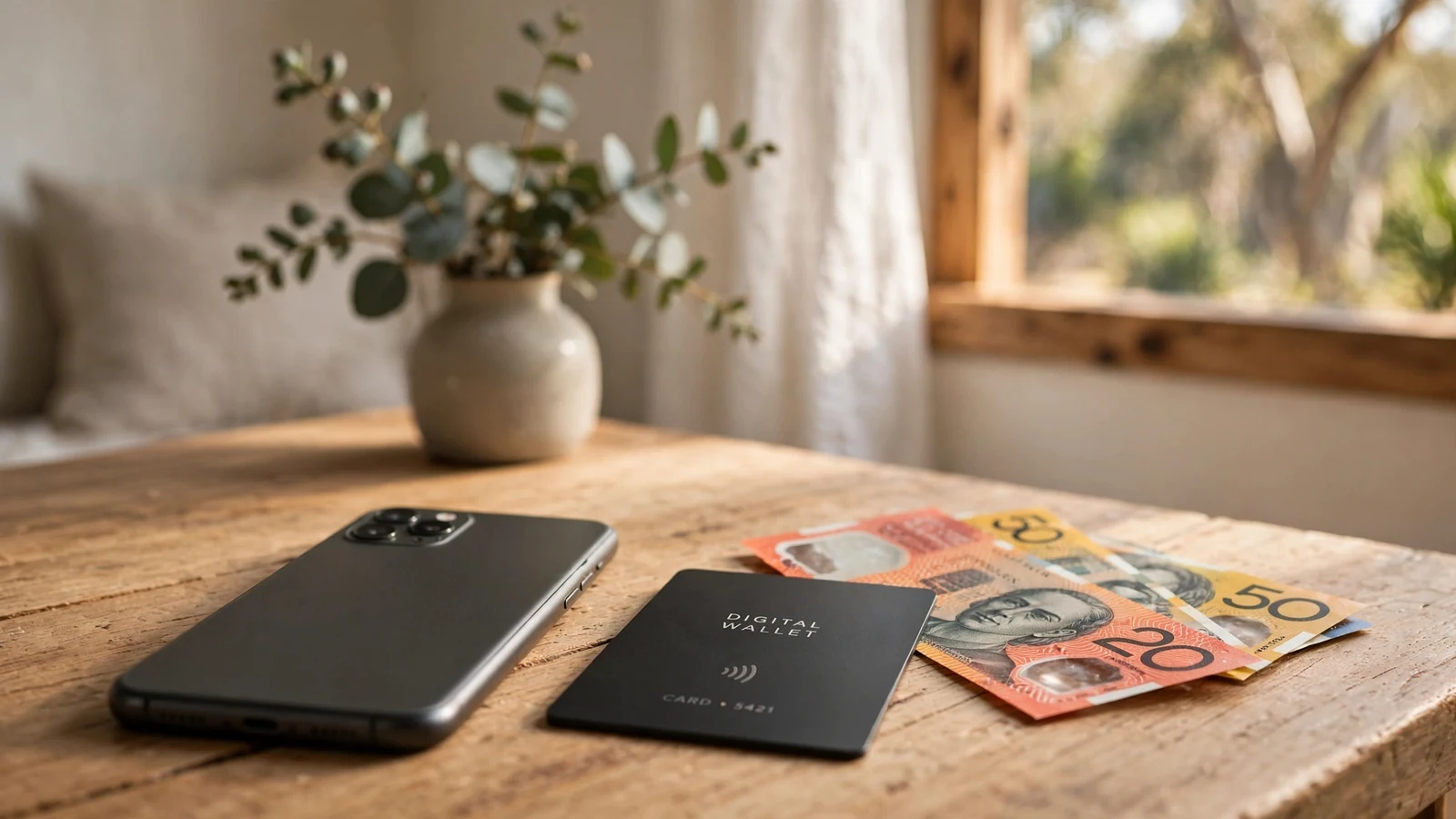
Some specialist reviews have reported that Australian banks, including members of the Big Four, may sometimes block PayID transfers to gambling merchants identified under their acceptable use policies. That is a reported possibility, not a settled description of every bank’s current practice. Policies and their application can change, and the outcome of a particular transfer cannot be inferred from the PayID name alone. Banks may apply their controls in ways that depend on the transaction and the recipient.
This is one reason the phrase “fast PayID pokies” should be treated as a claim about a payment route, not as a description of the legal or financial character of the service. The NPP facilitates quick bank-to-bank transfers. It says nothing about whether a particular operator is authorised to offer online casino games in Australia, whether a site will honour a payment, or how it will handle a dispute. Those are not functions of PayID.
A payment method can be familiar, practical and embedded in local banking, while the business attached to it remains subject to entirely different rules. That is the essential context for Australian PayID searches: the system itself is part of the country’s payment network, but its presence on an online gambling page does not turn that page into an Australian-regulated service. The distinction is small on a screen. It is not small in law.
Legal Prohibition
Under the Interactive Gambling Act 2001, providing real-money online casino games, including pokies, to people physically located in Australia is prohibited.
Real-Money PayID Payments: Matching Details and Irreversible Transfers
A payment identifier can look almost too ordinary to carry much consequence: a mobile number or email address, already familiar from everyday banking. Yet a PayID transfer is still a direction to move money, not a request to hold it while the details are reconsidered. Once the transaction is confirmed, it cannot be reversed through PayID. That makes checking the destination and the account identity part of the act of payment, not tidying up afterward.
The identifier used for a transfer must be the one registered with the player’s bank. A remembered address, an old mobile number or a detail copied from an unverified message may point somewhere other than intended. A near-match is not a match. Before any confirmation, the recipient information shown by the bank matters more than the reassuring familiarity of the payment method.
Identity also has a second edge. The bank account name should match the name on the casino profile. If those names differ, the operator may treat the payment or a later account check as inconsistent. That can create a dispute about who supplied the funds, or interrupt access to money held in the account. The matching details are not bureaucratic ornament. They are a basic way to keep one person’s payment from being attached to another person’s profile.
The point is especially important where money is being sent to a gambling operator. A bank transfer does not establish that the recipient is lawful, dependable or obliged to return funds on the sender’s preferred terms. PayID’s role is narrower: it conveys a payment instruction between accounts. It does not inspect the business behind the receiving details or guarantee what happens after the funds arrive.


That distinction can disappear in promotional language. “Instant” describes the movement of a payment, not the quality of the recipient or the certainty of a later outcome. A fast transfer can make a poor decision arrive more efficiently. Dry, but true.
For people searching for PayID pokies with real money, there is a legal fact that should precede any payment checklist: under Australia’s Interactive Gambling Act 2001, operators are prohibited from providing real-money online casino games, including pokies, to people physically located in Australia. The payment system does not change that position. Nor does the presence of a cashier option make the service lawful. This is not an invitation to find a workaround; it is the context in which claims about real-money casino payments need to be read.
If funds are nevertheless being considered for transfer, the irreversible nature of confirmation changes the sensible order of events. First comes checking the payment destination against the bank’s own confirmation screen. Then comes checking that the bank account holder and casino profile carry the same name. Only after those details agree should a person decide whether to proceed at all. A transfer sent to the wrong destination may not be recoverable through PayID, and a payment to an operator does not gain protection merely because the transaction completed successfully.
Some specialist reviews describe PayID minimum deposits in the AUD 10–20 range. Such figures are operator conditions, not a safety threshold and not evidence that a service is suitable or lawful. A small amount can still be lost, and a low entry point does not make an irreversible transaction reversible. The dollar figure is often the most visible detail on a cashier page; it is not necessarily the most important one.
PayID Payment Verification
- Verify the payment destination against the bank’s confirmation screen
- Ensure the bank account holder’s name matches the casino profile name
- Confirm the specific minimum deposit required by the operator
The wider habit behind these checks is older than digital payments. Banking has always depended on matching names, accounts and instructions closely enough that money reaches the intended place. PayID compresses that process into a familiar identifier, but it does not remove the need for care. The convenience belongs to the transfer. Responsibility for confirming its destination remains with the person authorising it.
No payment label can settle the questions that matter about an online gambling operator. It cannot prove that the operator may legally serve people in Australia, that account information will be handled properly, or that funds will be returned when requested. Those are separate matters, and a successful PayID confirmation answers none of them.
How PayID Deposits Reach an Online Casino
A PayID deposit has two distinct parts: the movement of money through the payment network and the casino’s recognition of the incoming payment. The first can be almost immediate. The second depends on the operator’s own system, which must associate the transfer with an account before the balance displayed on screen changes.
At a high level, the process begins when a payment is initiated through a bank using PayID. The transfer travels between financial institutions, and the casino’s payment process registers it against the relevant customer account. PayID deposits at online casinos are typically completed within seconds, so a balance update may follow soon after the transfer is made. “Typically” matters: a quick transfer does not mean every account screen refreshes at precisely the same moment.

The distinction is familiar beyond gambling. A bank can move money promptly, while the service expecting that money still has to record it. Digital systems make the handover look seamless when everything lines up; the quiet work of matching a transaction to an account remains in the background. A brief delay in a displayed balance does not, by itself, explain where a payment is or what has happened to it.
The minimum is set at the other end
PayID does not determine the smallest amount an operator will accept. That figure is set by the operator’s payment rules, so two services using the same transfer method need not have the same entry point. The commonly stated minimum for deposits is in the AU$10–AU$20 range. Some specialist reviews have reported an AU$5 starting point at particular operators, but that is a specific claim, not a reliable description of the market as a whole.
Those amounts describe the threshold attached to a deposit, not a promise that a payment method will be available everywhere or that an operator will process every transaction identically. A low minimum can make a service appear approachable. It says little about the wider terms governing the account or the nature of the business receiving the money.
There is also a legal reality that the language of payment convenience can obscure. Under the Interactive Gambling Act 2001, providing real-money online casino games to people in Australia is unlawful for operators. Pokies fall within that prohibited category. The existence of a payment route does not alter that position, and a fast transfer is not an endorsement by a bank, payment network or public authority. The machinery can be ordinary; the service using it is a separate matter.
Deposit Timings
PayID deposits are typically completed within seconds, although the update of the on-screen balance depends on the operator’s internal system.
That separation is important when accounts of PayID deposits describe a few seconds as though speed were the whole story. Speed answers a narrow question: how quickly the payment may travel. It does not establish that the recipient is lawful, that the account balance will be updated without delay, or that the service will treat a customer fairly. Payment infrastructure is deliberately neutral about the purposes to which a recipient puts incoming funds. It carries the transfer; it does not certify the destination.
The practical sequence, where such a service is involved, is therefore simple in outline but not a guarantee of outcome: a bank transfer is initiated, PayID carries it, and the receiving operator records it against an account. The visible credit is the final step in that chain, not evidence of the character of the service. A payment rail can make money move quickly. It cannot make the surrounding arrangement safe or lawful.
Checking Whether a Casino Accepts PayID
A payment method shown on a casino’s website is not proof that it remains available at checkout. Cashier options can differ by account, location or time, so PayID should be confirmed on the cashier page before an account is opened. A mention in a promotional banner or an old review is weaker evidence than a current listing in the payment menu.

That check answers a narrow question: whether the operator presents PayID as a deposit option. It does not establish that a transfer will be accepted by a bank, or that the operator is trustworthy, fair or willing to pay winnings. Payment rails are not character references.
A specialist review has reported minimum deposits of A$10 to A$30 at reputable sites said to accept PayID. That range is not a universal rule, and the cashier’s own terms are the relevant place to check any stated minimum. A payment option may be listed while its conditions remain buried elsewhere.
There is a larger Australian context. Under the Interactive Gambling Act 2001, providing real-money online casino games, including pokies, to people in Australia is illegal for operators. PayID appearing in a cashier does not alter that legal status or grant an operator Australian authorization. The payment method and the service using it belong to different questions.
For anyone assessing a listing, the distinction matters: a visible PayID logo tells little beyond the claimed payment route. It cannot certify the business behind it. A small icon carries a very small promise.
Choosing Among PayID Casinos Without a ‘Best’ List
A “best” label suggests that several operators have been assessed against standards that matter to players. PayID acceptance can establish only a narrow point: a payment route appears in an operator’s cashier. It cannot establish that the operator is lawful in Australia, that its games are fair, or that it will pay winnings. Those are separate questions, and a payment logo does not answer them.

That distinction matters especially in Australia. The Interactive Gambling Act 2001 makes it illegal for operators to provide real-money online casino games, including pokies, to people physically located in the country. A ranking that presents offshore casinos as recommended destinations risks turning a payment comparison into an endorsement of services that operators may not lawfully provide here. A foreign licence does not alter that Australian legal position.
The word “best” also hides the choice of criteria. A list might be arranged by payment availability, minimum deposit, game selection, customer service, or payout record. Even a tidy table cannot make those measures interchangeable. A cashier listing PayID says nothing about the quality of the operator’s oversight. A polished site says nothing about the fairness of its games. An easy way to transfer money says nothing about whether a disputed balance will be returned. The method is a doorway, not a credential.
The same caution applies to claims about fairness or transparency. PayID does not certify game outcomes or publish an independent assessment of them. Nor does a payment option prove that an operator will honour a withdrawal. A ranking that treats those matters as settled because a cashier is familiar has confused payment infrastructure with institutional trust. The distinction is less glamorous than a top-ten list. It is also the useful part.

In a market where real-money online casino provision is prohibited, a claim that an operator is “licensed for Australia” deserves particular scrutiny. Any licence claim would need to be publicly verifiable and meaningful for the service being offered; a foreign authorisation is not a substitute for permission to provide prohibited services to people in Australia. That is not a recommendation to find an offshore venue with a more convincing badge. It is a reason not to let a badge, payment method or ranking obscure the law.
A comparison page can still be read critically. Its stated criteria should be visible, and any claim about oversight should point to a regulator’s public record rather than rest on the operator’s own wording. Claims about game fairness need evidence beyond a general assurance. Claims about withdrawals need to be distinguished from claims about deposits: a convenient payment route cannot establish how a later dispute will be handled. None of those checks turns PayID availability into proof of safety.
Nor does a long PayID pokies list necessarily provide more certainty than a short one. Repetition can create the impression of independent confirmation when several entries may simply repeat the same promotional language. The number of names, the confidence of the prose and the neatness of the comparison are not evidence in themselves. Affiliate links, where present, should be clearly identified; a commercial relationship can shape what a page chooses to praise or omit.
There is also a small but important question of account consistency. The PayID identifier used for a payment should be the one registered with the player’s bank. That detail concerns the identity attached to a transaction; it does not settle whether the operator is lawful or trustworthy. One check cannot do the work of another.
- Use the PayID identifier registered with your bank
- Verify operator oversight via public regulator records
- Distinguish between deposit and withdrawal claims
- Rely on payment logos as proof of legal status
- Use offshore licences as a substitute for Australian permission
- Trust ranked lists as a proxy for fairness or safety
A search for the best PayID pokies in Australia can therefore produce a misleading kind of certainty: a ranked answer to a question whose central issue is not the payment button. A responsible comparison cannot use PayID acceptance as a proxy for licensing, fairness, transparency or payment conduct. In Australia, the legal boundary comes first. A payment method does not move it.
PayID Limits, Fees and the Cost of a Withdrawal
A PayID transfer limit belongs to the bank, not to the payment identifier itself. A specialist review describes the player’s bank as setting the daily ceiling for PayID transfers, so the permitted amount can depend on the account and the bank’s rules. That limit is separate from any conditions an online casino attaches to a withdrawal. One boundary is financial infrastructure; the other is an operator’s policy.
The distinction matters because a payment method can be free while the transaction around it is not. PayID does not levy a transfer fee. Reputable venues are also described as not adding PayID-specific charges, but that does not settle whether an operator applies a separate withdrawal fee or deduction. The cashier terms, rather than the payment label, determine that part of the cost.
Specialist reviews have reported casinos charging A$2–A$5 for a withdrawal. Other reviews describe deductions of A$5–A$10 when a withdrawal falls below an operator’s internal threshold, with A$100 or A$200 cited as common thresholds in those reports. These are reported practices, not a universal PayID tariff. They should not be treated as a stable feature of Australian gambling services, where providing real-money online casino games to people in Australia is prohibited under the Interactive Gambling Act 2001.

A small payout can therefore be affected by more than the transfer itself: a bank’s daily cap may constrain what can be sent, while an operator’s own minimum or fee policy may reduce what is received. The cost is not necessarily visible in the word “PayID.” It sits in separate terms, sometimes in small print.
This distinction also prevents a misleading comparison between PayID pokies in Australia and ordinary bank transfers. PayID’s role is to move money through the payment network; it does not set a casino’s withdrawal threshold or make a deduction legitimate. Nor does a cashier listing reveal whether the operator is permitted to serve people in Australia. Payment convenience and legal status are different questions. Plainly different.
PayID Withdrawals: Casino Reviews and Waiting Periods
A PayID payout has two separate clocks: the time an operator takes to approve a withdrawal, and the time for the transfer to reach the bank account after approval. A payment method can move money quickly once released; it cannot make an operator’s review disappear.
Casino-initiated withdrawals are subject to internal checks. The operator may review the account and its identity-verification status before authorising payment. An incomplete KYC check can therefore hold up a request even when the PayID details are ready. The wait is not necessarily a delay in the payment network: the funds may still be inside the casino’s system.
A specialist review reports that some operators apply a pending period of 24–72 hours before funds leave that system. This is a reported practice, not a universal timetable. The review and any pending period belong to the casino’s process; neither should be confused with the transfer time after approval.
Withdrawal Process
The casino reviews the account and identity-verification (KYC) status.
Funds may remain in the casino’s system for a pending period of 24–72 hours.
Once approved, the transfer typically reaches the bank account within 12–24 hours.
For the transfer stage, specialist reviews commonly describe a 12–24-hour window after approval. They also report that the full interval from request to receipt can reach 2–4 days when an internal pending period is included. These are reported timings, not guarantees for every account or operator. The sequence matters: a withdrawal marked as requested or pending has not necessarily been sent to the bank.
This distinction explains why a PayID withdrawal may feel slower than a deposit. A deposit can be completed within seconds, while a payout involves an operator’s decision before the transfer begins. The word “instant” describes the payment rail, not every step that precedes its use.
There is also a legal context that payment descriptions cannot settle. Under Australia’s Interactive Gambling Act 2001, providing real-money online casino games, including pokies, to people physically in Australia is illegal. A PayID option or a stated payout timetable does not alter that status.
For any account already in a withdrawal process, the useful record is the operator’s displayed status: requested, under review, approved, or sent. Those labels identify where the time is being spent. They do not prove that a payout will be made, and PayID itself cannot compel an operator to approve one. The distinction is plain enough. The clock has more than one owner.
Free Credits and the Wagering Terms Behind Them
“Free” describes how promotional credit is presented, not what can be done with it. A bonus may carry conditions before any associated winnings can be withdrawn, and the wagering requirement is central: it sets how much qualifying play must take place against the bonus amount. The label alone says nothing about that obligation.

One specialist review reported wagering requirements of 30x–45x the bonus amount. That range should be treated as a report from that review, not as a fixed rule for every offer or operator. The terms attached to a specific promotion are what define its requirement. A larger multiplier means more qualifying wagering is needed relative to the credit; the displayed bonus value, by itself, cannot show how demanding the condition is.
Other clauses matter too. Bonus terms may set a maximum bet while wagering requirements are active. Exceeding that limit can void both the bonus and associated winnings. The condition is consequential, not fine print in the decorative sense.
PayID does not change these rules. A payment method can describe how money is transferred; it cannot make promotional credit unconditional or establish that an offer is fair. Searches for free credits linked to PayID, including references to social platforms or named services, are not evidence that a particular promotion is current, available, or safe. Only the actual terms can establish what a promotion claims to offer.
There is also a wider Australian context. The Interactive Gambling Act 2001 prohibits operators from providing real-money online casino games, including pokies, to people in Australia. Promotional language does not alter that legal position. A “free” label does not make the underlying service a different kind of service.
The arithmetic is plain; the setting is not.
Wagering Conditions
Attention: Promotional “free” credits often require wagering (commonly 30x–45x) before winnings can be withdrawn.
PayID Claims on Facebook: Check the Terms, Not the Pitch
A Facebook post can make a PayID-related promotion look like a simple exchange: a payment method, a bonus, and a bright promise of extra play. The post itself is not the offer’s terms. Promotional language may leave out the condition that determines whether bonus credit can become withdrawable.
That condition is wagering. A specialist review of promotional terms describes requirements commonly set at 30x–45x the bonus amount. The precise rule depends on the offer, so that range should not be mistaken for a universal promise. A post that gives no wagering figure, or mentions “free” credit without explaining what must be wagered, leaves the most consequential part unstated.
The wording also matters. A requirement may apply to the bonus alone or to a combined bonus-and-deposit balance; those are not equivalent calculations. Other terms can specify which games contribute towards wagering and what happens if the conditions are not met. A brief social caption rarely has room for these distinctions. It has room for enthusiasm.

A PayID reference does not verify that a Facebook promotion is genuine, current or complete. Nor does it establish anything about the operator behind it. The useful comparison is between the claim and the full written terms: the wagering multiple, the balance to which it applies, and the conditions attached to release of winnings. If those details cannot be located in the terms, the post has not supplied enough information to assess the bonus.
A shiny headline is not a rulebook.
Australian PayID Pokies: What the Payment Method Does—and Does Not—Show
In Australia, PayID can make a payment look distinctly local: it is a familiar way to move money between bank accounts. That familiarity says something about the payment rail, not about the business receiving funds. A pokies site that displays PayID, or describes a PayID partnership, has not thereby shown that it is authorised to offer gambling in Australia, that its games are fair, or that it will pay winnings.

The legal distinction is decisive. Under the Interactive Gambling Act 2001, providing real-money online casino games—including pokies—to people physically in Australia is illegal for operators. The rule concerns the service, not the payment method attached to it. A local transfer option cannot turn a prohibited service into a permitted one.
Nor does the presence of PayID establish a locally licensed category of PayID casinos. It is possible to encounter overseas operators making claims about Australian customers, payment options or credentials; those claims are not proof of lawful status. Online casino services without local authorisation are subject to blocking and enforcement in Australia. The person playing does not incur a fine or criminal prosecution merely for playing at an offshore casino, but that does not make the service legal for its operator to provide.
Payment and conduct remain separate questions. PayID itself does not charge a transfer fee, and reputable venues do not add a PayID fee for deposits or withdrawals. That narrow point about charges cannot certify a venue’s reputation. A payment channel is not an audit, a licence, a fairness assessment or a promise of a payout.

This is why lists of PayID pokies sites, including an “ultimate” list, can create a false sense of order. Grouping operators by a shared payment option answers only whether that option is presented. It cannot establish the operator’s legal standing or the truth of its other claims. A named brand, a polished cashier page or an apparent payment arrangement does not change the law applying to services offered to people in Australia.
The word “Australian” can describe a customer, a currency, a bank transfer or a marketing target. Those meanings are not interchangeable. The first three do not establish permission to provide real-money casino games in the country; the last may raise the very issue the law addresses.
PayID is a payment method. Nothing more.
Does PayID charge fees for casino deposits or withdrawals?
PayID itself does not charge transfer fees, and reputable venues generally do not add fees for PayID transactions. However, some casinos charge A$2–A$5 per withdrawal or deduct A$5–A$10 from withdrawals below their internal thresholds.
How do I deposit money into online casino sites using PayID?
Choose PayID at the cashier and make the transfer through your bank using the PayID registered to your account. Check the recipient details before confirming, because a confirmed PayID transfer cannot be reversed.
What does it cost to start?
Typical minimum PayID deposits are A$10–A$20, although some operators accept as little as A$5. Your bank may also set a daily PayID transfer limit.
How do I know if a casino is safe?
PayID does not certify a casino or make its services lawful. Online real-money casino games, including pokies, are prohibited for operators to provide to people physically located in Australia.
How long do PayID cashouts usually take?
After casino approval, a PayID withdrawal typically reaches your account within 12–24 hours. A casino’s pending review can extend the total time from requesting a payout to receiving it to around 2–4 days.
Do online casino sites in Australia use PayID?
Some online pokies sites accept PayID deposits, with typical minimums of A$10–A$20. PayID acceptance does not mean the site is authorised to provide online casino games in Australia.
Are there any casino sites in Australia that offer withdrawals via PayID?
Some operators offer PayID withdrawals, but payout timing depends on the casino’s review and your KYC status. PayID availability does not make an online casino service lawful for people located in Australia.
Written by the editors at Wildtokyoslotshubau.com.