Darwin Casino: Hotel, Dining and Practical Details
 Available in AU
A closer look at the venue’s civic role, stay options, gaming, food, amenities and practical details.
Table of Contents
- Darwin Casino’s Place in the City
- Staying at the Casino Hotel
- Poker, Opening Hours and the Live Programme
- Online Gambling Is a Different Proposition
- Finding the Venue and Getting in Touch
- Breakfast, Buffet and Resort Amenities
- Spa, Dress Code and Practical Details
- Restaurants at the Casino
- Accommodation Around the Casino
- Food Options and the Pool
Darwin Casino’s Place in the City
A casino’s civic importance is not measured by its doors alone. It lies in the relationship between a commercial venue and the city around it: the work it supports, the public life it draws into its orbit, and the way its development fits—or fails to fit—the shape of local priorities. In Darwin, those are the questions that give the casino name significance beyond gaming. They are also questions that require more than an address or a promotional description to answer.
Development is the first part of that story. A venue can change a city through the land it occupies, the investment it attracts and the activity it brings to nearby businesses. But “development” is not automatically a synonym for public benefit. The useful account would trace what changed, when it changed, and who gained from it: workers, neighbouring businesses, visitors, residents, or the operator. Without that distinction, the word risks doing the work of evidence while supplying none.
Employment belongs in the same civic ledger. A casino may be discussed as a source of jobs, but the label alone says little about the character or durability of that work. A grounded account would distinguish direct employment from the wider activity associated with a venue and would place those claims against the local economy, not in a vacuum. The human scale matters: a workplace is not merely a figure in a development announcement, but a set of shifts, skills and livelihoods. A claim about jobs deserves context.
Choosing a casino while in Darwin calls for a clear look at the details available for each operator. This list provides a concise reference to help you assess the options for 2026.
License: Curacao (operating since 2017) · Min. deposit: A$20 Uptown Pokies has operated since 2017 under a Curacao licence. Its minimum deposit is A$20.
License: Curacao, operated by Dama N.V. 7Bit Casino is operated by Dama N.V. and holds a Curacao licence.
License: Curacao OGL/2024/1335/0780 · Min. deposit: EUR 20 Vegaz Casino holds Curacao licence OGL/2024/1335/0780. Its minimum deposit is EUR 20.
License: Curacao eGaming OGL/2024/923/0383 (Antillephone N.V.) · Min. deposit: A$30 WinSpirit Casino holds Curacao eGaming licence OGL/2024/923/0383, issued by Antillephone N.V. Its minimum deposit is A$30.
License: Curacao Gaming Control Board JustCasino holds a Curacao Gaming Control Board licence.
License: Tobique Gaming Commission · Payout speed: crypto ~10-15 minutes, fiat 1-5 days · Min. deposit: A$30 SkyCrown is licensed by the Tobique Gaming Commission. Its stated payout speed is around 10–15 minutes for crypto and 1–5 days for fiat; the minimum deposit is A$30.
License: Curacao eGaming (Dama N.V.) JeetCity Casino holds a Curacao eGaming licence and is operated by Dama N.V.
License: international iGaming licence – jurisdiction not named in the source · Payout speed: PayID 1-24 hours · Min. deposit: A$30 (PayID from A$10) House of Pokies has an international iGaming licence, though the jurisdiction is not named in the available source. PayID payouts are listed at 1–24 hours, and the minimum deposit is A$30 (or A$10 with PayID).
License: Curacao Gaming Control Board OGL/2023/176/0095 (Hollycorn N.V.) Neospin holds Curacao Gaming Control Board licence OGL/2023/176/0095, with Hollycorn N.V. named in connection with the licence.
License: Curacao – Antillephone N.V. (Versus Odds B.V.) · Min. deposit: EUR 20 Thor Casino holds a Curacao licence associated with Antillephone N.V. and Versus Odds B.V. Its minimum deposit is EUR 20.
Entertainment and events can make a venue more visible in city life, although visibility is not the same as belonging. A programme may draw people who would not otherwise visit the site; it may also serve a narrower audience. The difference shapes how the venue is experienced: as a destination, a workplace, a meeting point, or simply a business operating within the city. The details matter. Broad descriptions of entertainment cannot establish what takes place, who attends, or how often it contributes to the city’s cultural calendar.
That distinction is especially important when talk of opening or reopening enters the civic conversation. Such language can refer to very different things: a new development, a return after a closure, a change in operations, or simply the ordinary question of whether a venue is trading. These are not interchangeable events. A reopening, if one has occurred, would carry a history that an opening does not; a new development would raise different questions again. In public discussion, one loose verb can blur several separate stories.
The city is not merely a backdrop for those stories. Darwin’s interests include the effects of commercial activity on its residents and urban life, not only the attraction of visitors. That means asking how a venue relates to its surroundings and whether its role is understood locally as economic, social, cultural, or some mixture of the three. None of those categories settles the question of value by itself. A business can generate activity and still leave a thin civic footprint; a modest venue can matter greatly to the people who use or work in it.
There is a broader Australian tension here. Gambling is a commercial activity, but its place in public life is shaped by rules, attitudes and local institutions. A casino therefore sits within more than a market: it occupies a contested social space where employment and entertainment meet questions of responsibility and public purpose. That tension is not unique to Darwin, but its local meaning depends on the city’s own history and choices. General arguments cannot substitute for that record.
The most useful account of Darwin Casino’s place in the city would connect these threads rather than present them as separate selling points. Development would be described alongside its consequences; employment alongside the people and conditions behind it; events alongside their actual role in local life. Until those strands are established, confidence is not a civic history. It is only tone.
Staying at the Casino Hotel
A hotel attached to a casino can make a stay feel like one continuous destination: check in, leave the car, and move between a room and the venue without planning around the city. That convenience is the central promise behind searches for a Darwin casino hotel. It is also a promise that depends on the details. A hotel’s name, location and relationship to a casino need to be established before room features or special offers can be compared.
- Identify the hotel operator
- Verify the connection to the venue
- Check the room category and inclusions
- Review cancellation conditions
- Rely on vague “at the casino” labels
- Assume a photograph establishes inclusions
- Judge value by a “deal” label alone
- Assume shared ownership based on logos
The distinction matters because “at the casino” can mean several things in travel listings. A property may be part of the same complex, operated by the same company, or simply close enough to use the casino in its marketing. Those arrangements are not interchangeable. Before booking, the listing should identify the hotel operator and give a clear description of its connection to the venue. If that relationship is vague, the wording is doing more work than the evidence.
Room descriptions deserve the same scrutiny. A photograph can suggest atmosphere, but it cannot establish what is included in the room rate, whether a view is guaranteed, or which facilities are available to hotel guests. The useful details are practical ones: the room category being booked, the inclusions attached to it, cancellation conditions, check-in arrangements and any extra charges. These should appear in the booking terms, not merely in promotional language.
The phrase “Darwin casino hotel deals” can make a price reduction sound like the main question. It is only one part of the calculation. A lower headline rate may come with stricter cancellation terms or fewer inclusions; a package may add value only if its components are actually wanted. Comparing the total price and conditions is more revealing than comparing a discount label. Offers change, and the terms attached to them matter more than the word “deal.”
Ownership is another point that can be blurred by branding. The casino’s owner, the hotel’s owner and the company managing the property may be different entities. A shared name does not establish shared ownership. Corporate information or the hotel’s own published disclosures are the appropriate places to verify the arrangement; an assumption based on logos is not.

There is also a difference between a hotel inside a casino complex and hotels in Darwin near a casino. The latter may suit guests who value a particular neighbourhood, room style or price more than an on-site connection. They are a separate accommodation choice, not evidence of a casino hotel’s facilities or rates. Keeping those categories distinct prevents an address nearby from quietly becoming a promise of resort access.
For anyone comparing casino hotel rooms, the sound sequence is simple: confirm the property’s identity, check the exact room and rate conditions, then decide whether the location is worth the cost. A listing should not be treated as an official hotel offer unless it clearly identifies the booking provider and the property. If a deal cannot be traced to terms that explain what is included, its value cannot be judged.
This kind of checking is less glamorous than a photograph of a polished lobby. It is also how accommodation stops being a bundle of implications and becomes a choice with defined terms. In a city stay, the room is not incidental: it determines where the day begins and ends. The name on the sign is only the beginning.
Poker, Opening Hours and the Live Programme
Poker, poker machines, opening hours and shows belong to different parts of a casino’s public life. They are often bundled together in people’s minds because they sit under one roof, but each answers a separate practical question: what kind of play is offered, when particular areas operate, and whether a performance is scheduled. A general claim about the venue cannot settle all three.
In Australia, the term “poker” can refer to both card games played against other people and poker machines, also known as Electronic Gaming Machines (EGMs).
The word poker needs particular care. It can mean a card game played against other people, or appear in the familiar Australian term poker machines, also called Electronic Gaming Machines (EGMs). These are not interchangeable activities. A listing for one would not establish the availability of the other, and neither can be inferred from the word “casino” alone. Details such as formats, tables, tournaments or machine access require current venue information rather than assumption.
Opening hours also resist a single neat answer. A property may have different schedules for its gaming areas, restaurants, bars, ticketed events and other services. Public holidays, special events and operational changes can alter those schedules. A time attached to one part of a venue should not be treated as the trading hours of the whole place. Even when a general opening time is published, it may not tell someone when a particular game or performance begins.
Shows are similarly specific. A casino’s reputation as an entertainment destination is not a programme. Performances need dates, start times, ticket information and confirmation that an event is still proceeding; a past listing is not evidence of a current one. A calendar is useful only when it is current. Otherwise, the distinction between “has hosted” and “is hosting” becomes a small but consequential piece of grammar.
Employment enquiries form another strand of the same practical search. A job at a casino might refer to a role in gaming, hospitality, events, administration or venue operations, each with its own duties and requirements. A general description of casino work cannot stand in for a vacancy notice. Applicants need a live listing that identifies the employer, position, location, conditions and application process. The word “jobs” signals interest, not evidence that a particular role is open.

There is a quiet civic dimension to these questions. Opening times determine when a venue participates in the rhythms of a city; a live programme gives a date and a reason to gather; employment listings make the organisation visible as a workplace rather than merely a leisure destination. Yet those broader meanings do not supply the operational facts. They make accurate schedules and current notices more important, not less.
For Darwin, the useful distinction is between what a venue might offer in principle and what it confirms at a given time. Poker facilities, machine access, trading hours, performances and vacancies should each be checked against the relevant current information. One category cannot be used as a proxy for another, and an old timetable cannot reliably answer a question about tonight.
That is the practical shape of the subject: separate activities, separate schedules, separate confirmations. A casino is not one clock.
Online Gambling Is a Different Proposition
A search for the best casino in Darwin in 2026 can lead to two different subjects: a physical venue in the city and online casino games accessed from Australia. They may share words such as “casino” and “Darwin”, but they do not share the same legal position. Interest in bingo, dining or parking at a venue is not the same thing as seeking online pokies, blackjack or roulette.
Legal Prohibition
The Interactive Gambling Act 2001 prohibits operators from providing real-money online casino games, such as pokies, blackjack, and roulette, to people physically located in Australia.
The distinction matters because the Interactive Gambling Act 2001 prohibits operators from providing real-money online casino games to people physically located in Australia. That includes services offered by Australian-run businesses, as well as casino-style games such as pokies, blackjack and roulette. A Darwin venue’s physical facilities belong to a separate question; the law governing online gambling does not establish what that venue offers on site.
Offshore platforms occupy a less straightforward position. Australian players are not generally subject to criminal liability simply for using one, but an offshore operator is not regulated under Australian law as a local online casino. That leaves fewer protections if a disagreement arises: options for resolving disputes may be limited, and winnings may not be protected if the operator becomes insolvent. A platform’s claims about its own licence do not turn it into an Australian-regulated provider.
That is the grey area: access and legal protection are not the same thing. Australian law targets the operators providing prohibited services, while a platform based overseas may still be encountered by people in Australia. The law is not an endorsement. Nor does the word “licensed”, without more, mean that an offshore casino is authorised to offer online casino games here.
Virtual location tools add another complication. A VPN can make an internet connection appear to come from somewhere other than Australia, but using one to reach a region-blocked pokies site breaches the site’s terms and may result in account suspension. A specialist review has also reported that software providers may block some games for Australian users; availability can change, and a game missing from a lobby or failing to load is not proof that access can be restored legitimately by disguising location.
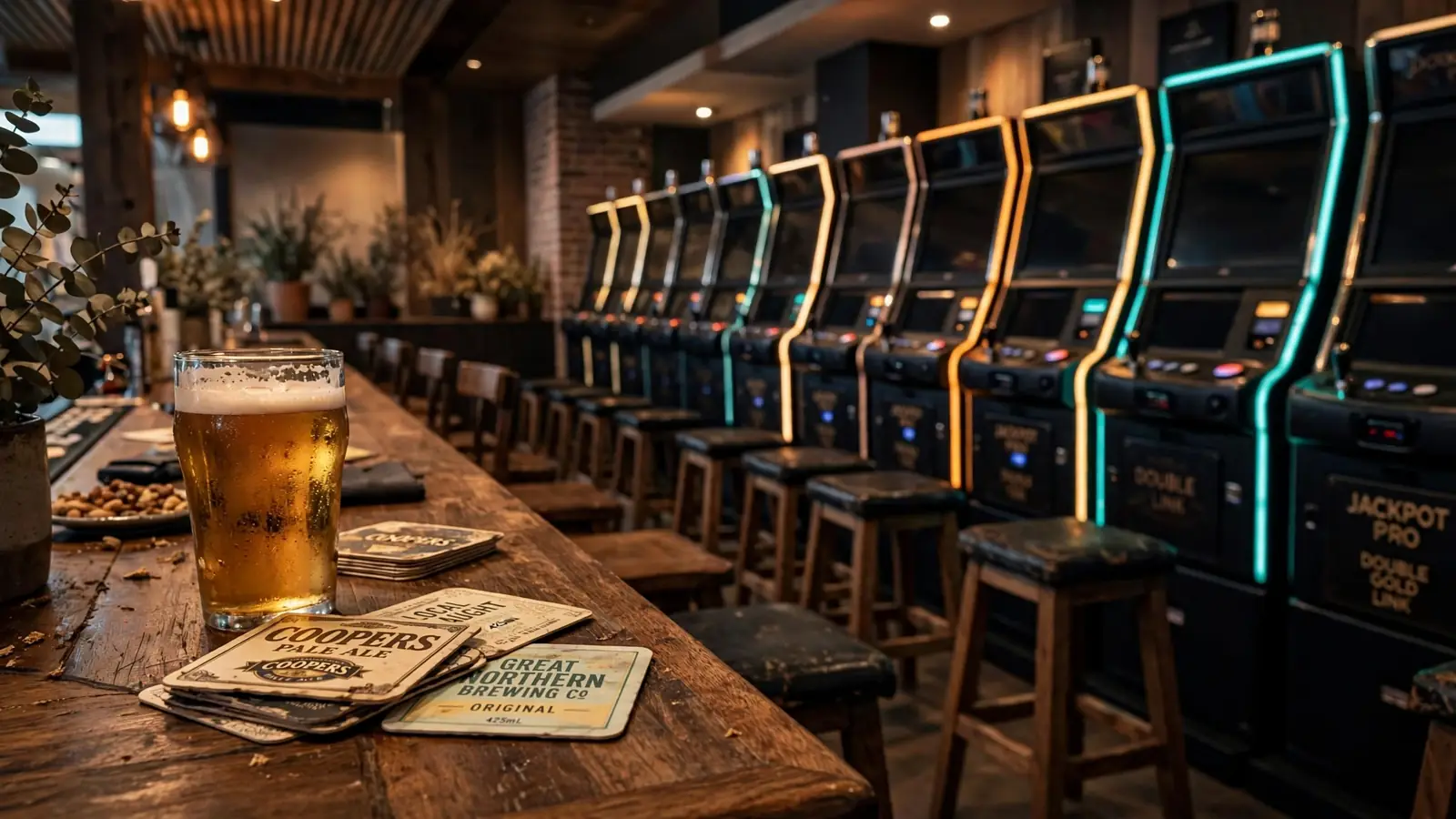
The difference between a physical casino in Darwin and a Darwin online casino is therefore not merely a matter of convenience. It is a boundary drawn around who may provide which services, and where the customer is located. Online casino-style games are prohibited when supplied to people in Australia, even when an offshore website remains visible or accepts visitors. Visibility is not permission.
That boundary can be obscured by search results, which place venue details beside online offers as if they were variations of one product. They are not. A request about casino dining or parking concerns a visit to a place; an online casino request concerns a service that Australian law prohibits operators from supplying to people here. The distinction is less glamorous than a lobby full of games. It is more important.
Finding the Venue and Getting in Touch
A map pin is useful only when it belongs to the right entrance. Casino properties can include several public-facing areas, and a search result may point to a hotel entrance, a general property boundary or a nearby road rather than the door intended for visitors. For a Darwin visit, the practical sequence is simple: confirm the venue’s current address through its official channels, check the map pin against that address, then look for any arrival instructions published by the venue. A third-party map can help with orientation; it should not be treated as the final word on access.
The same care applies to a car park. A map may show nearby parking without establishing whether it is part of the casino, available to visitors or subject to particular conditions. Current venue information is the place to check before setting out. If parking arrangements matter to the journey, they should be confirmed directly rather than inferred from a pin on a map. Small distinction, consequential arrival.
Venue Arrival Process
Confirm the venue’s current address through its official channels.
Cross-reference the map pin against the official address to identify the correct entrance.
Look for arrival and parking instructions published directly by the venue.
Contact details deserve equal scrutiny. A phone number copied across directories can outlive the page that first published it. For questions about access, facilities or a particular service, the casino’s own contact page is the soundest starting point; if a number is listed, checking that it is still published there avoids relying on an old directory entry. Event enquiries belong with the organiser or venue channel responsible for the listing, not with an unrelated ticket page.
Searches for a bar, baccarat or craps describe different expectations, not proof that each is available at a particular venue. The same is true of concerts: a venue’s general reputation does not establish a current programme or confirm a specific performance. Dates, access arrangements and event details can change, so a current listing should be checked through the venue or event organiser. For gaming questions, only the venue’s own current information can establish what is offered on site. No assumption should be built from a game name appearing in an online search result.
There is also a legal distinction that is easy to blur. A physical casino and an online casino-style service are not interchangeable simply because both involve gambling. Under the Interactive Gambling Act 2001, operators may not provide real-money online casino games, including slots and table games, to people located in Australia. That restriction concerns online services; it does not, by itself, confirm which facilities or games a Darwin venue provides. Nor should a web page offering access to offshore games be mistaken for the casino’s own contact or arrival information.
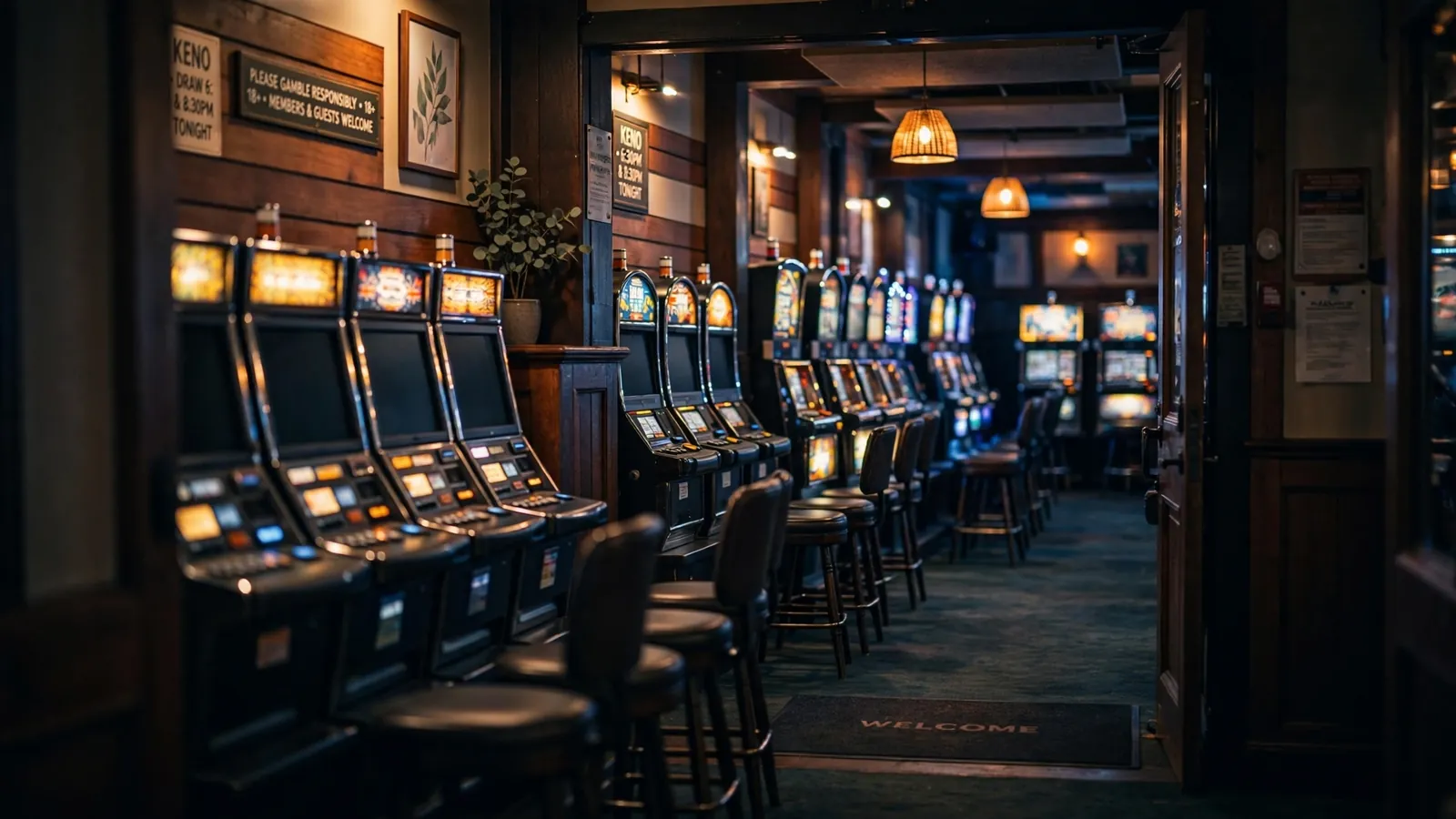
For poker machine gambling at a venue, identification must be checked, and the consequences of failing to comply must be made clear. That requirement is a practical matter, not a substitute for confirming local venue arrangements. Travel details, entry processes and any event-specific conditions are best checked close to the visit, using official information rather than assumptions assembled from search snippets.
Breakfast, Buffet and Resort Amenities
Breakfast, buffet and resort are words that can make a single venue sound like a complete holiday plan. They are not interchangeable promises. A breakfast service may be a limited morning offering; a buffet implies a particular style of meal; “resort” describes a broader hospitality concept, not a guarantee that every amenity commonly associated with one is present.
That distinction matters when planning around a casino visit. A buffet breakfast and a seafood buffet are separate propositions, each dependent on the menu, service period and current operation. The word “seafood” in a listing is especially poor evidence of what will be served: menus change, and a label alone says nothing about dishes, availability or dietary suitability. A useful plan rests on a current menu or direct confirmation from the venue, rather than on an old directory entry or an assumption carried over from another resort.
The same caution applies to rewards. A casino rewards programme, if offered, has its own rules: eligibility, how benefits are earned, where they can be used and whether dining is included. A rewards label does not establish that breakfast is discounted or that buffet access forms part of a benefit. Those details belong in the current programme terms, not in the reassuring glow of a brand name.
Buffet Dining Logistics
Buffet service is designed around choice and abundance, making practical details like service times, menu changes, and specific inclusions more important than the general promise of variety.
There is a social history tucked into the buffet itself. It turns eating into a service designed around choice and abundance, while asking less of the diner than a sequence of separately ordered courses. The format can suit groups with different tastes, but it also makes the practical details—service times, menu changes and what is actually included—more important than the broad promise of variety. No grand theory required.
For a Darwin stay, “casino resort” can therefore be a starting description, not a complete itinerary. Breakfast, buffet dining and other resort facilities need to be considered as distinct services, each with its own current terms. A venue’s general identity cannot settle whether a particular meal is served on a particular day, whether it is buffet-style, or whether a rewards benefit applies.
Online pokies belong to a different category altogether. They are not a resort amenity, and a search for them should not be mistaken for evidence about the physical venue’s food or facilities. The practical picture is narrower and clearer: meal formats, resort services and rewards benefits should each be confirmed on their own terms.
Spa, Dress Code and Practical Details
An address is the most ordinary detail attached to a venue, and often the most consequential: it determines whether a map pin leads to the entrance, a hotel reception or a larger resort precinct. For a Darwin visit, the useful distinction is between the casino’s own location and any broader address used for associated facilities. Those labels can appear interchangeable in casual listings, though they may not describe the same arrival point. A current venue directory or official map is a better basis for travel planning than an old search result.


The same care applies to dress. “Casino dress code” can sound like a single rule, but expectations may differ between gaming areas, bars and event spaces, and can change with a particular function. A general impression of what is acceptable is not a substitute for a venue’s stated entry conditions. Clothing advice copied from another casino, city or occasion may be confidently phrased and still be irrelevant. Nothing so useful as a rule that actually applies.
A day spa belongs to a different register of resort life: quiet rooms, treatments, appointments and the small logistics that surround them. Its association with a casino or hotel name does not, by itself, establish that it is on the premises, open to day visitors or operating under the same booking arrangements. The same distinction matters for bars. A listing can indicate a venue, but not necessarily its current hours, access conditions or relationship to the gaming floor. These are separate practical questions, not details that can be inferred from a building’s branding.
Career searches also lead beyond the visitor’s itinerary. Hospitality and gaming work sit within a regulated industry, and recruitment information is best treated as role-specific rather than as a general promise about working conditions. A job title alone cannot establish the duties, eligibility requirements or employment terms. That is especially true where a resort contains several kinds of operation under one public identity.
Dress Code
Expectations may differ between gaming areas, bars, and event spaces; general impressions are not a substitute for the venue’s stated entry conditions.
“Games” has a further ambiguity in Australia. The Interactive Gambling Act 2001 prohibits operators from providing real-money online casino games, including slots, poker and table games, to people physically in the country. That rule concerns online services; it should not be blurred with assumptions about the facilities of a particular physical venue. Nor does a casino’s name make an offshore website a locally regulated alternative. The distinction is legal, not merely a matter of interface or location.
For a visit, the dependable details are the ones attached to the specific service: its address, entry conditions, booking arrangements and current operating information. Spa, bar, dress and employment questions may share a resort label, but each has its own answer.
Restaurants at the Casino
A meal at a casino belongs to a different kind of evening from a meal chosen simply for its menu. The room, the pace of service and the distance between dinner and the rest of the night all matter. Yet the phrase “restaurants at the casino” can conceal several distinct questions: whether dining is available on site, what kind of food is served, whether a table needs to be booked, and whether the venue has a bar with a view.
Those details should be treated as particulars, not inferred from the word casino. A search for a Darwin casino restaurant does not establish that a particular restaurant is operating, or that its menu and service hours remain current. Names, menus and opening arrangements can change; a listing that once described an option may no longer describe tonight’s. The useful distinction is between a confirmed venue listing and an assumption built around the resort setting.

Restaurant choice also carries a small social history. Casino dining has often been presented as part of a larger night out, where food is not merely a pause between activities but a reason to arrive, linger or meet. That idea can make a property sound more complete than the information available to support it. A restaurant, a bar and a hotel dining room are not interchangeable, even when they share an address. Nor does the existence of one establish the others.
The rooftop-bar question deserves particular care. “Rooftop” suggests a specific setting and atmosphere; it is not a loose synonym for a bar inside a casino. Without a current listing that identifies such a venue, its name, access arrangements and service cannot be stated as fact. The same restraint applies to claims about cuisine, reservations, dress expectations or views.
For anyone comparing dining options, the most dependable details are those attached to a current venue page or a direct, recent confirmation: the restaurant’s identity, the menu, service times and booking conditions. These are practical checks, not guarantees about quality. Reviews can describe an earlier menu or a different service arrangement, while promotional language tends to turn possibility into certainty.
A restaurant may be the reason for a visit, or simply the part of an evening that makes the rest of it easier. Either way, the distinction between what is named and what is assumed matters. A polished setting is not a menu. A rooftop is not a rumour made useful by repetition.
Accommodation Around the Casino
A stay near a casino is a different decision from booking a room inside one. The useful comparison begins with the venue’s confirmed location, then asks how a property’s position, transport options and booking conditions fit the planned visit. Without a verified address, “near” is not a dependable measure: a listing may describe proximity in broad terms, while the practical journey depends on the route and the time of day.
Review cancellation rules, payment timing, and additional charges to determine the real cost.
Verify the route, transport options, and actual distance between the property and the venue.
Confirm the venue’s entry policy separately, as nearby accommodation does not guarantee admission.
For accommodation around Darwin Casino, the total booking terms matter more than a headline rate. Cancellation rules, payment timing, included services and any additional charges can change the real cost of a stay. A deal that looks persuasive at first glance may be less useful if its dates are fixed or its conditions make changes difficult. Those terms belong to the accommodation provider, not to the casino.
Casino promotions should be treated separately from accommodation deals. A gaming offer does not establish that a room is discounted, and a lodging promotion does not imply casino access or any particular gaming benefit. The distinction is easy to blur in a combined travel listing. It is also worth keeping clear: a room booking and permission to enter a venue are separate matters, governed by separate conditions.
The same applies to entry requirements. Accommodation nearby does not guarantee admission to Darwin Casino, nor does a casino’s entry policy determine the terms of a hotel booking. Any venue-specific conditions need to be checked with the venue before travel; a lodging listing is not a reliable substitute. Gaming machines, if relevant to a visit, are likewise a separate question from where to sleep.
For visitors comparing properties, map distance is only one part of the calculation. The route between the accommodation and the venue, transport availability, arrival and departure arrangements, and the booking’s change policy all affect how convenient a stay may be. These details should be confirmed for the intended dates rather than inferred from a general description or an old promotion.
There is no universal “casino accommodation deal”. Offers are tied to particular providers and conditions, and a promotion can change or disappear. The sound comparison is therefore between the actual booking terms available for the same travel dates—not between a casino-branded headline and an assumed saving. Proximity can be useful. It is not a promise.
Food Options and the Pool
Food and a pool can turn a casino visit into a longer resort stay, but those are separate facilities, not automatic features of a gaming venue. A search for food at Darwin Casino may mean anything from a quick meal to a collection of casual counters; the phrase “food court” makes a more specific promise. It suggests several places to choose from, often with a shared seating area. Without current venue information confirming that arrangement, the label should not be treated as a description of what is on site.
That distinction matters in practical planning. A resort can have dining without a food court, and a food court can offer a very different sort of meal from a full-service restaurant. Menus, service hours and seasonal changes are details that can alter the experience; none should be inferred from the word “casino” or “resort”. The sensible account of Darwin casino food is therefore not a catalogue of imagined outlets, but a reminder that broad categories need confirmation before they become plans.
The pool question is similarly specific. A hotel or resort setting does not, by itself, establish that guests can swim, whether access is restricted, or what facilities accompany a pool. Those particulars matter to families, overnight visitors and anyone deciding how much of the day to spend on site. A pool is not a decorative synonym for leisure.
Food and swimming also raise different access questions. Dining may be open to visitors who are not staying overnight, while a pool may be reserved for hotel guests or subject to other conditions. Neither arrangement should be assumed. Current venue information is the appropriate place to establish what is open, who may use it and whether any conditions apply.
The broader point is simple: “casino” names the central attraction, not a complete inventory of resort amenities. Food options, a food court and a pool each need to be described on their own terms. That is less glamorous than a promised day of effortless leisure, but more useful.
What is the legal status of offshore online casinos and NSW gambling law?
Australian-run online casinos cannot offer online casino games such as pokies, blackjack and roulette to people in Australia. Offshore casinos are not regulated under Australian law; although it is technically not illegal for Australian players to use them, their legal status is a grey area.
What are the bonuses and wagering requirements?
Some casinos offer free spins or bonus rounds that players can buy for a set amount, usually 50 to 100 times their stake. Free-spin winnings commonly carry wagering requirements of 20 to 50 times; one stated requirement is 30 times before withdrawal.
Are online casino-style games restricted in Australia?
Yes. The Interactive Gambling Act restricts Australian-based operators from offering online casino games such as pokies, blackjack and roulette. Offshore platforms may also block games for Australian players because of licensing rules or their own region restrictions.
Prepared by the Wildtokyoslotshubau.com editorial staff.