Keno Online Casinos in Australia: Legal Limits
 Available in AU
Australia’s Interactive Gambling Act 2001 sets limits on providing real-money online casino games to people in Australia.

Table of Contents
- Keno Online in Australia: The Legal Boundary Comes First
- Real-Money Keno and the Risks Beyond the Game
- Keno Sites, Age Checks and the Limits of Self-Exclusion
- Keno Games Without Unsupported Claims
- Keno Machine Language and What the Evidence Can Say
- Free-Play Keno: A Search Term, Not a Verified Offer
- Keno Strategy, Randomness and the Limits of Prediction
- Canadian Keno Searches and the Australian Context
- Keno Casinos and the Protections That Do Not Travel Offshore
- Keno Bonuses, Bitcoin Queries and the Cost of Turnover
Keno Online in Australia: The Legal Boundary Comes First
The legal question around online casino keno in Australia begins with the operator, not with the draw. Under the Interactive Gambling Act 2001, companies cannot provide real-money online casino games to people in Australia without a domestic licence. That category covers casino-style games, and no Australian-licensed online casino exists. The boundary is therefore not a matter of finding a foreign licence that somehow counts locally: the domestic authorisation required for this business has not been issued.
This distinction can be easy to lose in the language of the internet, where a site may present itself as a casino, accept Australian customers and display credentials from another jurisdiction. Those details do not turn it into an Australian-licensed service. The law addresses the provision of the service to people in Australia; an operator’s overseas status does not supply the local licence the Act requires.
Keno’s familiar presence in other settings does not change that test. A search for online keno at a casino may sound like a question about game choice, but the first issue is whether the real-money service itself may lawfully be offered to Australians. The name of a game cannot move the operator outside the legal category of online casino gambling. A polished page does not alter the statute.
For Australian players considering online keno, this list offers a starting point for reviewing the operator details available. The profiles do not confirm keno availability, so check that directly before choosing.
License: Curacao (operating since 2017) · Min. deposit: A$20 Uptown Pokies has operated since 2017 and lists a Curacao licence. Its minimum deposit is A$20.
License: Curacao, operated by Dama N.V. 7Bit Casino is operated by Dama N.V. and lists a Curacao licence.
License: Curacao OGL/2024/1335/0780 · Min. deposit: EUR 20 Vegaz Casino lists Curacao licence OGL/2024/1335/0780. Its minimum deposit is EUR 20.
License: Curacao eGaming OGL/2024/923/0383 (Antillephone N.V.) · Min. deposit: A$30 WinSpirit Casino lists Curacao eGaming licence OGL/2024/923/0383, issued through Antillephone N.V. Its minimum deposit is A$30.
License: Curacao Gaming Control Board JustCasino lists a Curacao Gaming Control Board licence. That is the available licensing detail for this profile.
License: Tobique Gaming Commission · Payout speed: crypto ~10-15 minutes, fiat 1-5 days · Min. deposit: A$30 SkyCrown lists a Tobique Gaming Commission licence. Its stated payout times are around 10–15 minutes for crypto and 1–5 days for fiat; the minimum deposit is A$30.
License: Curacao eGaming (Dama N.V.) JeetCity Casino lists a Curacao eGaming licence and is operated by Dama N.V.
License: international iGaming licence – jurisdiction not named in the source · Payout speed: PayID 1-24 hours · Min. deposit: A$30 (PayID from A$10) House of Pokies lists an international iGaming licence, though the jurisdiction is not named. Its stated PayID payout time is 1–24 hours, and the minimum deposit is A$30, or A$10 when using PayID.
License: Curacao Gaming Control Board OGL/2023/176/0095 (Hollycorn N.V.) Neospin lists Curacao Gaming Control Board licence OGL/2023/176/0095, with Hollycorn N.V. named in its licensing details.
License: Curacao – Antillephone N.V. (Versus Odds B.V.) · Min. deposit: EUR 20 Thor Casino lists a Curacao licence through Antillephone N.V., with Versus Odds B.V. named in its licensing details. Its minimum deposit is EUR 20.
The operator’s position and the player’s position
The Act targets companies that provide prohibited services, rather than making an individual player liable simply for playing on an offshore site. Australians can legally play on offshore sites that accept them. That statement is narrower than an endorsement: it does not mean that an offshore operator is approved in Australia, or that a player receives the protections attached to a domestic licence.
There is no such domestic online casino licence to check. That absence matters because the usual language of consumer choice—compare licences, then choose a regulated site—can suggest an Australian option that does not exist. A foreign regulator may oversee an operator under its own system, but that is not the same as Australian authorisation. The distinction is plain, if inconvenient.
The practical position is also less settled than a website’s availability might imply. The Australian Communications and Media Authority (ACMA) enforces the Interactive Gambling Act 2001 and blocks access to illegal offshore gambling sites. Internet service providers are required to comply with ACMA’s blocklist. A site being reachable at one moment, or accepting a deposit, is not proof that it has local approval; nor does a blocklist make the underlying legal distinction disappear.


This creates two separate questions that are often folded into one. The first is whether an offshore casino may lawfully provide real-money services to people in Australia: the Act prohibits that without a domestic licence. The second is whether an Australian player is personally committing an offence merely by using an offshore site that accepts them: the law’s target is the operator, not the individual player. Treating those questions as interchangeable makes the position sound harsher for players than it is, while treating the second answer as a seal of safety makes it sound gentler than it is.
The same separation applies to online casino keno as to other casino-style games. A player’s ability to access a service does not make the provider’s offer lawful in Australia. And the fact that the law does not target the player does not create a local authority able to supervise the offshore casino on the player’s behalf. The state has drawn a boundary around provision, not built a domestic casino market behind it.
For that reason, “best” cannot be read as a legal category. A site’s claims, its layout or its willingness to take Australian customers do not establish Australian licensing. Where offshore operators are concerned, Australian players have no legal recourse in Australia if a casino refuses to pay winnings. That is a different matter from whether the player is liable under the Act, and it should not be blurred into the same warning.
The legal landscape is unusually spare: the operator faces the prohibition, the player is not made liable merely for playing, and no Australian-licensed online casino stands between them. ACMA’s blocks are part of enforcement, not a local approval system for casino sites. A browser window can make distance look irrelevant. The law does not.
Legal Recourse
Australian players have no legal recourse in Australia if an offshore casino refuses to pay winnings.
Real-Money Keno and the Risks Beyond the Game
Real-money keno online sits in a peculiar Australian gap. The law places responsibility on the operator: Australians are not criminally liable simply for playing on an offshore site that accepts them. That distinction can make participation seem less consequential than it is. Legal permission for an individual to play, however, does not bring the operator under Australian supervision or create a local remedy if a dispute follows.
The risk becomes concrete at the point of payment. If an offshore casino refuses to pay winnings, an Australian player has no legal recourse in Australia. A balance displayed on a screen may look definite; the promise behind it is only as useful as the operator’s willingness to honour it. The distance between those two things is where real-money play stops being an abstract choice and becomes financial exposure.
That exposure is not limited to a dramatic refusal. A disagreement over account terms, a delayed decision, or a disputed result can matter because the service is outside the domestic system. The crucial point is not that every offshore operator will withhold winnings. It is that Australian legal remedies are unavailable in Australia if one does. A favourable outcome cannot be treated as secured merely because the account shows a credit.
The legal boundary and the practical one are different. Australians may legally play on offshore sites that accept them; the law’s focus is on the companies providing prohibited services, not on individual players. Yet the absence of player liability does not amount to a guarantee of payment, a domestic dispute process, or a reliable way to recover money. One rule answers whether the player is the target of the law. It does not answer whether the player can collect.
This matters when a game is framed as a small diversion. Keno can be presented as a quick sequence of choices and results, while the financial arrangement surrounding it is less visible. Real-money play adds an account balance, a deposit and the expectation that any winnings can be withdrawn. Each of those expectations depends on the offshore operator’s conduct, not on an Australian casino framework that does not exist.
The phrase “play casino keno online” can sound like a simple description of an activity. In practice, the setting changes what the activity means. A person can be legally permitted to participate while having no Australian legal recourse against the business if it refuses payment. Those are not contradictory statements. They describe two separate sides of the arrangement: the individual’s position under Australian law and the limits of protection when dealing with an offshore casino.
The same distinction applies whether the game is called online casino keno or real-money keno. A label does not alter the jurisdiction behind the service, and a displayed balance does not by itself establish that money will reach a player. Even the familiar language of casino rules can conceal the larger question: who is responsible when a rule is disputed, and where can that responsibility be enforced? In this setting, the answer may lie beyond Australian legal reach.
That is why the central risk is not a prediction about how a particular game will turn out. It is the gap between being allowed to play and being able to enforce a claim. The first concerns the player’s legal position; the second concerns the operator’s obligations and the remedies available if those obligations are contested. Confusing them makes offshore play appear safer than the actual arrangement warrants.
Attention: The absence of player liability under the Act does not guarantee payment or provide a domestic dispute process for offshore play.
Money changes the texture of the decision. Free-play wording belongs to a different discussion; when a balance is funded with real money, the question is no longer only what the game might return. It is also whether the operator will honour a withdrawal and what recourse remains if it does not. For Australian players using an offshore casino, the domestic answer to that last question is stark: none.
The game may be brief. The financial consequences need not be.
Keno Sites, Age Checks and the Limits of Self-Exclusion
Age is the clearest boundary in Australian gambling access: the legal minimum is 18, including for online pokies. It is a simple threshold, but meeting it does not make every online service part of the same protective system. An age check at an offshore casino and an Australian safeguard may look like parts of one process; their authority is not the same.
Identity checks tend to become most consequential when money is due to leave an account. A specialist review describes casinos as requiring verification before a first withdrawal, with possible requests for a photograph of identification, proof of address and, in some cases, a selfie showing the identification document. That account describes a reported practice, not a rule that can be assumed of every operator. Requirements vary, and the significance is practical: details supplied at registration may later be compared with documents before a cash-out is approved.

This can make verification feel less like a doorway than a checkpoint placed near the exit. A mismatch in names or addresses, or a request for further material, can complicate the process. The casino controls its own checks, and an offshore arrangement does not acquire Australian oversight simply because the account holder is in Australia or the documents are Australian. Careful handling of identity documents matters; so does recognising that the operator, rather than a domestic casino regulator, may be deciding whether the submission is sufficient.
That is a different question from whether someone is old enough to gamble. The age threshold establishes who may legally participate; it does not certify an offshore website, its procedures or its willingness to resolve a dispute fairly. Nor does an account screen displaying an age declaration amount to independent verification. Access controls and meaningful protection are not synonyms.
Self-exclusion makes the distinction sharper. BetStop is an Australian service, but its reach is limited to Australian-licensed operators. It does not bind offshore sites. Since there is no Australian-licensed online casino, a person who has excluded themselves through BetStop cannot treat that action as a barrier that automatically follows them to an offshore keno account. A safeguard can be real and still have a border.
The gap is not a technical footnote. Self-exclusion works by making a person’s decision visible to participating services; it cannot compel an operator outside that system to honour the same restriction. Offshore sites may offer their own account controls, but those are separate arrangements, governed by the operator’s terms and processes. Their existence should not be inferred from a registration form, and their reach should not be confused with BetStop’s.
BetStop Limits
BetStop is an Australian service that does not bind offshore sites; self-exclusion through this system does not automatically block access to offshore keno accounts.
This also changes the meaning of searches for casinos offering keno. A site may present age declarations, identity checks or account restrictions, but those features alone do not establish that it belongs to Australia’s protective framework. Nor does a polished verification process tell anything decisive about how an exclusion request will be handled. Administration can resemble regulation. It is not the same thing.
The social idea behind an age limit is that gambling belongs to adults, not children. Verification gives that boundary an administrative form, while self-exclusion gives people a way to interrupt access when participation has become harmful. Both depend on who is required to act and which system can enforce the requirement. At an offshore site, those lines may stop where Australian protections stop.
The useful distinction is therefore modest but important: age eligibility, identity verification and self-exclusion answer different questions. The first sets a legal threshold; the second may be a condition of withdrawing funds; the third depends on the reach of the service administering it. None should be mistaken for a guarantee that the others apply. A border remains a border.
Keno Games Without Unsupported Claims
Keno can appear in searches as a single game, a family of games or a feature attached to an online casino. The wording shifts; the underlying question is often simpler: what does a particular version involve, and what can be known about it before play? A name alone cannot answer that. Nor can the broad label “casino keno” establish how a game works.
That distinction matters because familiar words invite assumptions. A game described as keno may sound self-explanatory, but the label does not verify its rules, odds, prize structure or any special features. Those details belong to an individual game and its published rules. Without reliable information tied to that specific version, claims about how it plays would be guesswork dressed as guidance.
The same caution applies to descriptions of a collection of keno games. A plural heading suggests choice, but it does not establish what is included, whether the games differ, or how any differences affect play. A catalogue is not evidence of quality. A short description is not a substitute for rules. And repeating a game’s name does not make its mechanics clearer.
This is where casino language can blur useful distinctions. “Keno online” may refer to the general idea of playing digitally; “online casino keno” places that idea inside a particular kind of service. Neither phrase identifies a verified game or proves that a specific version is available in Australia. The wording carries an expectation of a product. It is not the product itself.
A careful description would need to connect claims to the exact game being discussed. If the subject is a set of rules, those rules should be attributable to that version. If the subject is odds or possible returns, the figures should be supported by information specific to it. If a feature is mentioned, its operation should be established rather than inferred from a familiar label. Without that connection, precision is only theatrical.
The distinction is not pedantry. Game labels travel easily between sites, pages and promotional copy, while details may not travel with them. A reader can encounter the same broad term in different contexts and reasonably assume that the games match. The assumption may be convenient for a catalogue; it is not a sound basis for describing the game.
Precision in Game Descriptions
A careful description must connect claims to the exact game version, ensuring that rules, odds, and features are attributable to that specific product rather than inferred from a general label.
An app raises much the same issue. The word identifies a format of access, not the rules or content of the game within it. It cannot, by itself, establish which keno version is offered, what its conditions are, or whether its description is complete. The small screen changes the frame, not the evidential standard.
There is also a difference between explaining the category and endorsing a particular offering. A general account can say that people use “keno” to name a type of game. It cannot responsibly turn that broad category into a claim about named products, particular odds or distinctive features where those details have not been established. The more exact the claim, the more exact its support must be.
So the sensible boundary is plain: broad language can identify the subject, but it cannot fill in the particulars. A “keno casino game” is not a complete description. Until the rules and conditions of an individual version are clear, confident claims about how it works would say more than the available information warrants. A label is not a rulebook.
Keno Machine Language and What the Evidence Can Say
The word “machine” carries more baggage than it seems to. It can suggest a physical cabinet in a venue, a screen-based game, or simply a familiar label for a digital pastime. Those meanings are not interchangeable. A phrase about keno machines, by itself, does not establish which kind of equipment or service is meant.
That distinction matters in Australia, where machine language has a recognisable public setting. Gaming machines belong to venues, rules and arguments about public space: where they sit, who can see them, and how gambling is managed around them. Online wording borrows the same solid noun for something that may have no cabinet at all. The borrowed term sounds concrete; the object behind it may not be.

A reference to a keno-style machine also tells nothing dependable about a particular product. It does not identify a manufacturer, a game title, a screen layout, or the way numbers are selected or displayed. Nor does it supply reliable machine data. Claims about performance, return rates, odds or special features would need evidence tied to a named product and its actual configuration. The terminology alone cannot carry that weight.
This is not a technical quibble. Product language often makes a general category feel like a documented object. Once a machine is imagined, it is easy to assume that its mechanics are known, that its rules are settled, or that a strategy can be attached to it. None follows from the label. A search phrase may express what someone hopes to find, but it cannot certify what exists or how it works.
There is a further ambiguity in the word “slot”. In ordinary conversation, it may be used loosely for a screen-based gambling game; in a product description, it can point toward a particular format. Without a verified product to examine, the term cannot settle that difference. Even the phrase “machine strategy” remains only a promise of subject matter, not evidence that any machine has a predictable pattern or a documented method of play.
The careful boundary is modest: machine-oriented wording indicates an interest in a machine-like presentation of keno, but it does not substantiate a specific device, catalogue entry or set of technical figures. Those details should not be supplied by imagination merely because the language sounds familiar.
Machine Terminology
A label like “machine” indicates an interest in a specific presentation but does not substantiate technical figures or documented rules.
A label is not a specification.
Free-Play Keno: A Search Term, Not a Verified Offer
“Free play” sounds simple: a game without a cash stake. In practice, the phrase can point to different things. It may describe a practice round, a demonstration mode, or play attached to a promotion. Those are not interchangeable. A demonstration, if offered, is not the same as a cashable prize; promotional play, if offered, may carry conditions of its own.
That distinction matters when keno is described in the language of pokies. The wording can make it sound as though a particular online game is waiting behind the label, with familiar mechanics and a no-cost version ready to open. A phrase is not a catalogue entry. It establishes neither that a game exists at a particular site nor that it can be played without depositing money.
There is also a difference between playing without staking cash and playing without consequence. A free mode may still involve time, attention and the habits formed by repeated play. If a promotion is involved, its terms determine what the credit can be used for and whether anything won can be withdrawn. The word “free” does not settle those questions. It is a small word carrying rather too much luggage.
The Australian setting adds its own restraint. Real-money online casino games cannot lawfully be provided to people physically in Australia by operators under the Interactive Gambling Act 2001. That does not turn a phrase such as “free keno” into evidence of a lawful, locally available casino product. Nor does a no-cash label, on its own, explain what kind of activity is being offered.

For that reason, free online keno is best understood as a description of an intended experience, not proof of a particular game or offer. The useful distinction is between a game used for practice, a promotional credit and a cash wager. Each has a different relationship to money, and the label alone cannot tell which one applies. A site’s own terms may define an offer, but the presence of the word “free” is not a substitute for those terms.
The attraction is easy to understand: a version without a cash stake seems to promise the shape of play with less financial exposure. Yet the promise remains only as precise as the arrangement behind it. “Free” can describe the price of entry; it does not describe every condition, the game itself, or what happens next. A tidy label, not a full explanation.
Keno Strategy, Randomness and the Limits of Prediction
A keno strategy can describe a way of making choices, but that is not the same as a way of knowing what will happen. The distinction matters whenever a system is presented as more than a preference: a pattern of selected numbers, a betting routine or a claim about timing may sound systematic without giving anyone a reliable forecast.
Randomness is a useful boundary, not a magic word. In a pokie, each spin is generated separately by a Random Number Generator; the previous result does not tell the machine what to produce next. A run of results may invite a story about momentum or an approaching reversal, but neither interpretation follows from the spin being independent. A sequence can look meaningful after it appears. That does not make it predictive.
Randomness
In games using a Random Number Generator, each result is independent, meaning previous outcomes cannot be used to predict future results.
That fact is specific to pokie spins. It should not be stretched into a claim about how every keno game or piece of keno casino software works. Nor does a strategy label establish that a method has been tested, that it improves outcomes, or that a particular set of choices has better prospects. Such claims need rules and evidence tied to the actual game. Without them, confidence is doing the work that proof should do.
The phrase “keno slot” can also blur two different ideas: a search for a casino-style format and an expectation that a strategy applies across games. Similar-looking screens or familiar vocabulary do not show that the underlying mechanics are the same. A method described for one format cannot simply be carried over to another because both involve chance.
There is still a modest role for strategy in the ordinary sense: a person can decide in advance what they are willing to spend, how long to continue and when to stop. Those are decisions about conduct, not devices for controlling random results. The difference is easy to lose in promotional language, where “strategy” can suggest an edge while supplying only a ritual.
A useful test of any keno strategy claim is whether it explains what the method changes. If it changes the player’s choices or limits, it may shape the experience. If it promises to identify future outcomes, the claim needs evidence specific to the game, not an appealing pattern or confident phrasing.
Chance has no memory.


Canadian Keno Searches and the Australian Context
References to Canadian keno casinos belong to a different geographical frame from an Australian page. A country name is not decoration: it can signal that the rules, services and audience being discussed are elsewhere. Once the setting changes, an answer about one market cannot simply be carried across to another.
That distinction matters particularly in Australia, where there is no Australian-licensed online casino. A Canadian label in a page title or description does not alter that fact, nor does it make a service Australian-regulated. The wording may be useful for identifying the subject of a discussion, but it is not evidence that a particular casino is available to Australians, or that it operates under Australian authority.
There is also a second kind of ambiguity in the same cluster of terms. References to playing several keno cards at once, or to a four-card format, sound precise. Yet a precise-sounding phrase is not the same as a verified description of a product. It does not establish what a game displays, how a round works, whether a particular version exists, or where it can be played. Those details should not be supplied by inference.
The internet encourages this blending of locations and formats. A page can be encountered far from the country named in its heading; a phrase can travel without its original context attached. That makes geographical labels easy to overlook and easy to misread. Canada-oriented material should therefore remain recognisable as material about Canada, rather than being presented as a guide to the Australian market.
Geographic Labels
References to Canadian keno casinos do not imply Australian regulation or local availability, as no Australian-licensed online casino exists.
The distinction is modest but consequential. A Canadian reference does not describe Australian licensing, and a card-count phrase does not certify a game. Neither should be treated as a local recommendation. In a market with no domestically licensed online casino, borrowed labels can create an appearance of local relevance that the label itself cannot support.
The country matters. So does the claim.
Keno Casinos and the Protections That Do Not Travel Offshore
Responsible-gambling controls are often presented as ordinary account settings: deposit limits, loss limits, session time limits and self-exclusion. Their usefulness depends on who operates the account and which system can enforce the setting. A control displayed on an offshore keno site is not the same thing as a safeguard backed by Australian oversight.
That distinction matters because Australia has no licensed online casino. BetStop, the national self-exclusion register, applies to Australian-licensed operators; it does not bind offshore casinos. Registering with BetStop therefore cannot be treated as a way to block access to an offshore keno account. A familiar label does not extend its reach.
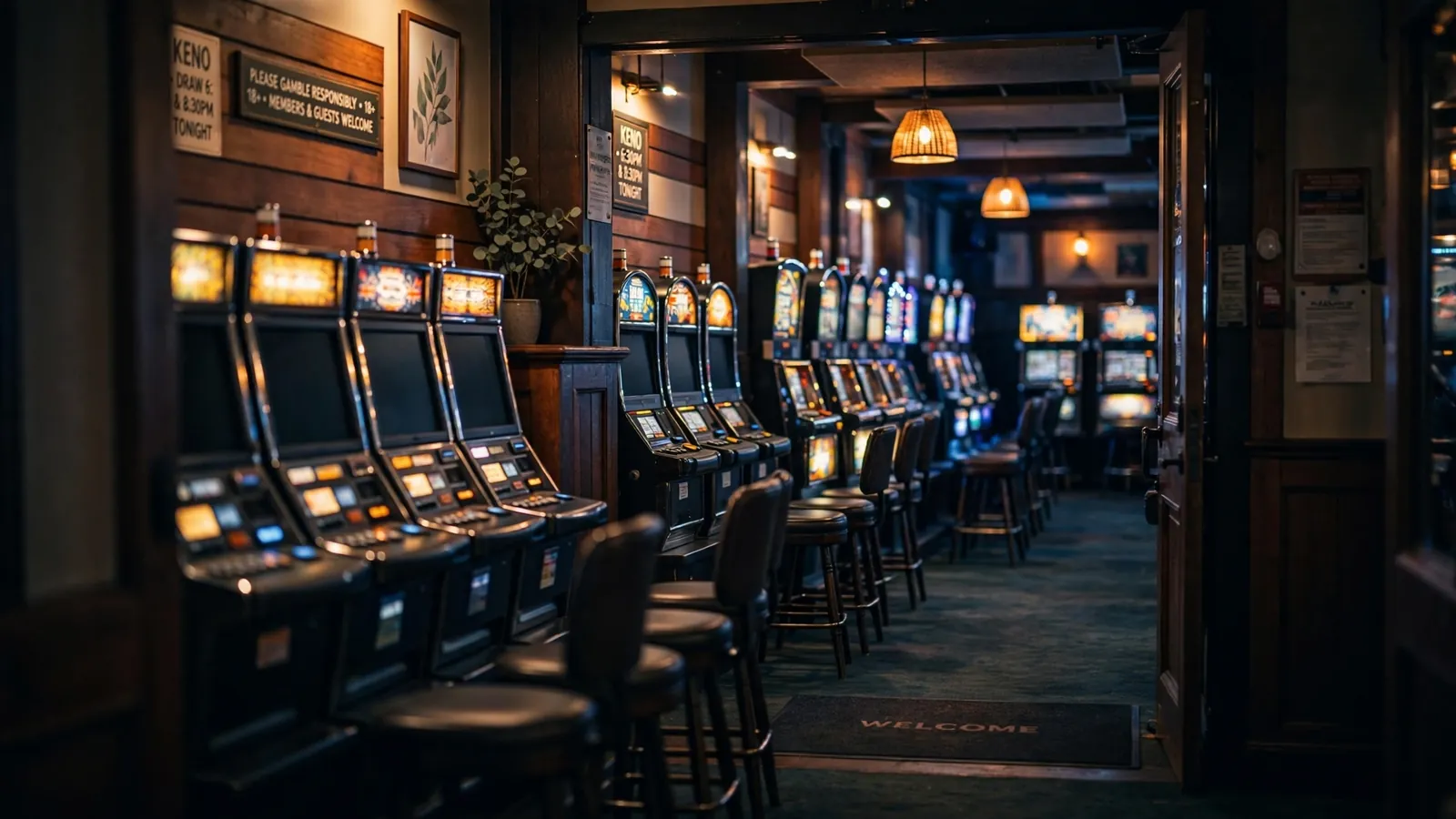
The same caution applies to limits chosen within an account. They may be offered by an operator, but they are not a substitute for protections enforceable under Australian regulation. If a site does not honour its own settings, an Australian player cannot assume that a domestic regulator will compel it to do so. Safeguards lose force at the border.
This is not a criticism of the idea of limits. Deposit and loss controls can help make gambling more bounded, while session limits can interrupt prolonged play. Self-exclusion can create a stronger barrier where the system recognises it. But each measure depends on the operator’s rules and the jurisdiction behind them. Offshore terms and Australian protections are not interchangeable.
The Australian approach also reflects a public choice: gambling is not treated simply as a private bargain between a customer and a website. Rules assign responsibility to operators and institutions. When play moves beyond that regulated structure, the player may still see familiar buttons and promises, but the domestic framework has not travelled with them.

For keno, then, the important question is not merely whether a casino offers limits or self-exclusion. It is whether those protections are connected to an Australian-regulated service. They are not made domestic by appearing on a screen.
Keno Bonuses, Bitcoin Queries and the Cost of Turnover
A bonus headline records what is offered at the entrance, not what must happen before its winnings can leave. The operative detail is the wagering requirement: the amount of qualifying bets required before withdrawal is permitted. A large multiplier can turn a generous-looking credit into a long obligation, with no assurance that play will end in profit.
One specialist review suggests treating requirements of 35x or less as a more reasonable benchmark and describes anything above 40x as punishing. That is a source’s rule of thumb, not a universal standard or a promise about any particular offer. The terms still decide which funds the multiplier applies to, which games count, and whether other conditions restrict a withdrawal.
The arithmetic is less charming than the headline. In the review’s illustration, a $500 bonus carrying a 40x requirement entails $20,000 in bets before any winnings can be withdrawn. The figure is turnover, not a deposit to be paid once; it represents repeated wagering, with the balance exposed to the game throughout. A bonus can therefore enlarge the task faster than it enlarges the player’s usable funds. Fine print, in this case, is the main event.

Bitcoin searches belong to a different part of the decision: they concern payment method, not the cost of bonus play. The phrase “Bitcoin keno casino” does not establish that any particular site accepts Bitcoin, nor does a payment option alter a wagering condition. Availability and terms would need to be checked directly, without treating the currency label as evidence of fairness or protection.
Promotional credit is not free money in the ordinary sense. Its value depends on the conditions attached, and a turnover figure is meaningful only when read alongside the qualifying games and withdrawal rules. A headline can be brief. The obligation rarely is.
What is the legal age for online gambling in Australia?
You must be 18 or older to gamble online in Australia.
How do I know if an online casino is safe to play at?
No online casino is licensed in Australia, and an overseas licence does not provide Australian authorisation. If an offshore casino refuses to pay, Australian players have no legal recourse in Australia.
Are online pokies rigged?
Each spin is an independent random event determined by a Random Number Generator. However, some providers let casinos choose between different RTP settings for the same game.
What does “wagering requirement” actually mean?
It is the amount you must bet before bonus-related winnings can be withdrawn, usually calculated as a multiplier. For example, a $500 bonus with a 40x requirement means $20,000 in bets.
Are online pokies legal for Australian players?
Australian players are not liable simply for playing on offshore sites that accept them. But companies cannot legally offer real-money online pokies to Australians without a domestic licence, and no such licences have been issued.
Written by the editors at Wildtokyoslotshubau.com.