Dragon Link Online Pokies in Australia: What’s Verified
 Available in AU
A cautious guide to payment terminology, legal limits, casino assurances and transaction questions around a named pokie search.

Table of Contents
- What a Digital Pokie Machine Means
- Free Play and the Real-Money Divide
- Real-Money Play and Australia’s Legal Boundary
- The Dragon Link Search, Without an Unsupported Game Profile
- Offshore Casino Claims and the Limits of Reassurance
- Game Credits, Bitcoin Value and Moving Prices
- Wins, Bonus Terms and Disputes
- Apps, Identity Checks and the First Withdrawal
- Bitcoin Deposits and Withdrawals: The Transaction Path
- Happy and Prosperous: A Name, Not a Verified Specification
What a Digital Pokie Machine Means
A digital pokie machine is a software-based version of a familiar gambling-machine category. When Bitcoin is accepted as payment, the phrase “Bitcoin pokie” describes the payment method associated with the machine; it does not describe a different kind of physical device. The machine is digital, and Bitcoin is the form of payment named in the description.
That distinction is easy to lose in the compressed language of online listings. “Machine” can suggest metal cabinets, buttons and a screen in a club or casino. In a digital setting, it can instead refer to a game presented through software. The word has travelled from the object to the activity, much as the old names of household tools survive after the tools themselves have changed shape. Here, though, the essential point is modest: the game is digital, and Bitcoin is accepted as payment.
The terminology does not establish what a particular game looks or sounds like, what rules it follows, or where it can be accessed. Nor does the presence of Bitcoin in a description confirm that a named title is available through any particular service. A phrase such as “Dragon Link casino machine” may combine a title, a broad game category and a payment setting in the mind of the person reading it. Those parts should not be mistaken for one verified specification.
Choosing Dragon Link online pokies in Australia means checking what is known about an operator before deciding where to play. This list gives a concise reference to the available licensing and payment details.
License: Curacao (operating since 2017) · Min. deposit: A$20 Uptown Pokies has operated since 2017 under a Curacao licence. Its minimum deposit is A$20.
License: Curacao, operated by Dama N.V. 7Bit Casino is licensed in Curacao and operated by Dama N.V.
License: Curacao OGL/2024/1335/0780 · Min. deposit: EUR 20 Vegaz Casino holds Curacao licence OGL/2024/1335/0780. Its minimum deposit is EUR 20.
License: Curacao eGaming OGL/2024/923/0383 (Antillephone N.V.) · Min. deposit: A$30 WinSpirit Casino holds Curacao eGaming licence OGL/2024/923/0383, issued through Antillephone N.V. Its minimum deposit is A$30.
License: Curacao Gaming Control Board JustCasino is licensed by the Curacao Gaming Control Board.
License: Tobique Gaming Commission · Payout speed: crypto ~10-15 minutes, fiat 1-5 days · Min. deposit: A$30 SkyCrown is licensed by the Tobique Gaming Commission. Its listed payout times are around 10–15 minutes for crypto and 1–5 days for fiat; the minimum deposit is A$30.
License: Curacao eGaming (Dama N.V.) JeetCity Casino is licensed in Curacao eGaming and operated by Dama N.V.
License: international iGaming licence – jurisdiction not named in the source · Payout speed: PayID 1-24 hours · Min. deposit: A$30 (PayID from A$10) House of Pokies lists an international iGaming licence, though the source does not name the jurisdiction. PayID payouts take 1–24 hours; the minimum deposit is A$30, or A$10 for PayID.
License: Curacao Gaming Control Board OGL/2023/176/0095 (Hollycorn N.V.) Neospin holds Curacao Gaming Control Board licence OGL/2023/176/0095, with Hollycorn N.V. named in the licence details.
License: Curacao – Antillephone N.V. (Versus Odds B.V.) · Min. deposit: EUR 20 Thor Casino is licensed in Curacao through Antillephone N.V., with Versus Odds B.V. named in the details. Its minimum deposit is EUR 20.
This matters because online language often makes unlike things appear neatly joined. A title may be spoken of as a machine; a machine may be spoken of as a game; a game may be spoken of as a payment product. The grammar is convenient. The distinctions are more useful. “Digital” says something about the form in which the game exists. “Pokie” names the broad kind of gambling game. “Bitcoin” identifies a payment currency. None of those words, on its own, supplies the missing details of a particular product.
The machine metaphor remains powerful because gambling has long been associated with visible objects: levers, cabinets, reels and the small theatre of a screen. Digital versions remove the need for that cabinet while retaining the familiar label. The language carries a physical history into a software setting. It can make an online game sound like a piece of equipment, even when what is being described is an interface rather than a machine that can be touched.
Bitcoin adds another layer to the description, but it does not change the basic category. A Bitcoin pokie remains a digital pokie machine that accepts Bitcoin as a form of payment. The currency is not the game, and the game is not the currency. A payment option may be part of how a service describes access to a game, but it does not tell anyone what the game’s features are. That is a separate question.

There is also a difference between a general category and a named title. “Pokie machine” can be used broadly; a name attached to it points towards a specific game or product. But naming something does not make every detail about it self-evident. A label alone cannot establish whether the item is a digital game, a physical machine, a particular version, or something available in a particular place. The label is a starting point, not a technical description.
For that reason, the phrase “online pokie machine” is best understood as ordinary shorthand, not as proof of a standard design. Digital games may be discussed as machines because the cultural vocabulary predates the software. Bitcoin may appear in the same phrase because it is accepted as payment. The words explain a broad relationship, not the full arrangement behind it.
There is a small historical irony in the name: the machine survives most vividly as an idea, while the object itself can disappear from view. The vocabulary stays put. The medium changes.
So, at its simplest, a Bitcoin pokie is a digital gambling machine that accepts Bitcoin as payment. That definition is deliberately narrow. It separates the general meaning of the term from assumptions about an individual game, its features or its availability. Labels can travel quickly. Specifics need firmer ground.
Free Play and the Real-Money Divide
Online pokies may present a choice between free play and real-money play. The screens can look similar; the difference lies in what is at stake. In free play, the session uses no money as a gambling stake. In real-money play, funds are wagered. That distinction is more than a setting in a menu. It changes the nature of the activity.

Free play can make a machine’s interface easier to understand. Without money riding on each spin, the experience is a simulation rather than a cash wager. Real-money play crosses that line: funds are committed to gambling, and the outcome can affect a player’s balance. Similar graphics do not make the two modes equivalent.
The words “free” and “play” can sound reassuring together, but they describe only the money question. They do not establish that a particular title is available, that a particular site provides a free mode, or that the mode works in the same way everywhere. A familiar name in a search for free Dragon Link play, for instance, is not evidence that a verified version can be opened without depositing or registering. The label is not the proof.
That distinction matters because online interfaces often make unlike things look alike. A button, reel display or credit counter may appear in both modes. In a free session, any displayed credits are part of the simulation; they are not money placed at risk. In a real-money session, the player is gambling with funds. The visual resemblance can soften the contrast, but it cannot erase it.
Free play is therefore not simply real-money gambling with the payment step removed. It is a different mode, with a different relationship to money. Nor does a free session establish what would happen in a cash game: the experience may help someone become familiar with a screen, but it cannot demonstrate the financial consequences of staking funds. Practice and exposure to risk are separate things.
The distinction also limits what can responsibly be inferred from a free-play label. It says nothing, by itself, about a game’s quality, fairness, availability or suitability. It is not a promise that a named machine can be played without charge, and it should not be read as a route from a no-money session to a real-money one. The mode is a description, not a recommendation.
There is a small but important social history in the appeal of “free.” Gambling has long been presented through the language of entertainment: a pastime, a diversion, a moment away from ordinary calculation. Digital interfaces inherit that language and add a convenient separation between trying a game and staking money on it. Yet the separation is real only while no funds are being gambled. Once funds are involved, the activity has changed, however familiar the display remains.
This is why the terms should not be blurred in reviews or descriptions. Calling a free simulation a real-money opportunity misstates what is happening; presenting a real-money mode as merely another way to try a game understates the financial risk. Clear language names the mode plainly. Free play involves no cash stake; real-money play involves gambling with funds. Neither phrase answers every question about a service, but they answer the first one that matters.
- Use free play to understand the interface
- Treat free sessions as simulations
- Distinguish between a simulation and a cash wager
- Mistake free credits for real money
- Assume free play proves a game is available
- Use a free simulation as evidence of financial risk
The distinction is simple. The surrounding language often is not.
Real-Money Play and Australia’s Legal Boundary
The phrase “real-money play” describes a financial arrangement, but in Australia it also meets a legal boundary. The Interactive Gambling Act 2001 prohibits operators from providing online casino-style gambling to people physically in the country. That prohibition covers pokies as well as online poker and table games such as blackjack and roulette. The law is directed at the service being supplied, not at whether a game is branded as a slot, a casino, or something else.
The result is a distinction that can sound counterintuitive: a locally licensed online casino cannot offer residents real-money pokies. A familiar casino label does not create an exception, and a game’s availability on a website does not establish that the service is lawful in Australia. In legal terms, what matters is the provision of the gambling service to someone in the country.
That boundary also shapes what “licensed” means in discussions of online casinos. Offshore operators described in this market hold licences primarily from Curacao eGaming or the Anjouan Gaming Authority. Those are foreign licences, not Australian authorisations to supply real-money casino games to people here. The word “licensed” on its own therefore leaves out the question that matters most: licensed by whom, and for which market?
The distinction is more than a matter of paperwork. A licence issued offshore belongs to another regulatory setting; it does not displace Australian law. Nor does the presence of a licence make an operator locally regulated. Australia’s approach is restrictive at the point of supply, while offshore businesses operate from outside that local framework. The same word can describe very different forms of oversight. A small word, a large gap.
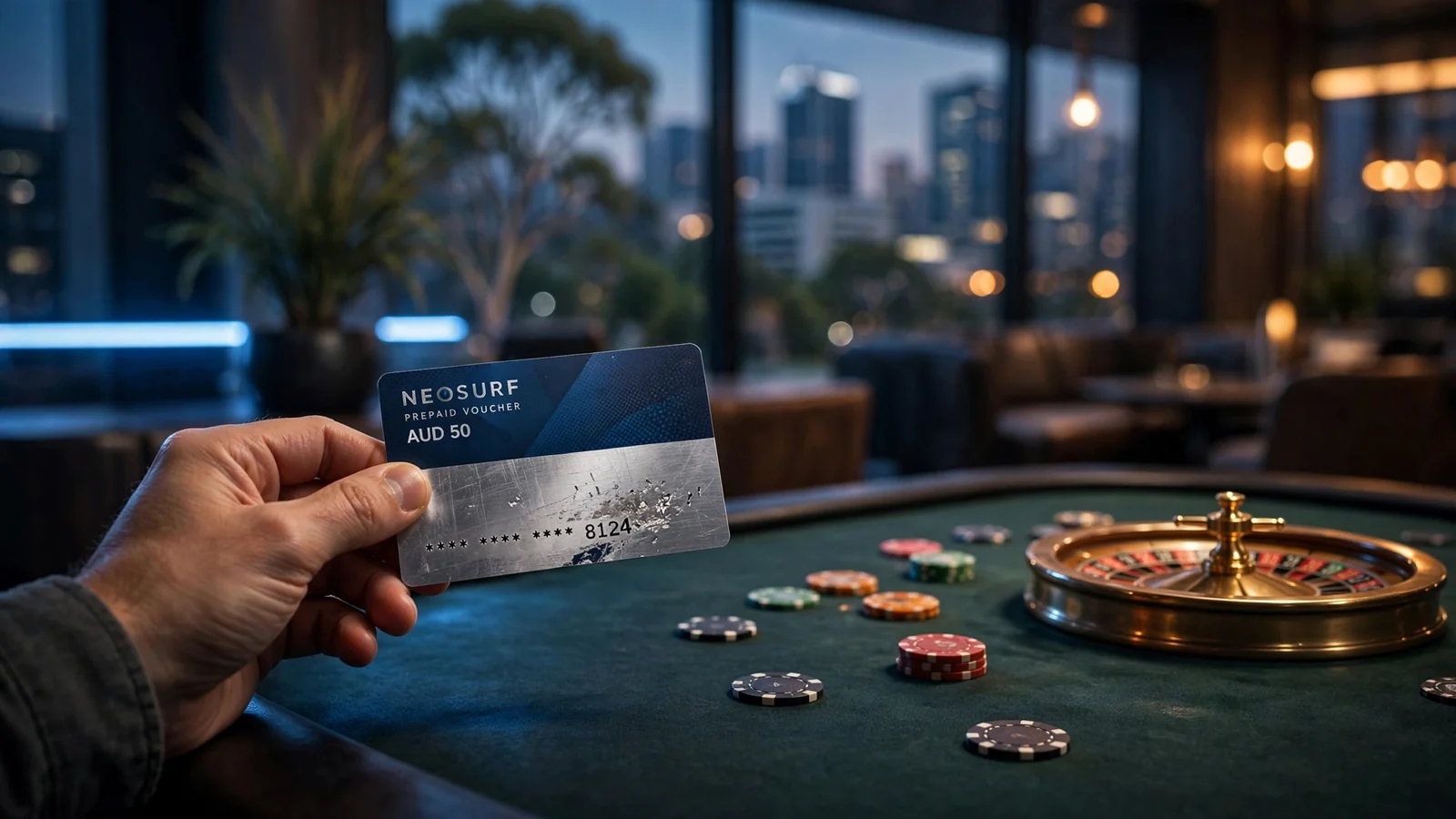
Australian authorities actively block and enforce against prohibited online casino services. That makes online availability a poor guide to legal status: a website may be encountered from Australia without being authorised to provide its gambling service to Australian residents. Technical access and legal permission are separate questions. The distinction is easy to blur on a screen, where a foreign operator may look no more distant than a domestic business.
There is also a practical consequence for anyone considering the protections attached to a transaction or dispute. Australian consumer protection laws do not apply to the offshore operators discussed here. A foreign licence does not bring those operators within Australian consumer-protection rules, and it should not be mistaken for a local avenue of redress. This is not a judgment about what every offshore operator will do; it is a limit on which protections can be assumed to apply.
The law does not make the player criminally or financially liable merely for using an offshore casino. That does not change the prohibition on operators supplying the service, or turn offshore activity into a locally regulated product. It is possible to describe those parts of the legal position together without treating them as equivalent: the restriction is aimed at provision, while the player is not subject to a fine or prosecution simply for playing at an offshore casino without a local licence.
Legal Boundary
Australian law prohibits locally licensed online casinos from providing real-money pokies to people physically in the country.
Age rules and legal permission are separate too. Meeting an age threshold would not make an otherwise prohibited service lawful to provide in Australia. Nor does a general warning or a responsible-gambling label alter the legal boundary.
The topic may be framed around Dragon Link, but the name of a game cannot settle the legal question. Whether a search concerns a particular pokie or a casino account, the same distinction remains: Australian law prohibits locally licensed online casinos from supplying real-money pokies to residents, while offshore licences do not amount to Australian approval. The legal setting comes before any claim about a title’s availability.
This is affiliate material and may include sponsored links. That disclosure does not endorse offshore gambling or make it lawful to offer real-money online casino games to Australians. The regulatory boundary is not a footnote to the market; it is the condition that defines what the market can legally provide.
The Dragon Link Search, Without an Unsupported Game Profile
The name Dragon Link may appear in searches for online pokies, but a familiar title is not a game profile. It does not establish who made a particular version, what its symbols or features are, where it can be accessed, or whether a version for 2026 exists. Those details should not be supplied by guesswork simply because the name is recognisable.

That distinction matters because the same title can be used loosely in conversation. Someone may mean a specific game, a group of games, or a search result that has attached the name to a page without establishing what is actually offered. Without reliable information tying the name to a defined product, descriptions of its mechanics, appearance, or availability would turn an assumption into apparent fact.
The calendar year in the phrase “Dragon Link online pokies Australia 2026” adds no evidence. A page dated for that year would not, by its date alone, confirm that a new version had been released or that the named game could be accessed from Australia. A current-looking label is not a specification. It may describe the page, not the game.
The Australian context also makes availability a question that cannot be answered by a title alone. Australian law prohibits locally licensed online casinos from providing real-money pokies to people in the country. Offshore sites may present themselves as offering casino games, but that does not make their claims a confirmation of a particular Dragon Link product or remove the risks associated with offshore operators. Australian consumer protection laws do not apply to the offshore operators discussed in this context.
So the careful description is narrow: Dragon Link is a name being sought in connection with online pokie play, but the name alone does not establish the game’s features, an Australian offering, or a 2026 edition. That is less colourful than a feature list. It is also more honest.
A result using the phrase “Dragon Link pokie” may therefore be about the subject without proving anything about the product. Search wording can travel from one page to another, gathering confidence as it goes. Repetition is not independent confirmation. Nor does a page become a dependable game description merely by using the same name in its heading, promotional text, and account of supposed features.

This matters especially when money is involved. Claims about a named game can make an unverified site appear more concrete than it is: a recognisable title lends borrowed familiarity to an operator, while the operator’s own claims remain just that. The title cannot establish the operator’s licence, the availability of a legitimate version, or how a transaction or dispute would be handled. Those are separate questions, not properties that can be inferred from a game name.
The distinction is modest but important. A name can be reported; a profile needs evidence. Until the latter is established, descriptions of Dragon Link’s play, version history, or Australian availability should be treated as unconfirmed rather than repeated as settled detail.
This page is affiliate material and may include sponsored links. That disclosure does not verify a game or endorse an offshore service.
Offshore Casino Claims and the Limits of Reassurance
A payment page can make a Bitcoin transaction look like a clean exchange: one address, one transfer, one balance updated on screen. Trouble begins when the screen and the transaction ledger tell different stories. A deposit may not appear because the address has been reused, the amount sent was below what the operator expected, or the operator has not detected the payment yet. From the player’s side, the transfer may be complete; from the account’s side, the credit may still be absent.

That gap is not merely technical. It leaves the player waiting on an organisation that controls the account record, while the blockchain records the transfer without settling any disagreement about what the casino should credit. A receipt can document the movement of Bitcoin; it cannot by itself make an operator recognise a deposit.
Withdrawals have their own bottlenecks. Delays can arise in an operator’s approval queue, when identity checks are incomplete, or when payments are handled in business-hours batches. Those explanations may describe ordinary processing, but they do not guarantee that a particular request will be resolved promptly. Some operators may also invoke security reviews after a significant win, especially for a new account or a first large withdrawal. A review can be legitimate; it can also become a convenient reason for delay. The player sees the same locked balance either way.
The least useful response to a stuck withdrawal is to send more money in the hope of unlocking it. That adds another transfer to an unresolved problem, not a remedy. Nor does a familiar game name or polished casino interface alter the basic arrangement: offshore operators discussed in this market do not fall under Australian consumer protection laws. Reassuring language is not the same thing as local recourse.
Address errors are harsher still. Cryptocurrency transfers are irreversible, so Bitcoin sent to an incorrect address is generally unrecoverable. There is no ordinary card-payment reversal waiting in the background. Once sent, a transfer cannot simply be recalled because the destination was mistyped or copied incorrectly.
Attention: Cryptocurrency transfers are irreversible, meaning Bitcoin sent to an incorrect address is generally unrecoverable.
This content is affiliate material and may include sponsored links; that disclosure does not change the risks described here or make an offshore service safer. In payment disputes, the difference between a transaction being recorded and a balance being honoured is substantial. The ledger keeps its own counsel.
Game Credits, Bitcoin Value and Moving Prices
A credit displayed inside a pokie is a unit of play, not a fixed slice of Bitcoin. Its meaning belongs to the particular game: one title’s credit cannot be assumed to match another’s. In Bitcoin terms, that credit’s value is also affected by the current BTC price. The same game credit can therefore correspond to a different amount of Bitcoin as the market moves.
A specialist review describes this relationship as dependent on both the game and the prevailing Bitcoin price. That is a useful distinction, not a universal conversion table. The game defines what its credits represent; the exchange value of Bitcoin supplies a separate, changing measure. Putting the two together requires care, because a number shown on a screen can look stable while its value outside the game is not.
This matters whenever attention turns from a title’s name to what its credits might mean in money. A search for a Dragon Link game, a jackpot, or a named version such as Golden Century or Spring Festival may sound like a request for a particular prize figure. But a game name alone cannot establish the Bitcoin value of a credit. That depends on the game’s own credit structure and the BTC price at the relevant time. A jackpot label, likewise, is not a conversion rate.
The distinction resembles the difference between a ticket and the currency used to buy it. The ticket has meaning within its own system; its value in another system needs a rate of exchange. Bitcoin adds movement to that second system. Its price is not held still by the game’s interface, and an on-screen credit does not become a fixed cryptocurrency amount merely because Bitcoin is used for payment.
This is one reason figures attached to credits can age quickly or fail to travel from one game to another. A number without the game context is incomplete; a number without the time-sensitive BTC context is incomplete in a different way. Neither a familiar title nor a prominent jackpot name repairs that gap.
The language of pokies often compresses these distinctions. “Credit” sounds like money, while functioning as a game-specific unit; “jackpot” sounds like a monetary amount, while its denomination and value require context. The words are not interchangeable. A credit is not automatically a satoshi, and a displayed total does not by itself tell what that total represents in Bitcoin.
The arithmetic has two moving parts. That is the point.
Wins, Bonus Terms and Disputes
A hoped-for win and a bonus balance are not the same thing. The first is an uncertain result; the second is governed by conditions that can determine whether credited funds remain available. That distinction matters whenever a dispute turns not on the game’s outcome, but on how play was counted.
Bonus rules may assign different wagering contributions to different games, meaning some high-return slots may be capped at half contribution while others count in full.
Bonus rules may assign different wagering contributions to different games. Table games can contribute nothing towards a wagering requirement, while pokies may count in full. Some high-return slots may be capped at half contribution. The practical effect is that the amount of play shown on a screen may not translate directly into progress under the bonus terms. If the contribution table is unclear, a player and operator can arrive at different accounts of whether the requirement has been met.
The percentages are conditions, not predictions. A full contribution does not make a win more likely, and a bonus does not establish that a particular game will pay out. Searches for Dragon Link wins or tips can suggest that there is a reliable technique to discover. No such conclusion follows from bonus arithmetic. The conditions describe how an operator counts play, not how a machine behaves.
Maximum-bet clauses create another familiar point of conflict. Bonus terms may set a ceiling on the stake permitted while bonus play is active; exceeding it may void that play. A dispute can then hinge on whether the rule was clearly presented, what counted as a breach, and whether the operator applied the condition consistently. The size of a win does not settle those questions.
This is why claims about a Dragon Link bonus or a winner’s method should be treated separately from the written rules attached to a promotion. A story about a payout cannot establish the contribution rate or maximum bet condition for another account, operator or game. Fine print has consequences. Sometimes the smallest line does the largest work.
For Australians, these terms do not change the legal boundary around real-money online casino games. Offshore bonus conditions are not a substitute for Australian consumer protection: those protections do not apply to the offshore operators discussed. A bonus is a contractual condition, not a guarantee of a win, a payout or a remedy when a dispute arises.
Apps, Identity Checks and the First Withdrawal
A phone-shaped icon can make a casino service look like an app, but it does not establish that a dedicated Dragon Link application exists. Nor does the name alone confirm a mobile version of the game or an RTP figure. A web page that opens on a phone is not the same thing as a verified app.
Account checks are a separate matter. Offshore operators may ask for identity and address documents when a first withdrawal is requested, or after cumulative deposits reach a threshold set by the operator. Stage-two checks may begin at that first cash-out or when deposits total AUD 2,000–5,000; the trigger varies. A further check can concern control of the cryptocurrency wallet used to deposit.
A specialist review describes possible crypto proofs as signing a message from the deposit address or supplying a wallet screenshot that shows the outgoing transaction. These are not universal requirements: an operator’s process can differ, and a screenshot may expose more account information than intended. Verification is not merely a formality once money is waiting to leave.
Completing all identity verification stages within 24 hours of registration can help remove a common source of delay during the first withdrawal.
A specialist review also advises completing later verification stages before requesting a first withdrawal, ideally within 24 hours of registration, on the grounds that this can remove a common source of delay. That is a reported recommendation, not a guarantee: approval queues and operator procedures remain outside the account holder’s control. Still, an unfinished identity check can turn a withdrawal request into a document request.
This sits within an awkward Australian reality. Local online casinos cannot lawfully provide real-money pokies to people in Australia; offshore operators are not covered by Australian consumer protection laws. An app label does not alter either fact. Nor does verification certify that a service is safe. Paperwork is not protection.
Bitcoin Deposits and Withdrawals: The Transaction Path
A payment route is not a playing method. Sending Bitcoin cannot improve the chance of a win, and a transaction does not establish that a named game is available.
In general terms, a person first acquires Bitcoin through a cryptocurrency exchange using conventional currency. To make a deposit, the account interface supplies a receiving address; the sender copies it and initiates the transfer from a personal wallet. The address is the crucial detail, not a label or account name. Bitcoin sent to an incorrect address is generally unrecoverable, because confirmed blockchain transfers cannot simply be reversed. Ethereum transfers to incorrect addresses carry the same danger.
A withdrawal follows the reverse administrative path, though not the reverse transaction itself: the account holder enters a personal wallet address in the withdrawal form and requests payment. A specialist review has reported that most Bitcoin withdrawals are completed within an hour, but that is a source-specific account, not a guaranteed processing time. Operator approval queues, business-hours batching or account checks can extend the wait. Bitcoin transfers also incur miner fees; a specialist review described these as usually minuscule, while noting that they vary over time. “Minuscule” is not a fixed price.
A stuck withdrawal is not a reason to send more money to unlock it. That demand can deepen the loss rather than release a payment.

For people in Australia, this remains a description of payment mechanics, not an invitation to use an offshore casino. Australian law prohibits locally licensed operators from offering real-money online pokies, and Australian consumer protection laws do not apply to offshore operators. This is affiliate material and may contain sponsored links; that disclosure does not make an unlawful service safe or locally regulated. Real-money gambling is for adults aged eighteen or over.
Happy and Prosperous: A Name, Not a Verified Specification
“Happy and Prosperous” may appear alongside Dragon Link in descriptions of a pokie, but the wording alone does not identify a confirmed machine or establish what it contains. A name can suggest a theme; it cannot reliably tell whether a particular title exists, which company made it, how it plays, or where it is available.
That distinction matters because casino titles are often repeated across pages with little context. A phrase may be presented as a game name, a variant, or part of a promotional description. Repetition does not turn it into a specification. Without dependable details, claims about symbols, bonus rounds, paylines, volatility or returns would be invention dressed as helpfulness.
The same restraint applies to claims that a Dragon Link machine called Happy and Prosperous is available online, or has a particular version for 2026. A matching label on a page would not, by itself, confirm that the game is genuine, that the description is accurate, or that access is lawful in Australia. Names travel easily. Evidence less so.
This is therefore a narrow point of identification, not a game review. The phrase can be acknowledged as a name associated with the subject, but it does not support a feature-by-feature account. Anything more specific would risk turning an uncertain label into a promise.
Wildtokyoslotshubau.com’s content is affiliate material and may include sponsored links. That disclosure explains a commercial relationship; it does not verify a title or endorse an operator. A name is not proof.
Can Australians use Bitcoin at online casinos for entertainment?
Bitcoin can be used as a payment method at some offshore online casinos. Australian law prohibits locally licensed online casinos from offering real-money pokies to residents, and Australian consumer protection laws do not apply to the offshore operators discussed.
Are Bitcoin casinos legit?
Some operators hold offshore licences, primarily from Curacao eGaming or the Anjouan Gaming Authority. That does not mean Australian consumer protection laws apply to them.
Is verification required?
Verification may be required, including at a first withdrawal or when cumulative deposits reach AUD 2,000–5,000, depending on the operator. Crypto checks may also involve signing a message from the deposit address or showing the transaction in your wallet.
Published by the Wildtokyoslotshubau.com team.