Best RTP Pokies in Australia: What the Figure Means
 Available in AU
RTP models the share of wagers returned as prizes over extensive play, but says little about an individual session or outcome.

Table of Contents
- What a Pokie’s RTP Can—and Cannot—Tell You
- The Australian Context: RTP Without a Domestic Online Casino
- Online Access, Deposits and the Withdrawal Catch
- Why the Highest Published RTP May Not Be the Setting in Play
- Payout Claims, Bonuses and the Turnover Arithmetic
- Australian Pokies: Venue Rules and the Limits of Comparison
- Pokies RTP and the Long View of Randomness
- High RTP Online: A Figure Is Not a Guarantee
- Comparing Pokies With the Highest RTP
- RTP, Responsible Play and the Unromantic Fine Print
What a Pokie’s RTP Can—and Cannot—Tell You
RTP, or return to player, is a theoretical measure of how much of the money wagered on a pokie is expected to come back as payouts across play. It is expressed as a percentage. The useful word is theoretical: the figure describes a model of repeated play, not a promise about what will happen to a particular balance or session.
That distinction is easy to lose when a percentage is printed beside a game. A high RTP can look like a forecast, as though the machine were quietly obliged to return a predictable share to each person who sits down. It is not. The figure does not tell a player what the next spin will do, how long a session will last, or whether any particular run will end ahead.
A simple way to read the measure is to imagine all wagers placed on a game over an immense volume of play. RTP describes the modelled share of those wagers that returns as prizes. It is not a schedule: the game does not hand back a fixed portion after a set number of spins. Nor is it a personal refund calculated at the end of an evening. A player’s result can fall well above or below the theoretical return.
A casino’s licence and payment details can help provide context, but they do not establish the RTP of its games. Use this list as a starting point and check the published RTP for the specific pokies you intend to play.
License: Curacao (operating since 2017) · Min. deposit: A$20 Uptown Pokies has operated since 2017 under a Curacao licence. Its minimum deposit is A$20.
License: Curacao, operated by Dama N.V. 7Bit Casino is licensed in Curacao and operated by Dama N.V. Those details provide basic information about its regulatory and operating arrangements.
License: Curacao OGL/2024/1335/0780 · Min. deposit: EUR 20 Vegaz Casino lists Curacao licence OGL/2024/1335/0780. Its minimum deposit is EUR 20.
License: Curacao eGaming OGL/2024/923/0383 (Antillephone N.V.) · Min. deposit: A$30 WinSpirit Casino lists Curacao eGaming licence OGL/2024/923/0383, issued through Antillephone N.V. Its minimum deposit is A$30.
License: Curacao Gaming Control Board JustCasino is listed as licensed by the Curacao Gaming Control Board. The available information offers a licensing detail to consider when researching the operator.
License: Tobique Gaming Commission · Payout speed: crypto ~10-15 minutes, fiat 1-5 days · Min. deposit: A$30 SkyCrown is licensed by the Tobique Gaming Commission. Its stated payout speed is around 10–15 minutes for crypto and 1–5 days for fiat, with a minimum deposit of A$30.
License: Curacao eGaming (Dama N.V.) JeetCity Casino is listed as licensed by Curacao eGaming and operated by Dama N.V. These are the available identifying details for the operator.
License: international iGaming licence – jurisdiction not named in the source · Payout speed: PayID 1-24 hours · Min. deposit: A$30 (PayID from A$10) House of Pokies lists an international iGaming licence, though the source does not name the jurisdiction. PayID payouts are stated as taking 1–24 hours; the minimum deposit is A$30, or A$10 for PayID.
License: Curacao Gaming Control Board OGL/2023/176/0095 (Hollycorn N.V.) Neospin lists Curacao Gaming Control Board licence OGL/2023/176/0095, with Hollycorn N.V. identified as the operator. This provides its stated licensing and operating details.
License: Curacao – Antillephone N.V. (Versus Odds B.V.) · Min. deposit: EUR 20 Thor Casino lists a Curacao licence through Antillephone N.V., with Versus Odds B.V. named in connection with its operation. Its minimum deposit is EUR 20.
This is why the search for high-RTP pokies can be useful only within limits. RTP offers a point of comparison between game settings, but it cannot sort games into reliable short-term winners and losers. A larger published figure may indicate a higher theoretical return under the setting being described. It does not make a session safer from loss, or turn luck into a payment plan.
The denominator matters, too. RTP relates to wagering, not simply to a player’s deposit. A balance may be wagered repeatedly, and the same funds can therefore contribute to more than one stake. The percentage is not a promise that the amount put into an account will be returned in cash, nor does it say how much will be left when play stops.
A game’s design can also make the figure feel more tangible than it is. Wins may arrive in clusters, or play may go through stretches without a notable payout. Neither pattern, on its own, proves that the game is paying above or below its stated RTP. The measure is about a long-run model; a short sequence is too small to act as a report card on that model.
There is a further distinction between the identity of a game and its settings. A specialist review reports that some providers allow casinos to choose among multiple RTP settings for a given pokie. The same title may therefore carry different return figures in different places. That does not change the basic meaning of RTP, but it does mean that a game’s name alone cannot tell the whole story about the percentage attached to it.

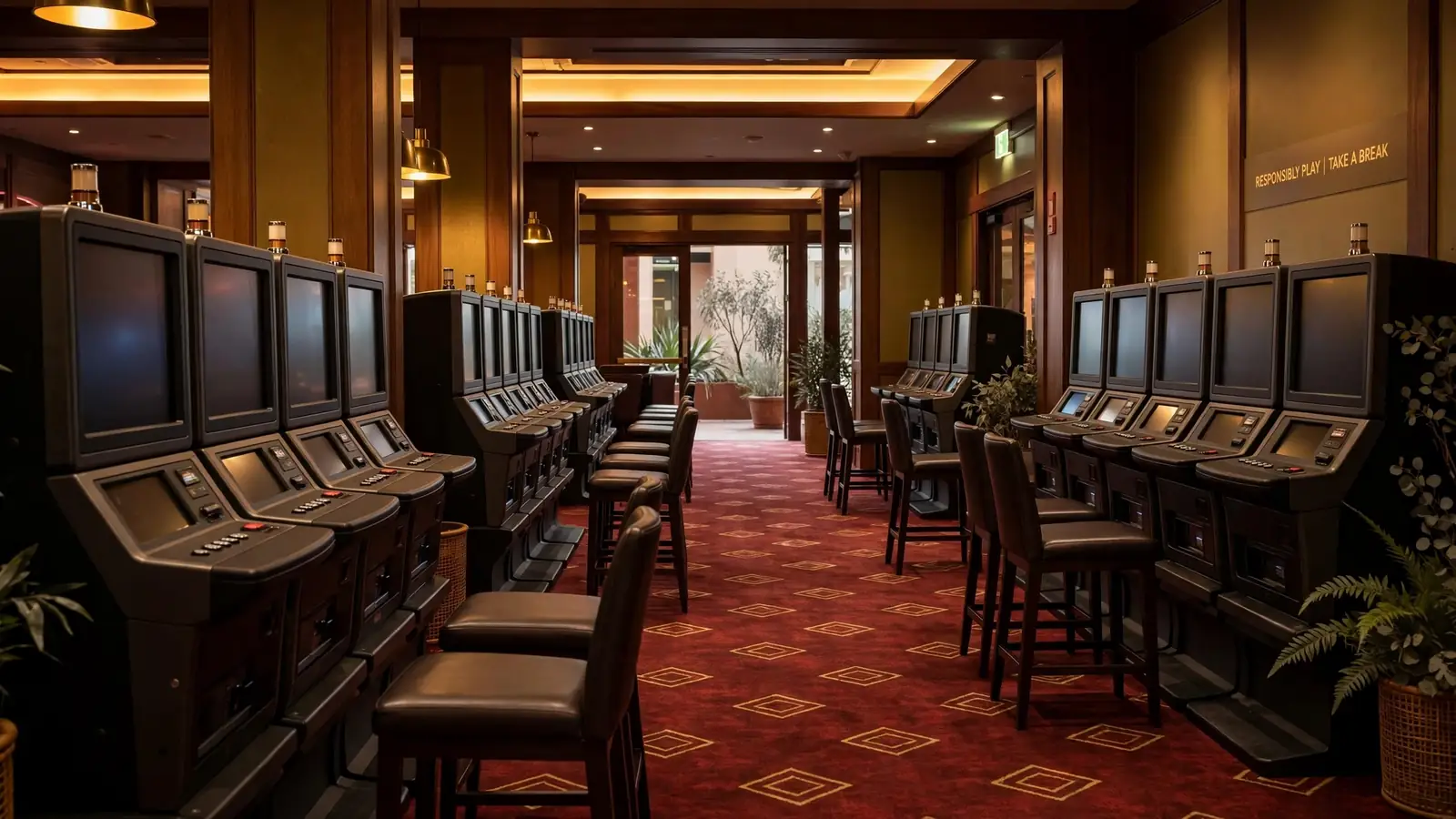
The figure should also be kept separate from the experience of volatility. RTP describes a theoretical return across play; it does not say how often prizes arrive or how large they may be. Two games with similar return figures need not feel alike over a session. A player can encounter frequent modest wins in one game and less frequent, larger swings in another, without that difference making either game a dependable source of income.
A percentage has the authority of arithmetic, but arithmetic can describe uncertainty without removing it. That is the modest service RTP performs. It gives a theoretical measure for comparing stated returns, provided the setting is the one actually in use. It cannot tell anyone what a session will pay, whether a particular sequence is “due” to change, or how much money a person will recover.
The mechanism behind each spin is a Random Number Generator. Each spin is an independent random event, rather than a step in a sequence that remembers earlier results and compensates for them. A poor run does not, by itself, create an obligation for the next spin to pay; a good run does not establish that another win is on its way. RTP belongs to the model across play, not to a promise made to the next person at the machine.
For anyone comparing pokies with high RTP, the sensible reading is therefore narrow: the percentage is a theoretical return attached to a particular game setting. It is not a prediction, a guarantee, or a personal measure of likely winnings. The difference may sound plain. In practice, it is the whole point.
Attention: RTP is a theoretical measure of long-run return and not a guarantee of a specific payout or a prediction for any individual session.
The Australian Context: RTP Without a Domestic Online Casino
An Australian looking for a pokie’s return percentage online encounters a peculiar divide. The figures belong to games offered by offshore operators, while the domestic legal framework provides no licensed online casino in which those games can be played for real money. The Interactive Gambling Act 2001 makes it unlawful for a company to provide real-money online pokies to people in Australia without a domestic licence. No such licences have been issued.
That distinction matters. A return percentage can be presented as a property of a game, but the setting in which it is offered is shaped by the operator’s location and the law applying to the service. For Australians, there is no locally licensed online casino market supplying a domestic benchmark for comparing those offers. A page describing a pokie as available to Australian players does not make the operator Australian-licensed.
The law places responsibility on the provider, not on an individual simply for playing. That is not the same as authorising companies to offer online casino games to people in Australia. Operators remain subject to the prohibition, even where their websites are based overseas or display a foreign licence. The legal question is therefore not settled by whether a site accepts an Australian registration or lets a game load. Access and permission are different things.
Nor does a foreign licence become a domestic one by being prominently displayed. It may describe the operator’s relationship with an overseas regulator, but it does not create an Australian licence for online real-money pokies. In practical terms, Australian players are dealing with an offshore service outside the local licensing framework. The absence of domestic operators is not a technical footnote. It changes who supervises the service and what protection is available when a dispute arises.


The consequence is stark if an offshore casino withholds winnings: Australian players cannot take that dispute to an Australian licensing authority with power over the operator. A foreign regulator may have its own processes, but that is not the same as a domestic remedy, and the existence of a complaint channel should not be confused with a guarantee of payment. The apparent ease of opening an account can make the arrangement feel ordinary. The legal footing is not.
The Australian Communications and Media Authority (ACMA) enforces the Interactive Gambling Act 2001. It can block access to illegal offshore gambling sites, and internet service providers are required to follow its blocklist. That enforcement gives the prohibition a practical edge: offshore sites are not merely outside the local licensing system; access to illegal services can also be restricted. A blocked site may still be discussed or encountered elsewhere online, but that does not alter the status of the service.
This is why online claims about the best return percentages need to be read in their proper setting. A displayed figure is not evidence that an operator holds an Australian licence, because there is no Australian-licensed online casino. It is also not a substitute for the protections attached to a domestic regulated service. The legal framework does not certify offshore game offers for Australian customers, and the presence of a familiar game or a polished site does not supply that missing oversight.
Legal Risk
Real-money online casino services are prohibited when offered to people in Australia, as no domestic online casino licences have been issued.
The words “RTP pokies Australia” can sound as though they point to a local catalogue, with local rules and a local authority behind it. They do not. They describe an Australian audience considering games offered online from outside the domestic licensing system. That distinction is easy to lose when a site presents itself in local currency, uses Australian payment language or lists games with confident return figures. Such details concern presentation or access, not domestic authorisation.
There is a wider social irony here. Australian law draws a firm line around what companies may supply, while the online environment can still make offshore offers visible to residents. The line is not a local online casino market with a list of approved operators; it is a prohibition on providers, backed by enforcement, alongside the absence of individual player liability under the stated framework. Those positions are related, but they are not interchangeable.
For anyone assessing an online claim about pokie returns, the first local fact is therefore not a percentage. It is the legal setting: real-money online casino services are prohibited when offered to people in Australia, and no domestic online casino licence has been issued. Players are not the target of the operator prohibition, but an offshore transaction does not gain Australian protection simply because it is accessible. A number may be displayed. The local licence is not.
Online Access, Deposits and the Withdrawal Catch
A payment method can make a deposit traceable without making the destination trustworthy. That distinction matters when an Australian player follows a headline about online pokies with a high published return: the route money takes into an account says nothing, by itself, about the operator’s status or whether a displayed game figure is reliable.

PayID is not a separate bank or a promise of a successful transfer. It is an alias layer connected to the New Payments Platform (NPP), which is supported by all major Australian banks and uses end-to-end encryption. An alias can be an email address, mobile number or Australian Business Number. For real-money play at an online casino, PayID must first be linked to a bank account. The infrastructure is domestic; the account receiving the money may not be.
That last distinction is easy to lose in the neatness of a transfer screen. PayID identifies a route through the payment system, not the legal character of the merchant at its far end. Its availability cannot establish that a gambling operator is licensed in Australia, nor can it validate the return percentage attached to a pokie. Payments and game settings belong to different questions.
There is also the bank’s decision in between. A specialist review reports that some Australian banks, including members of the Big Four, have at times blocked PayID transfers to known gambling merchants. Specialist reviews also describe Australian banks and card companies as increasingly blocking transactions to known gambling sites. These are reports about changing payment practices, not a fixed rule that every bank applies in the same way. A transfer that worked once is no guarantee of the next one.
The practical consequence is not merely inconvenience. When a payment is blocked, delayed or routed through an unfamiliar intermediary, the transaction trail becomes part of the risk. A familiar payment label can lend an offshore merchant an air of ordinariness; that appearance does not give the customer the protections that would come with a domestic online casino framework. Australia has no such licensed online casinos, and a player whose offshore operator withholds winnings has no legal recourse in Australia to compel payment. The transfer may be visible. The remedy may not be.
PayID serves as an alias layer for the New Payments Platform; it identifies a route through the payment system, not the legal status of the merchant receiving the funds.
This makes the withdrawal side more consequential than the deposit screen suggests. A successful deposit proves only that funds reached an account under the terms of that transaction. It does not prove that a later cash-out will be approved, arrive on the expected terms, or be recoverable if the operator refuses to pay. The two directions of money are not mirror images: sending funds can be simple, while asking for them back depends on the operator’s conduct and the practical limits of pursuing an offshore business.
In a search for online RTP pokies, payment speed can therefore become a misleading proxy for quality. A smooth deposit process is not evidence of fair play, transparent game settings or dependable withdrawals. Nor does the use of an Australian payment rail relocate an offshore operator into Australian oversight. The technology carries the transfer; it does not carry the law.
Banking systems are built to identify and move money, not to certify every business that requests it. That is a rather narrow service.
Why the Highest Published RTP May Not Be the Setting in Play
A return figure can look like a property of a pokie, as fixed as its name or artwork. It may not be. A specialist review reports that some providers let casinos choose between multiple RTP settings for the same game. The title can therefore remain unchanged while the return percentage attached to it differs between casinos.
That distinction matters whenever a published figure is used to identify the highest-return pokies. A figure found on a provider’s page, a casino’s game listing or a review may describe a particular setting, not every version of that game wherever it appears. The number is not necessarily false; its scope may simply be narrower than the headline suggests.

The comparison problem is familiar from other products, though less visible here. Two items can share a name and appearance while differing in a detail that affects how they function. With pokies, the selected RTP setting is one such detail. A matching title and provider name do not, by themselves, establish that two casino listings use the same setting.
This makes comparisons based on names alone fragile. A list that places a game near the top because one source gives it a high return may not describe the version available elsewhere. Even when the figure is stated clearly, the useful question is what configuration it refers to: the game in general, a particular setting, or the version offered by a specific casino. Without that distinction, a ranking can look more exact than its evidence allows.
The same caution applies to claims about the highest RTP pokies in Australia. A figure associated with a title is not automatically a single, universal value for that title. If different settings are available to casinos, comparing one published figure with another may mean comparing different configurations rather than like with like. The apparent order can then say less about the games than about which settings the sources happened to describe.
A careful comparison keeps the title and the setting separate. It treats a published percentage as applying only to the version it identifies, rather than carrying it across every listing of the same pokie. Where a casino’s listing does not identify its setting, the figure from another source cannot safely fill that gap. The missing detail is not a minor footnote when the comparison turns on return.
Why game names can be misleading
A specialist review reports that some providers allow casinos to choose among multiple RTP settings for a single pokie, meaning the same title may have different return percentages in different places.
There is an appealing simplicity to a single ranked table: one title above another, each with a clean percentage beside it. But the table is only as sound as the match between its figures and the versions actually being compared. A headline number may be accurate and still be a poor guide to a different casino’s configuration. Precision on paper is not the same thing as comparability.
For Australian readers, the practical point is modest but important: a game’s name alone cannot settle which RTP setting is in play. A high published figure can identify a setting worth examining; it cannot establish that every casino offering that game uses it. The comparison should stop where the identification of the setting stops. No universal figure follows from a shared title.
Payout Claims, Bonuses and the Turnover Arithmetic
A bonus headline records what is offered, not what can be taken away. Between the two sits the wagering requirement: a turnover multiplier that specifies how much must be bet before bonus-linked winnings become eligible for withdrawal. The arithmetic can make a generous-looking figure feel rather less generous.
A specialist review uses a threshold of 35x or lower as a point of comparison and describes requirements above 40x as punishing. That is an assessment, not a universal rule. More important than the label is the base to which the multiplier applies. Terms may count the bonus alone, or the deposit and bonus together; the same multiplier can therefore produce very different turnover.
Consider a $500 bonus with a 40x requirement. If the multiplier applies to the bonus, the required bets total $20,000 before winnings can be withdrawn. The bonus is not a $500 payment waiting in an account. It is an invitation to generate a large volume of play under stated conditions. The distinction is plain on paper, less so in a celebratory banner.

If the requirement instead applies to a $500 deposit plus a $500 bonus, a 35x multiplier means $35,000 in bets. The calculation is 35 times the combined $1,000, not 35 times the bonus alone. Small wording changes alter the obligation substantially. “Bonus only” and “deposit plus bonus” are not decorative clauses.
Free spins have their own possible catch. A specialist review notes that some offers limit how much of the resulting winnings can be cashed out. A spin may produce a balance on screen, while the offer’s terms restrict the portion that can leave the account. The apparent win and the withdrawable amount are separate measures.
These conditions belong to the promotion, not to the pokie’s return percentage. A higher RTP cannot cancel a turnover requirement, and a bonus cannot make a game’s theoretical return more favourable. They answer different questions: one describes a game’s long-run design; the other determines what must happen before promotional winnings can be withdrawn.
The useful reading is therefore grammatical as much as numerical: identify what the multiplier applies to, then check whether a cash-out cap limits free-spin winnings. The headline is the invitation. The terms are the arithmetic.
Australian Pokies: Venue Rules and the Limits of Comparison
A pokie in a pub or club belongs to a different regulatory setting from an online game encountered through an offshore site. The distinction matters when Australian pokies RTP is discussed: venue oversight concerns how gambling is managed in a physical place, while an RTP figure describes a game’s theoretical return over play. Neither tells the whole story about the other.
Venue Requirements
From 1 July, venues with over 20 gaming machines must have a dedicated responsible gambling officer (RGO) present and maintain a gambling incident register.
A report by regionriverina.com.au describes a requirement taking effect from 1 July: venues operating more than 20 gaming machines are to have a dedicated responsible gambling officer (RGO) present while those machines are running. The same report says venues are allowed a one-month transition period to appoint officers and take down specified signage. These are operational obligations for venues, not a statement about the percentage a machine returns.
The report also describes a gambling incident register. Venues are to record relevant occurrences, including signs that a patron may be at risk of gambling harm or already affected by it. That turns a difficult, often private pattern of behaviour into something staff are expected to notice and document. It is a social duty attached to the room, not a mathematical property attached to the machine.
The distinction has a history of its own. A physical venue gathers people, staff and machines under one roof; oversight can therefore ask who is on duty, what is observed and what is recorded. Online play lacks that shared floor and visible staff presence. The institutional response is different, and venue requirements cannot be used as evidence that an online game has a particular return setting—or that two games with the same name use the same setting.
Nor does a venue’s compliance establish that a given pokie is generous. An RGO and an incident register address conduct and harm; they do not certify a payout percentage. The rules may shape the environment in which people play, but they do not convert a long-run statistical measure into a promise for any one session.

That boundary is easy to miss when “pokies” is used for both settings. The machines may look familiar; the systems around them are not interchangeable. Institutional oversight is not an RTP label.
Pokies RTP and the Long View of Randomness
A run of empty spins can feel as though it is building towards a correction. A run of wins can feel like a pattern worth following. Both impressions belong to the human mind, which is notably good at finding a plot in events that have none.
A pokie’s outcome is generated spin by spin by a Random Number Generator. Each spin is independent: the result already produced does not change the result of the next one. A machine has no memory of a losing streak, no sense that a win is overdue, and no obligation to keep a fortunate sequence going. The apparent story is the player’s, not the machine’s.
That independence matters when RTP is read as a long-run measure. A return percentage describes a theoretical pattern across play, not a schedule for an individual session. In a short stretch, results may sit far from that pattern. Random outcomes can arrive in clusters, or leave long gaps between wins; neither shape proves that the next spin is more likely to behave differently. The arithmetic offers no appointment time.
This can make the long view feel less reassuring than it sounds. “Over time” is not a promise that every player’s results will gradually approach a stated return, nor that losses will be followed by compensating wins. It describes how a theoretical average is understood across repeated play, while any one session remains exposed to chance. Averages are calm. Sessions are not.
- Treat each spin as an independent random event
- View RTP as a long-run theoretical average
- Assume a losing streak makes a win overdue
- Believe a lucky spell proves a game is generous
The same point cuts both ways. A lucky spell does not establish that a game has become generous, just as a barren spell does not show that it is due to improve. Treating recent results as evidence about the next spin turns randomness into a forecast, and the forecast has no basis in the mechanism described here.
There is a social habit behind the mistake. People tell stories about luck because a sequence feels easier to bear when it has a direction: a machine “warming up”, a win “coming back”, a streak “turning”. Such language gives uncertainty a human face. It also quietly attributes intention to a process that has none.
The long view is useful only when kept in its proper place. RTP concerns a theoretical return; independence concerns how each outcome is produced. Neither can tell a player what a particular spin will do. Randomness is not a promise.
High RTP Online: A Figure Is Not a Guarantee
A return percentage shown beside an online pokie can look like a neat piece of evidence: precise, portable and apparently easy to compare. But a figure on a screen does not establish who is offering the game, what setting is active, or how the number was checked. Precision is not provenance.
That distinction matters in Australia, where there is no Australian-licensed online casino. A displayed RTP cannot turn an offshore operator into a locally licensed one. Nor does a polished game page, familiar provider name or payment method prove that the operator is authorised or that its presentation of the game’s return is transparent. Those are separate questions, however conveniently a website may place them together.

There is also a technical reason not to treat a game title as a fixed return. A specialist review reports that some providers let casinos select from multiple RTP settings for the same pokie. The same title may therefore be configured differently across casinos. That observation does not establish which setting is active on a particular site; a displayed percentage needs context before it can support a comparison.
The gap between showing a figure and substantiating it is not unique to gambling. Labels have always done social work: they make a complicated arrangement look settled. Online, the number may be visible while the information needed to assess its basis is not. The screen can state a return without independently demonstrating that the stated setting applies to the game being played.
A sensible reading is therefore narrow. An RTP display is a claim about a game’s theoretical return under a particular setting, not proof of an operator’s status, a guarantee of the configuration in use, or an assurance about a session’s result. None of those conclusions follows merely from the figure.
BetStop does not close this gap: it applies to Australian-licensed operators and does not bind offshore sites. Since no Australian-licensed online casino exists, the distinction is practical, not decorative. A visible number may help describe a game; it cannot supply the protections or verification that the number itself does not contain.
The figure is only the beginning.
Comparing Pokies With the Highest RTP
A comparison of high-return claims can look precise while quietly comparing different versions of a game. A specialist review has reported that some game providers let casinos choose from multiple RTP settings for the same pokie. The title may be identical; the return percentage attached to it may not be.
Attention: A bare list of games with the highest RTP can be misleading unless each figure is tied to the specific casino and setting it describes.
That makes a bare list of games with the highest RTP a poor guide. Unless each figure is tied to the casino and setting it describes, the ranking may put unlike configurations side by side. A number copied from a provider’s general game information, for instance, does not by itself establish which setting a particular operator has selected.
A useful comparison therefore needs more than a game name and a percentage. It should identify the operator associated with the figure, make clear where the figure comes from, and distinguish a game’s available settings from the one said to be in use. If that detail is absent, the comparison can show only that a claim has been published—not that the same return applies wherever the game appears.
The distinction matters because “highest” depends on what is being compared. A figure may be the highest setting a game can offer, rather than the setting attached to every version of it. Two listings can appear to disagree without either having changed the game’s name; they may describe different configurations. A ranking that omits the setting turns that difference into false certainty.

This does not make comparison pointless. It gives comparison a narrower job: to organise claims that are attached to a specific version and source, while leaving unverified figures unranked. Where the setting cannot be established, a responsible account says so rather than filling the gap with a confident order.
The language of league tables encourages a simple contest, as if each title carried one permanent return figure. In practice, the relevant unit is not just the pokie but the particular setting offered in a particular context. Without that link, a list of the highest-return games is less a measurement than a catalogue of labels.
A careful comparison can expose what a claim leaves out. It cannot make an unclear setting clear by placing it in a table.
RTP, Responsible Play and the Unromantic Fine Print
A return percentage is only one part of the account a pokie keeps. It says nothing about whether winnings can be withdrawn promptly, what documents will be requested, or how much of a balance can leave the account at once. Those terms sit outside the game’s mathematics, yet they shape what a player can actually take away.

Specialist casino reviews report that some operators set weekly or monthly withdrawal ceilings between $5,000 and $10,000. Under such a limit, a $50,000 jackpot could be paid in instalments over several years. The figure on the game screen and the money reaching a bank account belong to different kinds of arithmetic.
Identity checks can be another condition of cashing out. Specialist reviews describe operators requesting identity documents and proof of address before a first withdrawal, sometimes alongside a photograph of the account holder holding their identification. These requirements should be understood before money is deposited: a pending verification is not the same as a rejected win, but it can delay access to funds.
Responsible-play controls address a different risk. Deposit limits, loss limits and session time limits can put boundaries around activity; self-exclusion can prevent further access where stopping is the necessary step. They do not improve a game’s return or make a losing run less likely. Their purpose is less glamorous: to make the edges visible before play becomes difficult to contain.
BetStop has a narrower reach than its name might suggest. It applies to Australian-licensed operators and does not bind offshore sites. Since Australia has no licensed online casino, it cannot be treated as a universal block on online pokies. A safeguard that does not reach a service cannot do the work of one that does.
The useful reading of an RTP claim is therefore modest. It describes a game statistic, not a cash-out promise, a substitute for account terms, or a responsible-play measure. Verification rules and withdrawal caps can decide how winnings are handled; limits and self-exclusion concern how play is managed. None changes the others.
The fine print is unromantic. That is its job.
Are online pokies legal for Australian players?
Yes, Australians can legally play on offshore sites that accept them, but companies cannot lawfully offer real-money online pokies to Australian residents without a domestic licence, and none have been issued. The law targets operators, not individual players.
What does “wagering requirement” actually mean?
It is the amount you must bet before bonus winnings can be withdrawn, calculated by multiplying the relevant bonus amount by the stated turnover multiplier. For example, a $500 bonus with a 40x requirement means $20,000 in bets before withdrawal.
Are online pokies rigged?
Each spin is an independent random event determined by a Random Number Generator; previous wins or losses do not make a later result due. A short run of results alone does not show whether a game is paying above or below its theoretical RTP.
Published by the Wildtokyoslotshubau.com team.